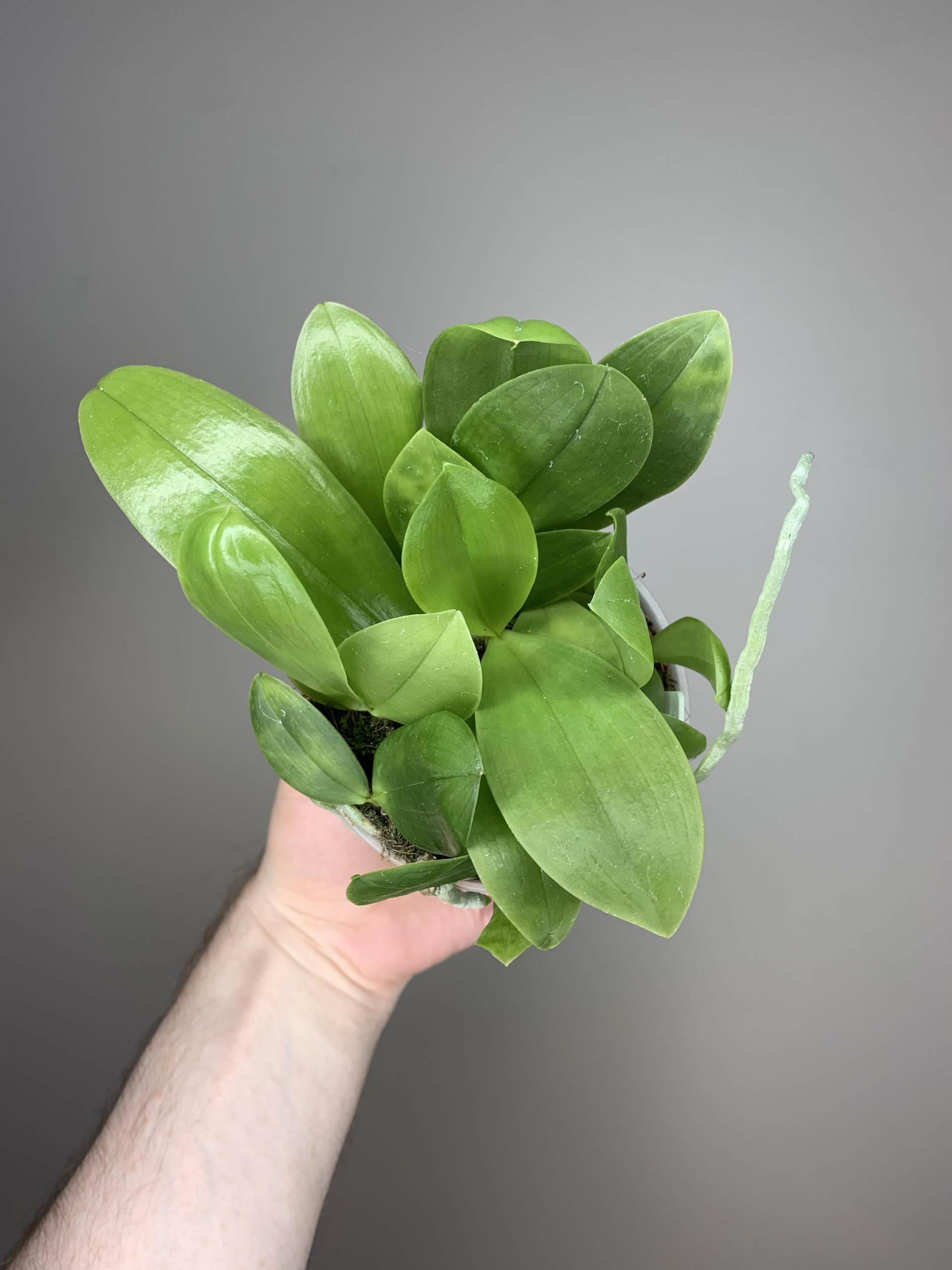
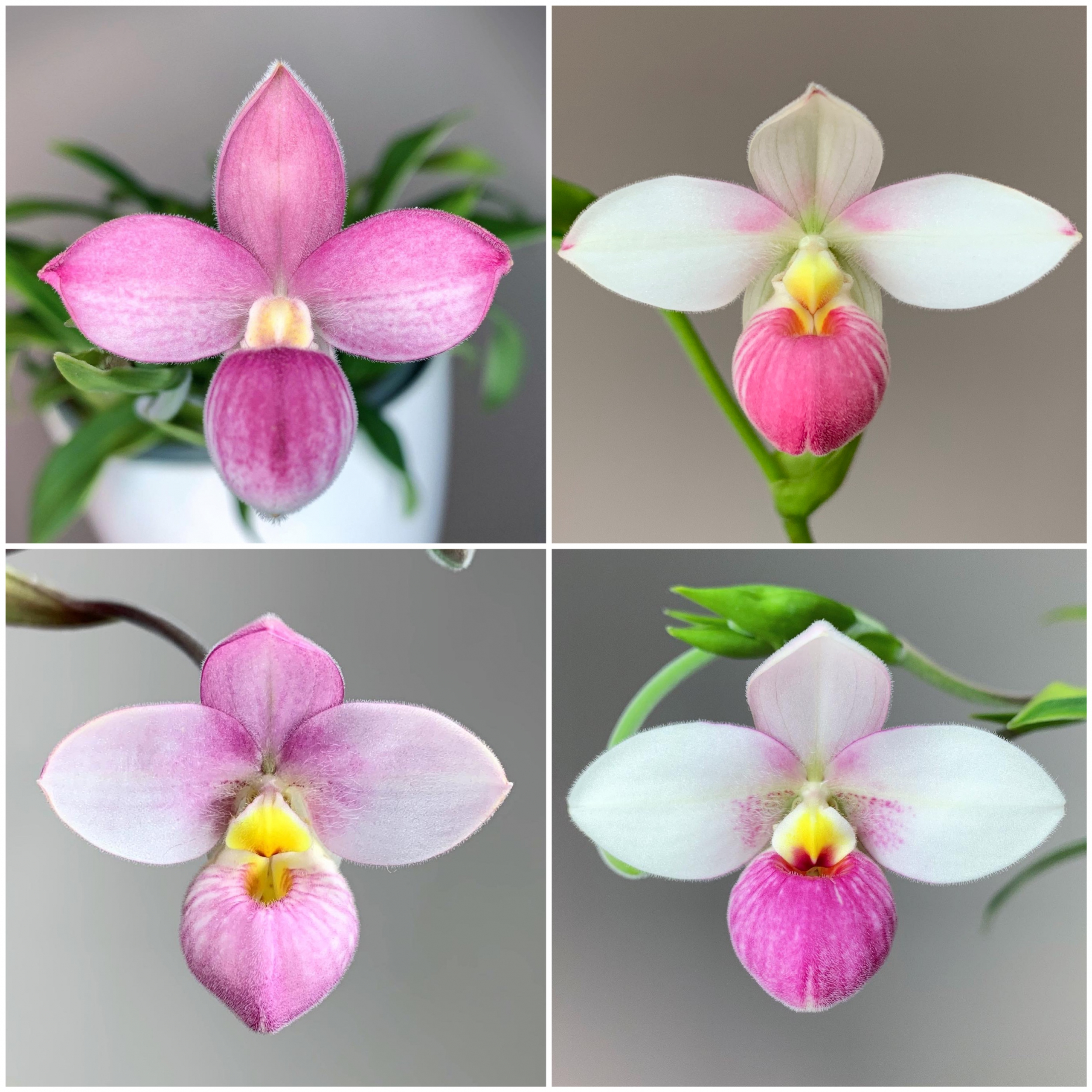
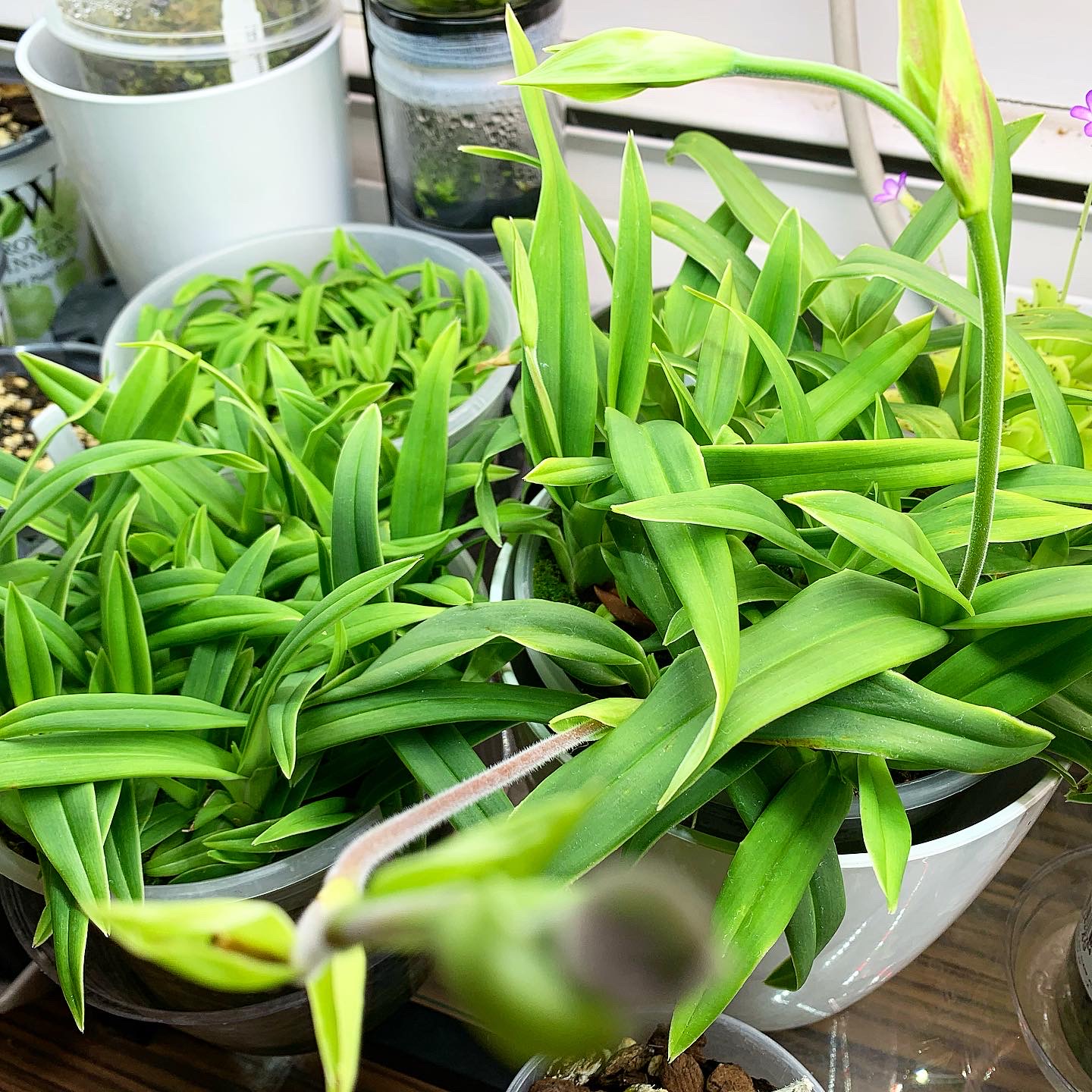
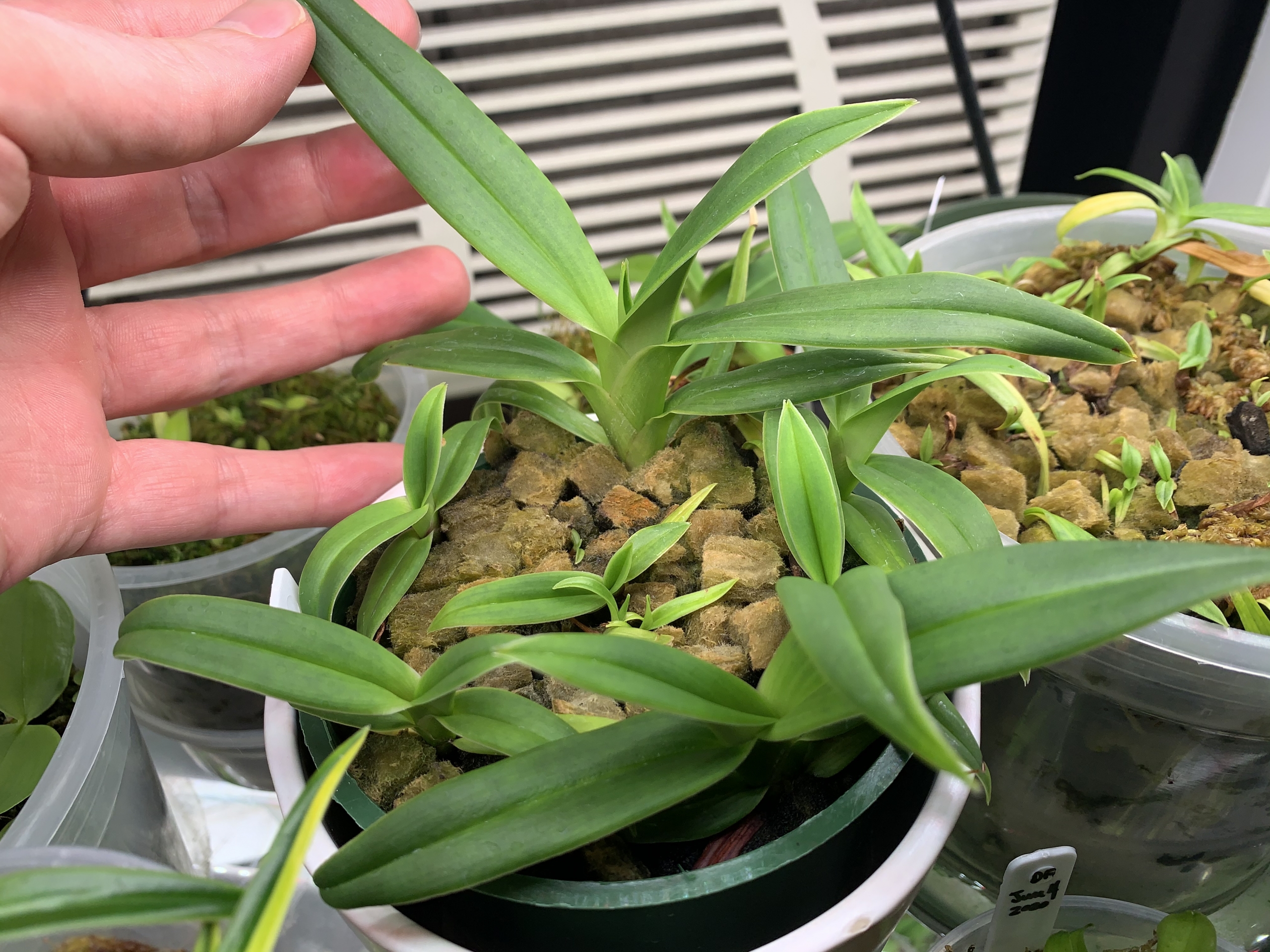
 |
|
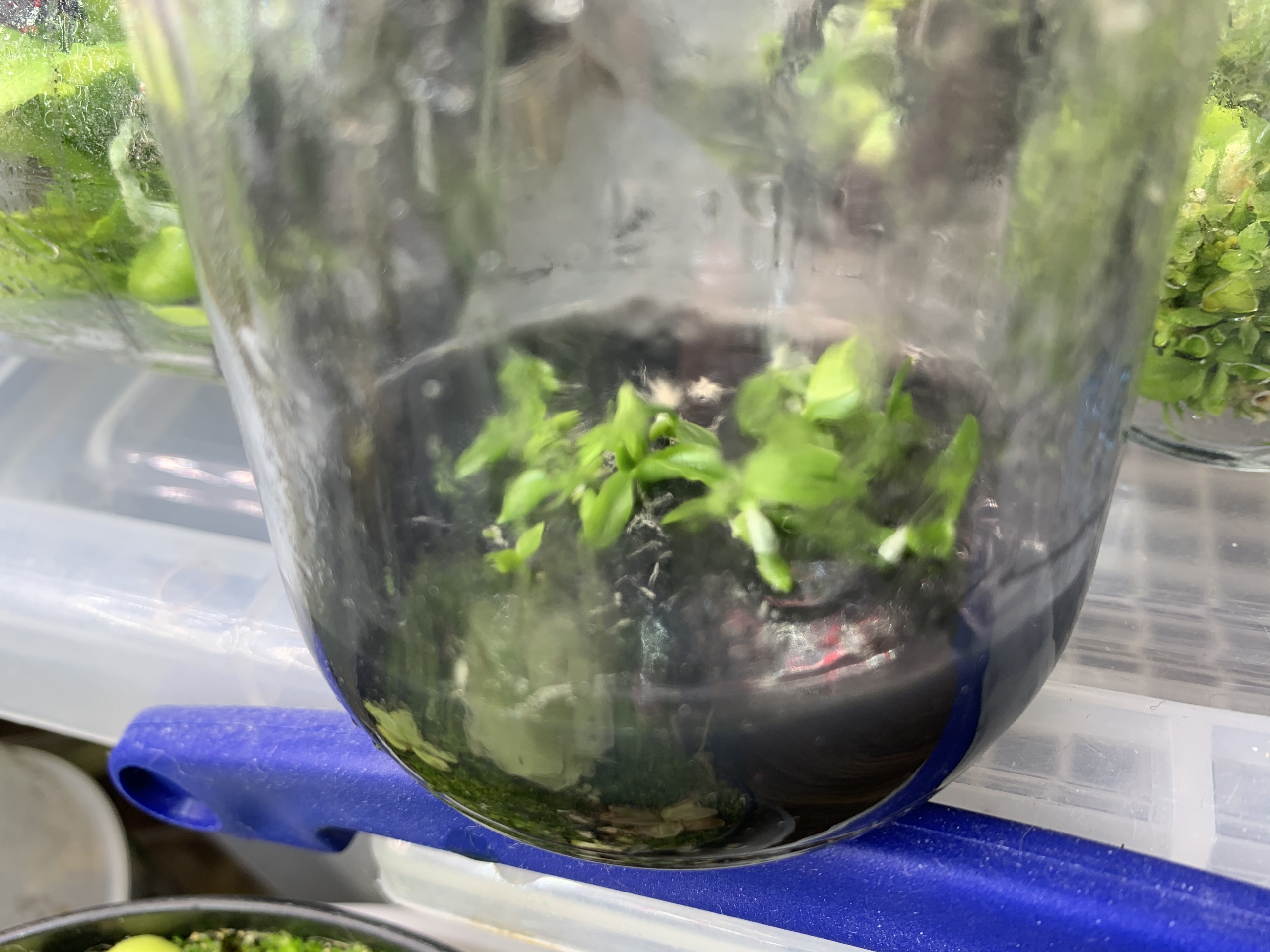
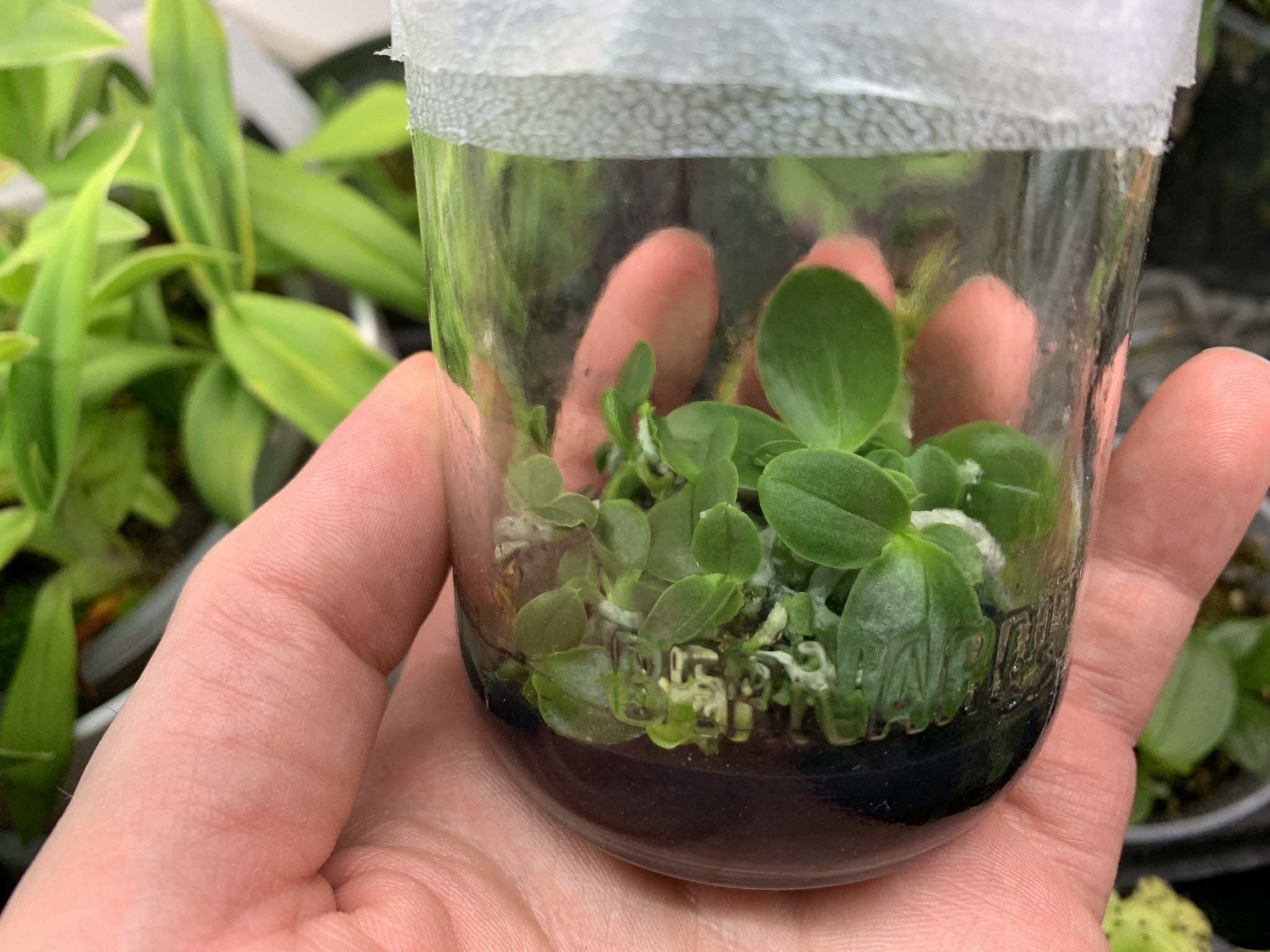
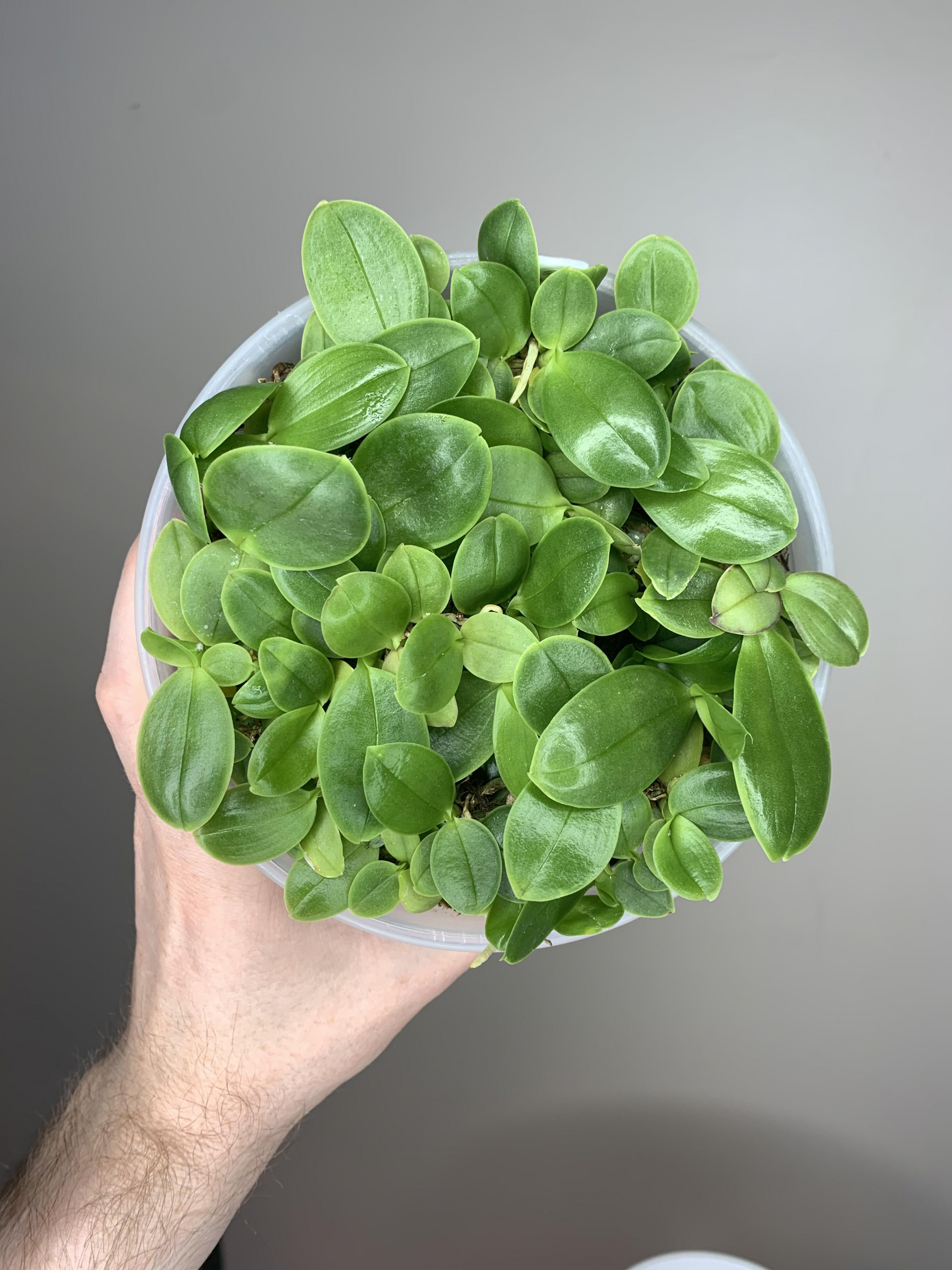
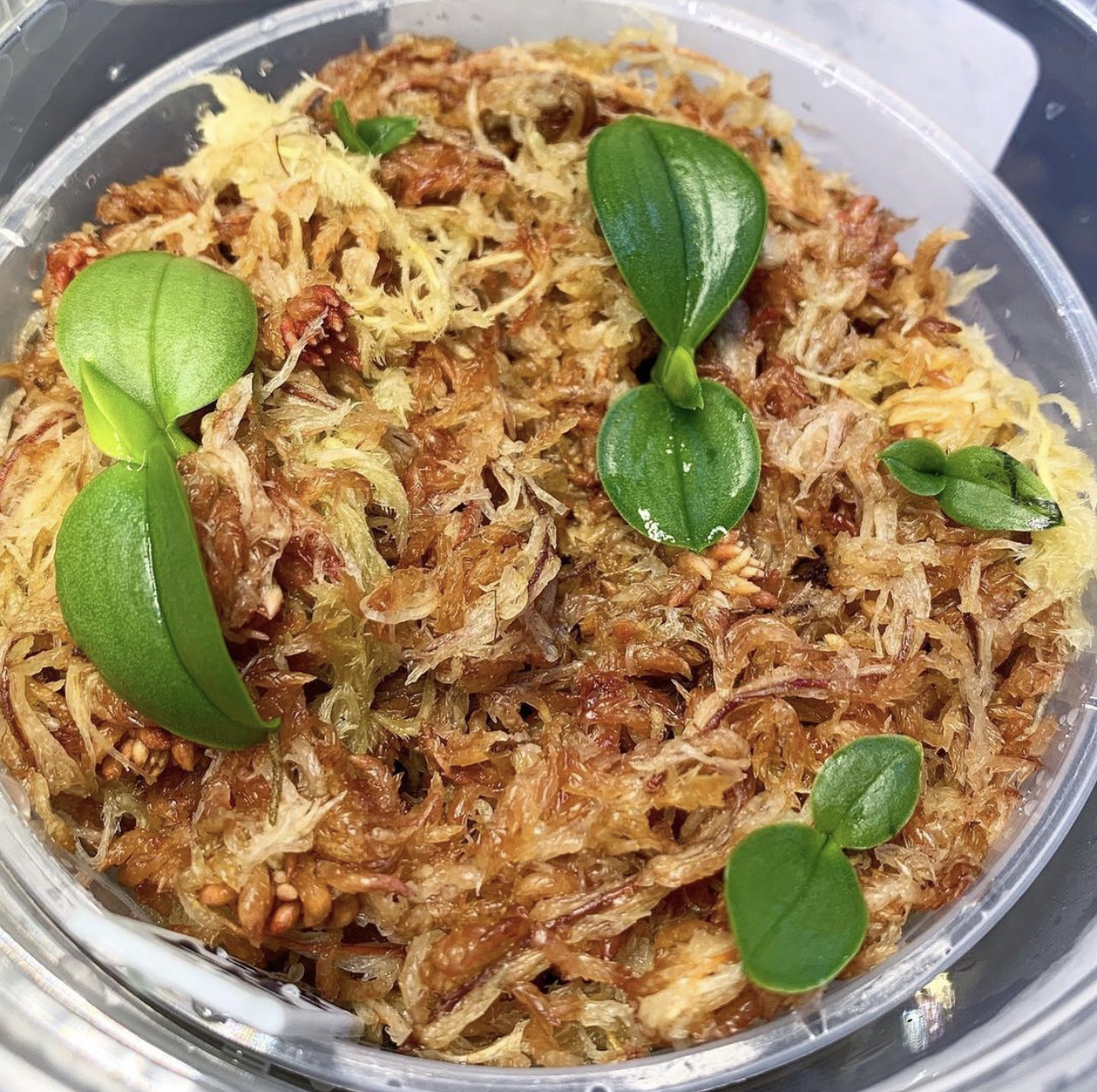
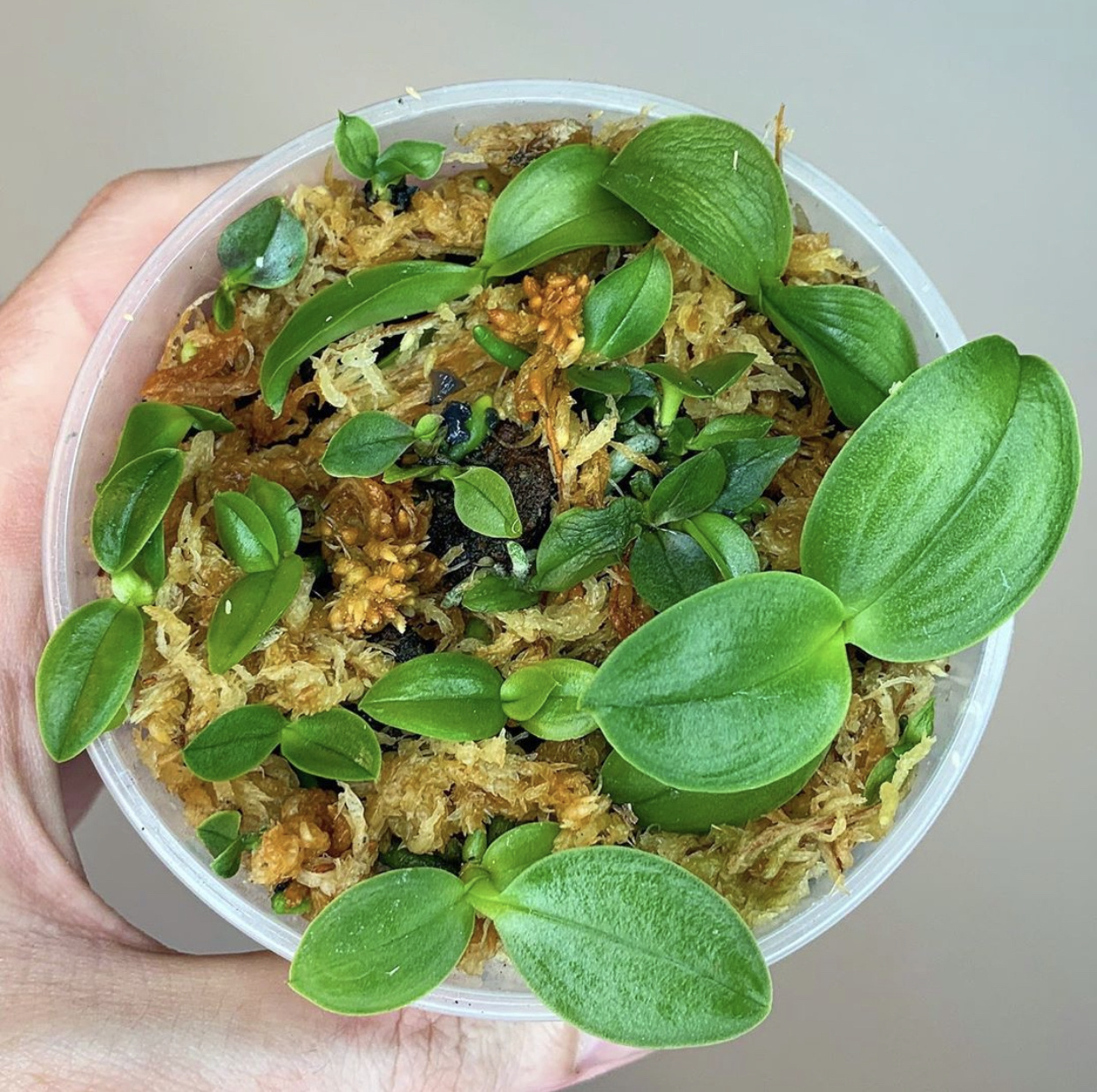
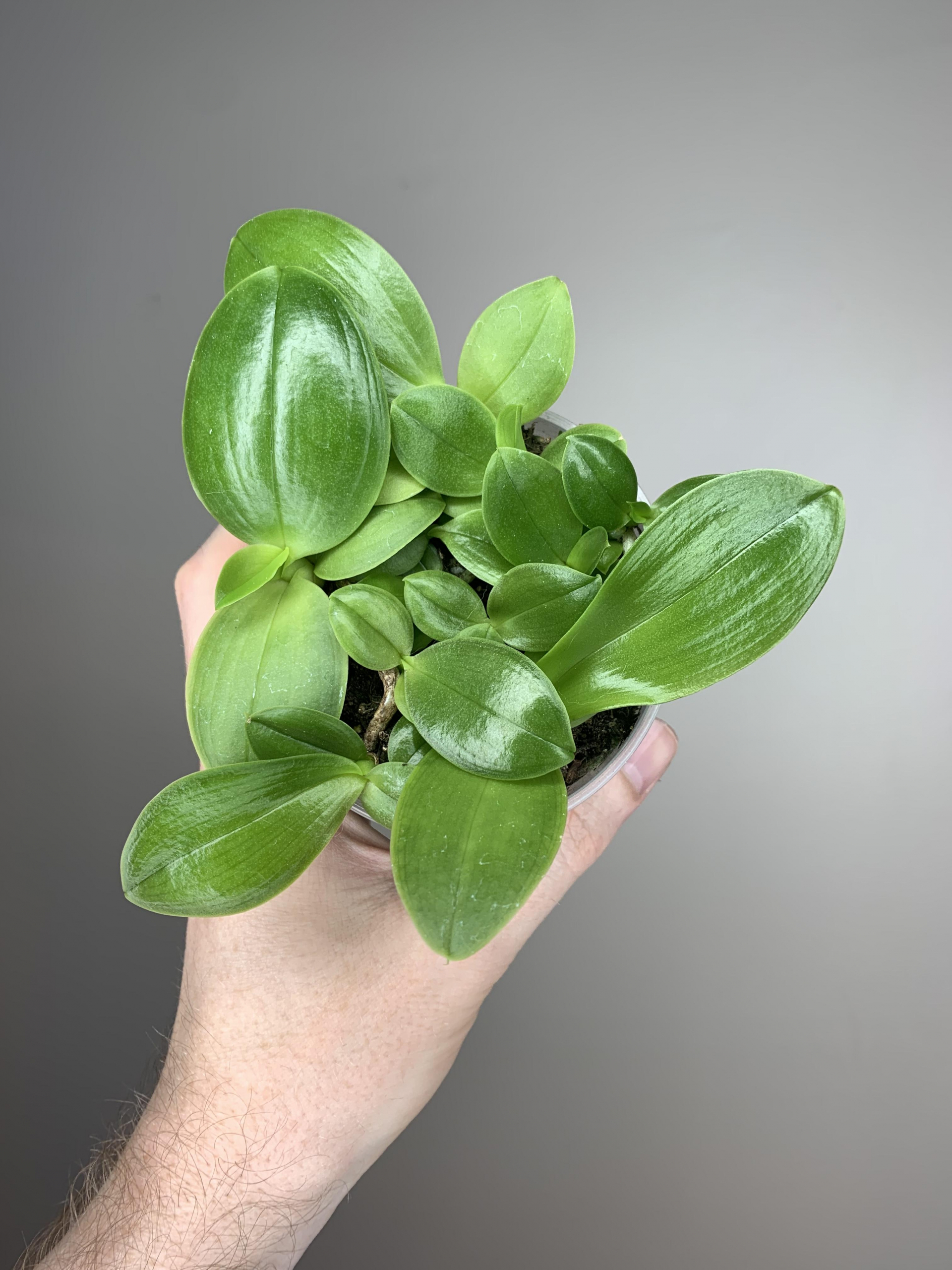
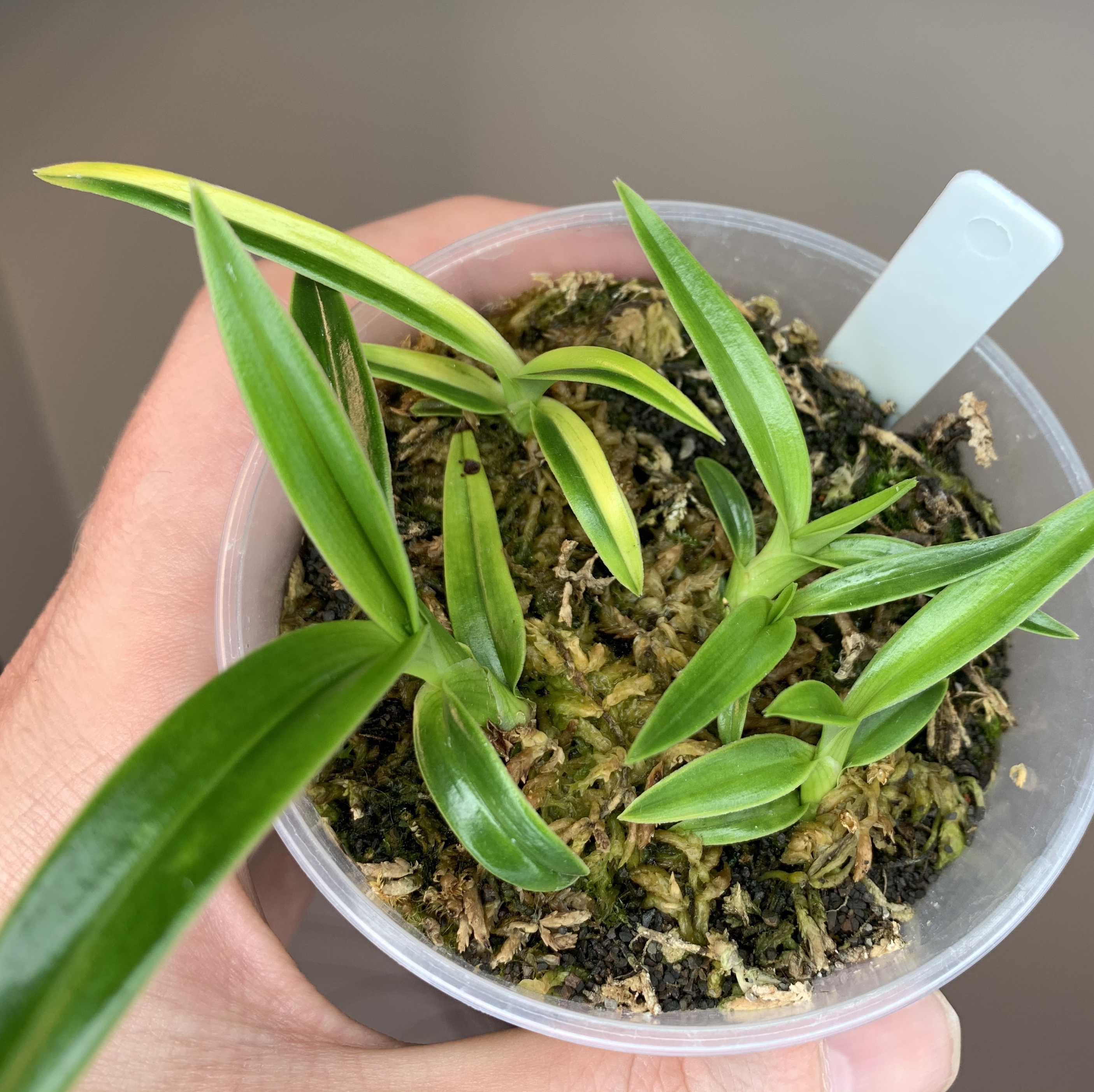
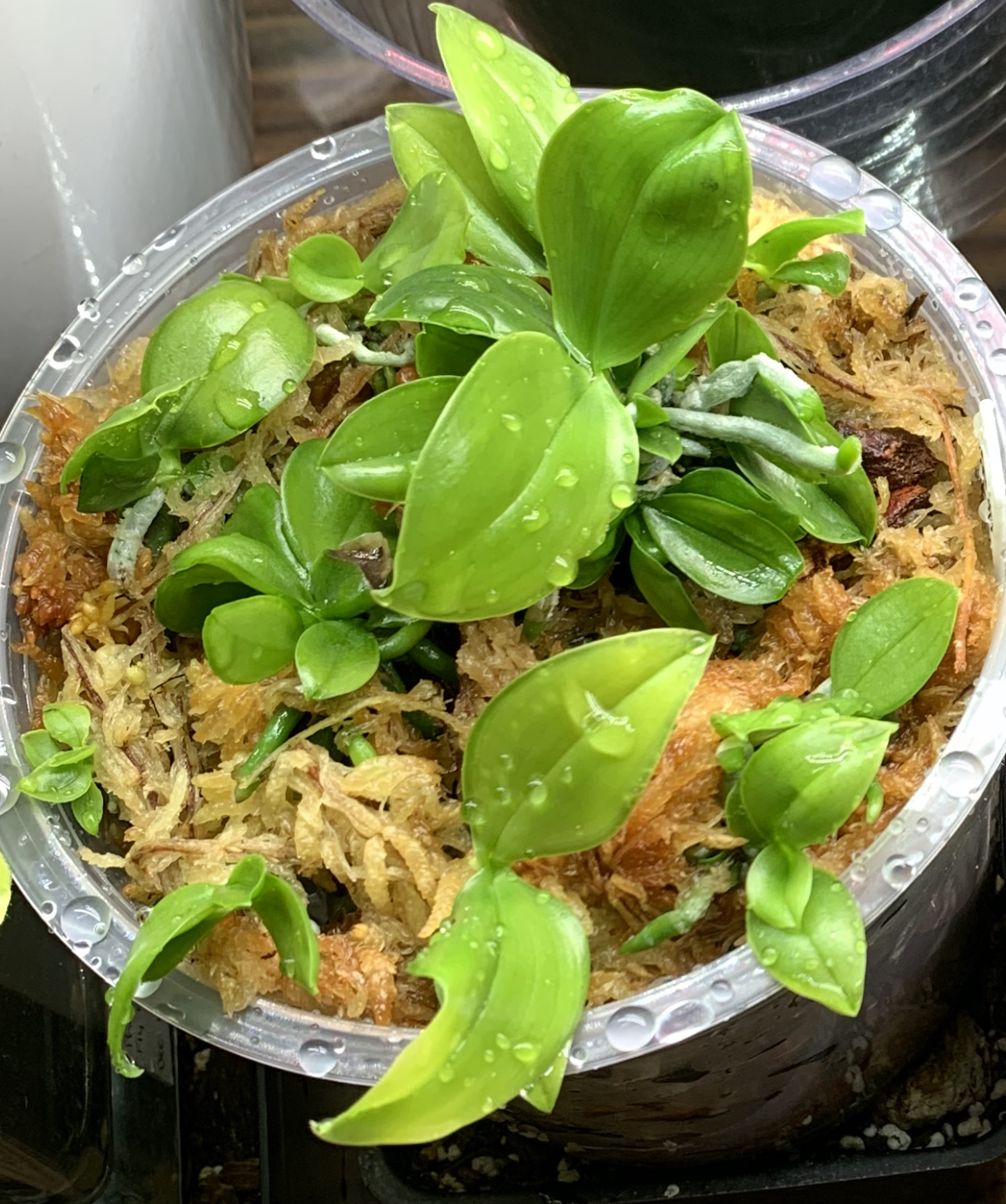
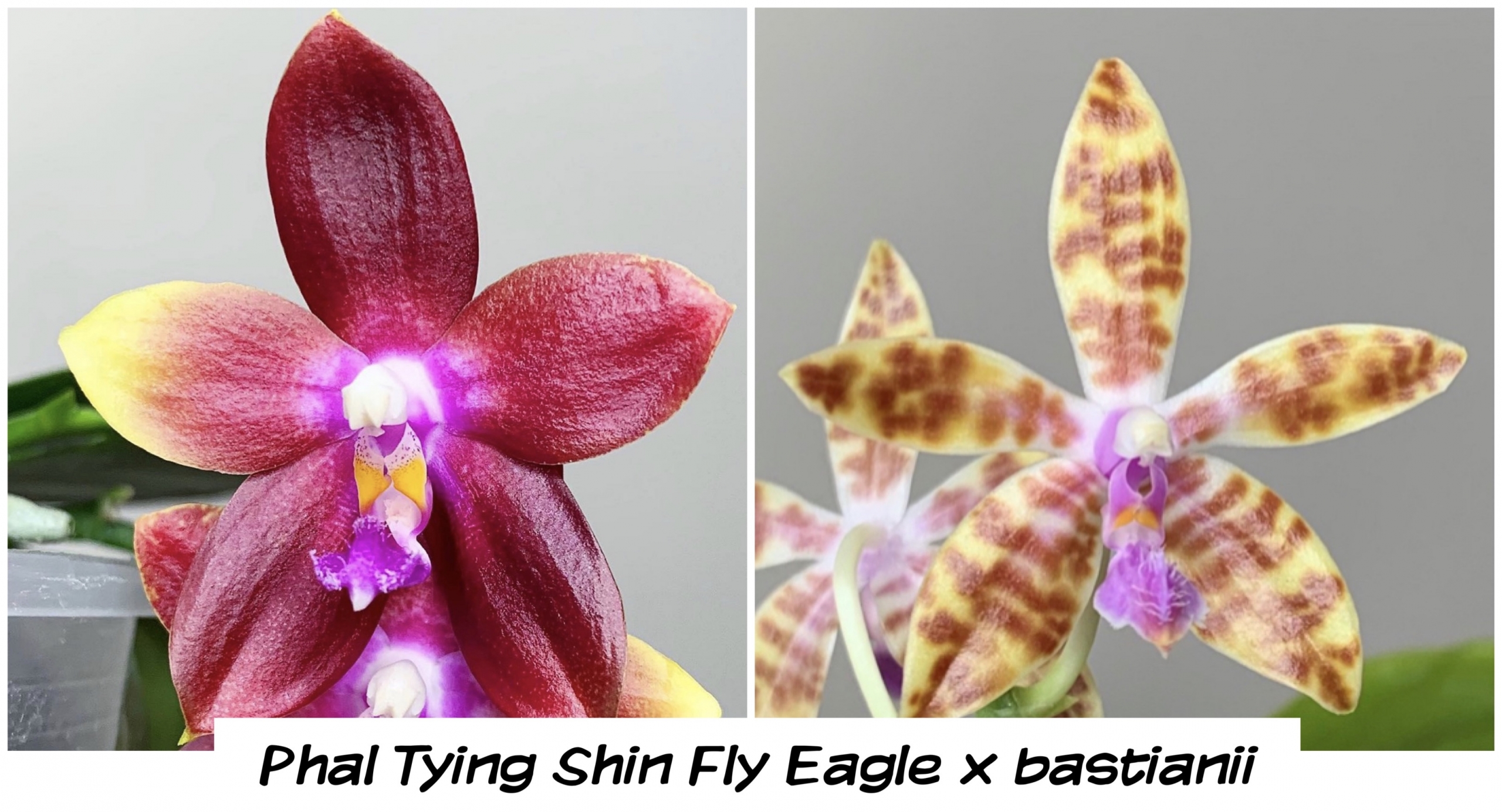
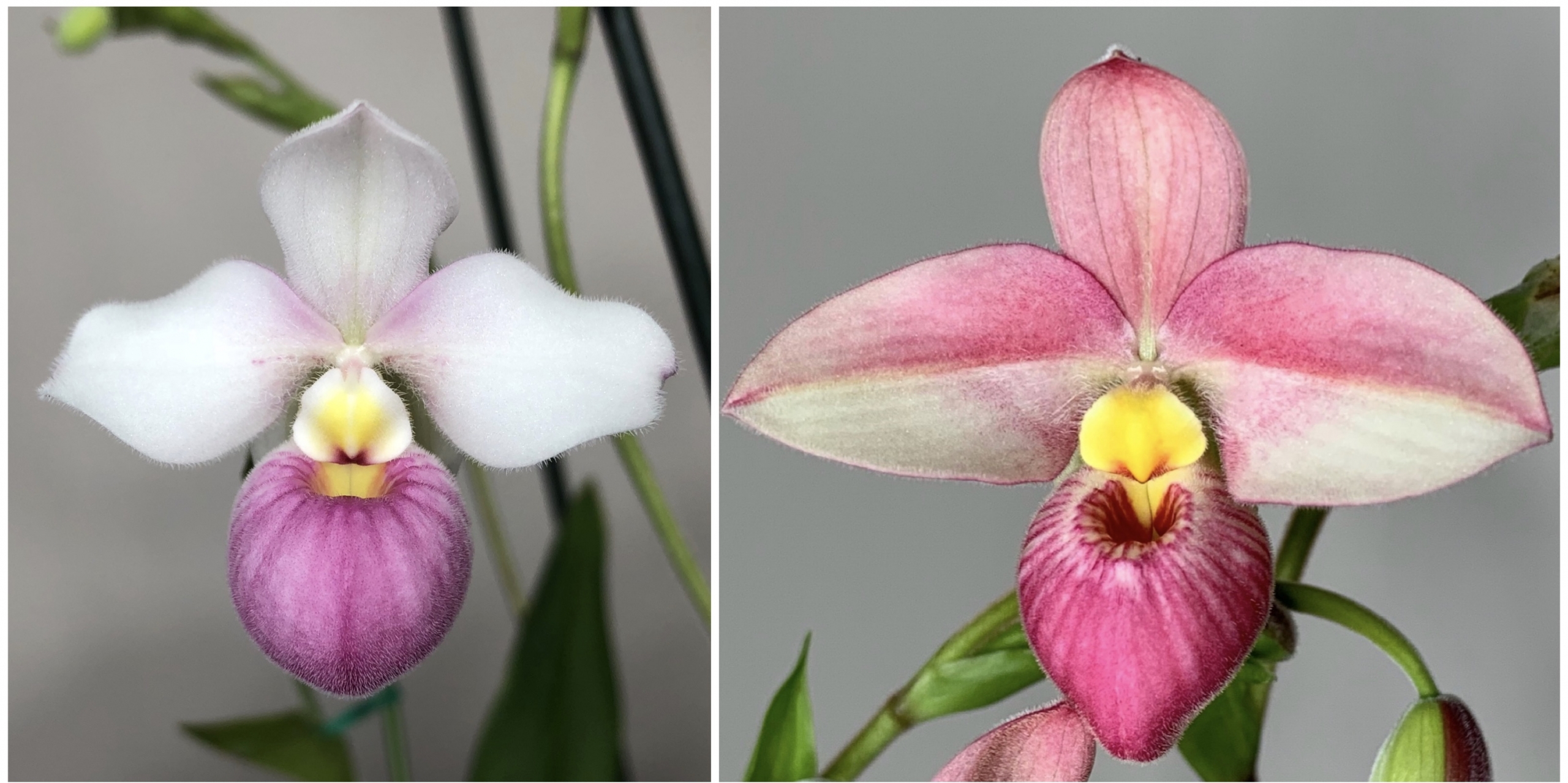
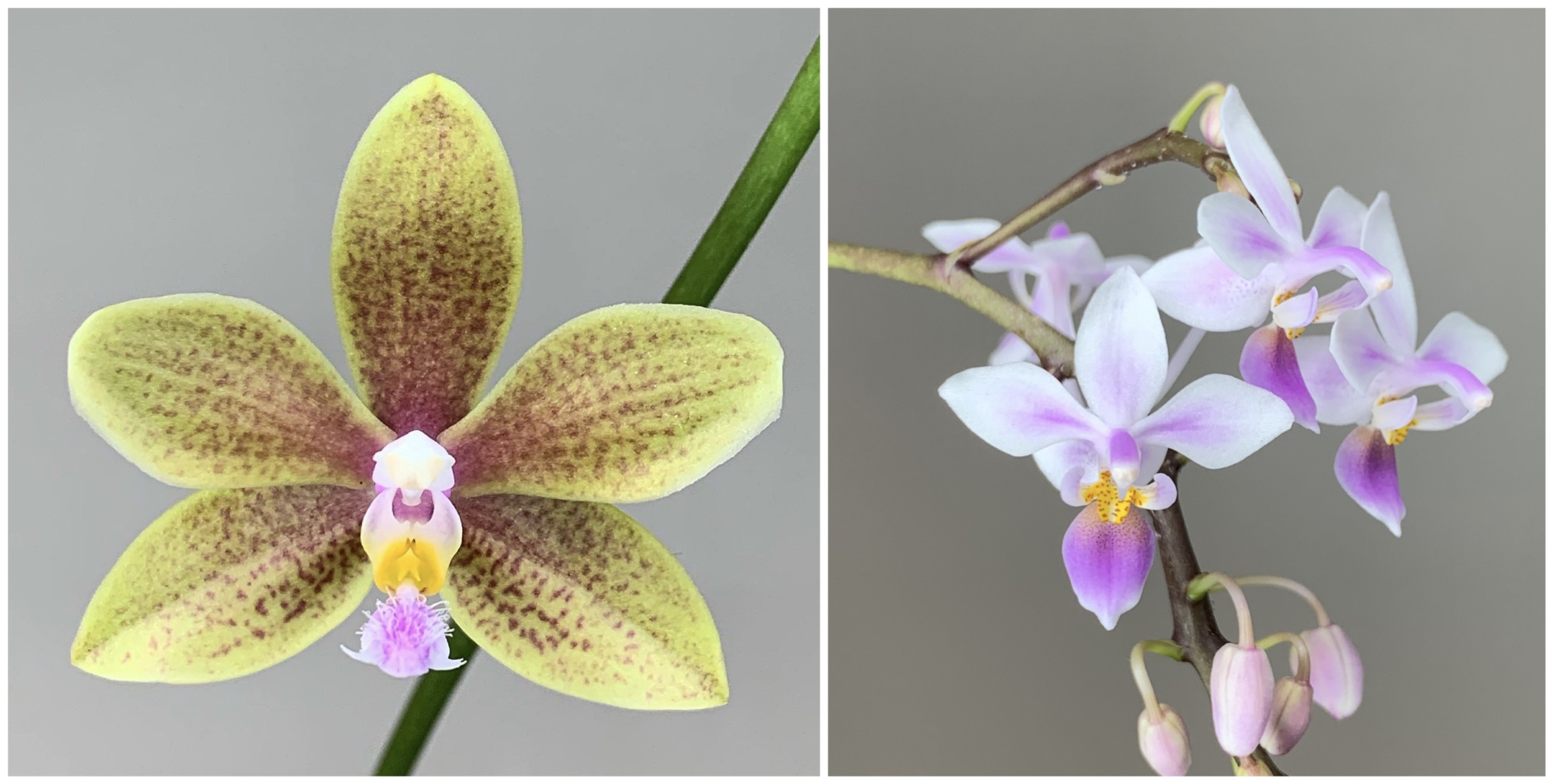
Phal Tying Shin Fly Eagle x bastianii
Pollinated: April 2, 2018
Sowed Mother Flask (dry seed): Nov 7, 2018 (7mths after pollination)
Replated #1: Jan 2, 2019
First Flower: Mar 18, 2023 (4.5 years seed to first flower)
Why This? Hypothesis – My first-ever successful cross after multiple failed attempts—this one was personal. I envisioned small, vibrant flowers with red spots on a yellow background, influenced by bastianii’s color-changing tendencies. Ideally, the tetraspis (formerly speciosa) genetics from Tying Shin Fly Eagle would introduce both random red markings and a color-fading effect over time. The floriferous nature of both parents promised a prolific bloomer, and if the flowers turned out too uniform, a sibling cross could remix the genetics further. You can track my photo journal of this hybrid, here.
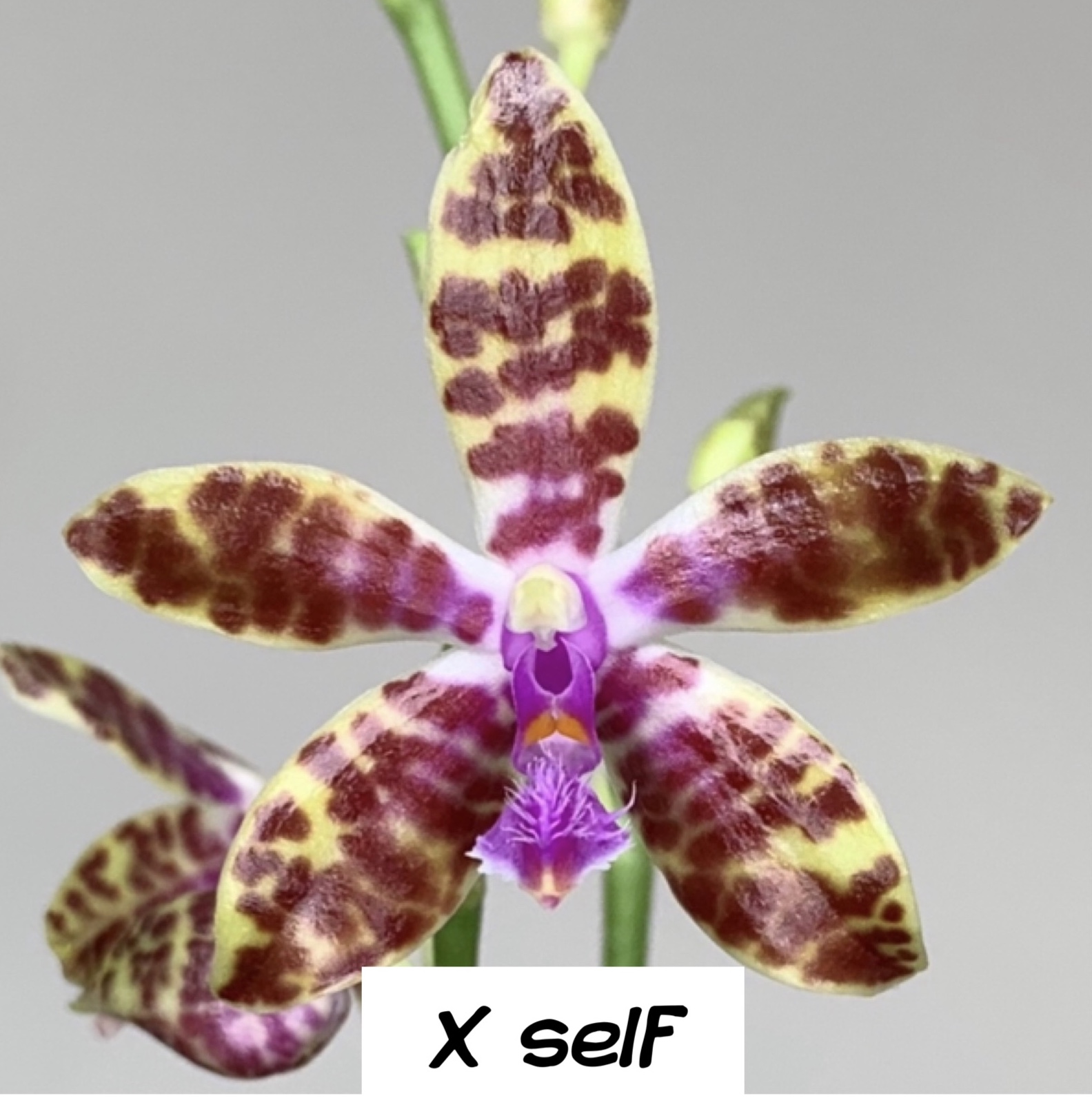
Outcome: Not the standout I hoped for. The maroon flowers have a good shape but are heavily flecked rather than clearly spotted—almost a snake-skin pattern, which isn’t my favorite. As expected, the dark color fades over time, but instead of shifting to coral-peach, it dulls into an unappealing brown. Fragrance? Let’s just say it’s a journey. On day one: latex and vanilla. By day three: something oddly reminiscent of processed cheese. Still, an improvement over TSFE’s notorious “hotdog water” scent. One redeeming trait is the yellow pigmentation—when backlit, the flower glows with hidden depth. A sibling cross might refine the spotting and better balance the tetraspis influence, but I’m undecided if this one is worth another five years of linebreeding.
Photos
|
 |
|
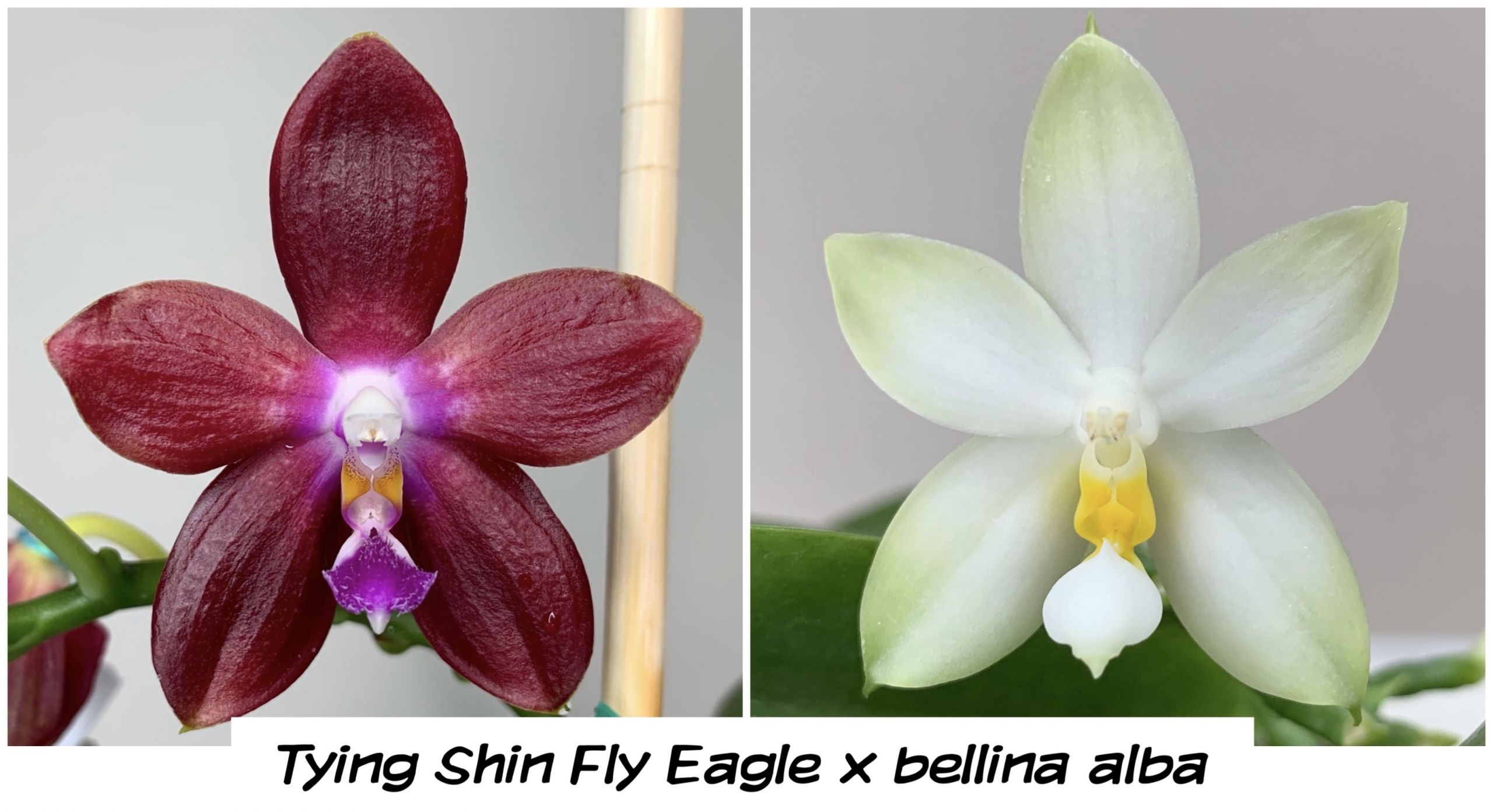
Phal Tying Shin Fly Eagle x bellina fma alba
Pollinated: May 5, 2018
Sowed (dry seed): Dec, 19, 2018 (7mths)
Why This? Hypothesis – This pairing promised strong shape and vigor, combining the floriferous nature of both my Tying Shin Fly Eagle and bellina fma. The alba parent could either mute TSFE’s reds to softer pinks or yellows. An alba expression combined with the pigment saturation of Tying Shin Fly Eagle could produce green flowers, which I would love. Fragrance was another major draw—both parents are intensely scented, so I expected the offspring to inherit a bold perfume, possibly a mix of goat cheese, spice and citrus. Not exactly a classic floral scent, but certainly unique. At the very least, I anticipated a well-formed, highly fragrant, and visually striking bloom..
|
Best outcome of this cross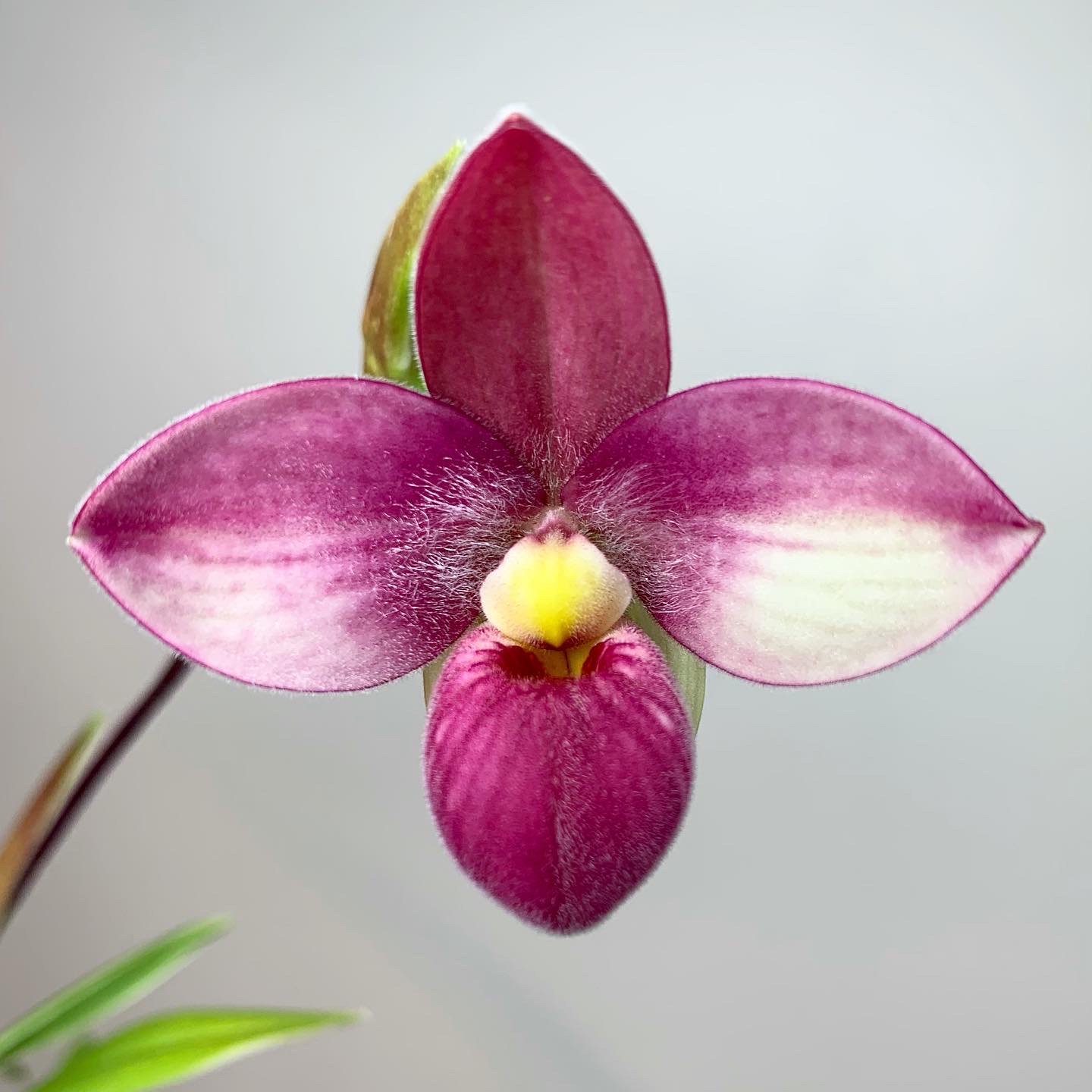
|
|
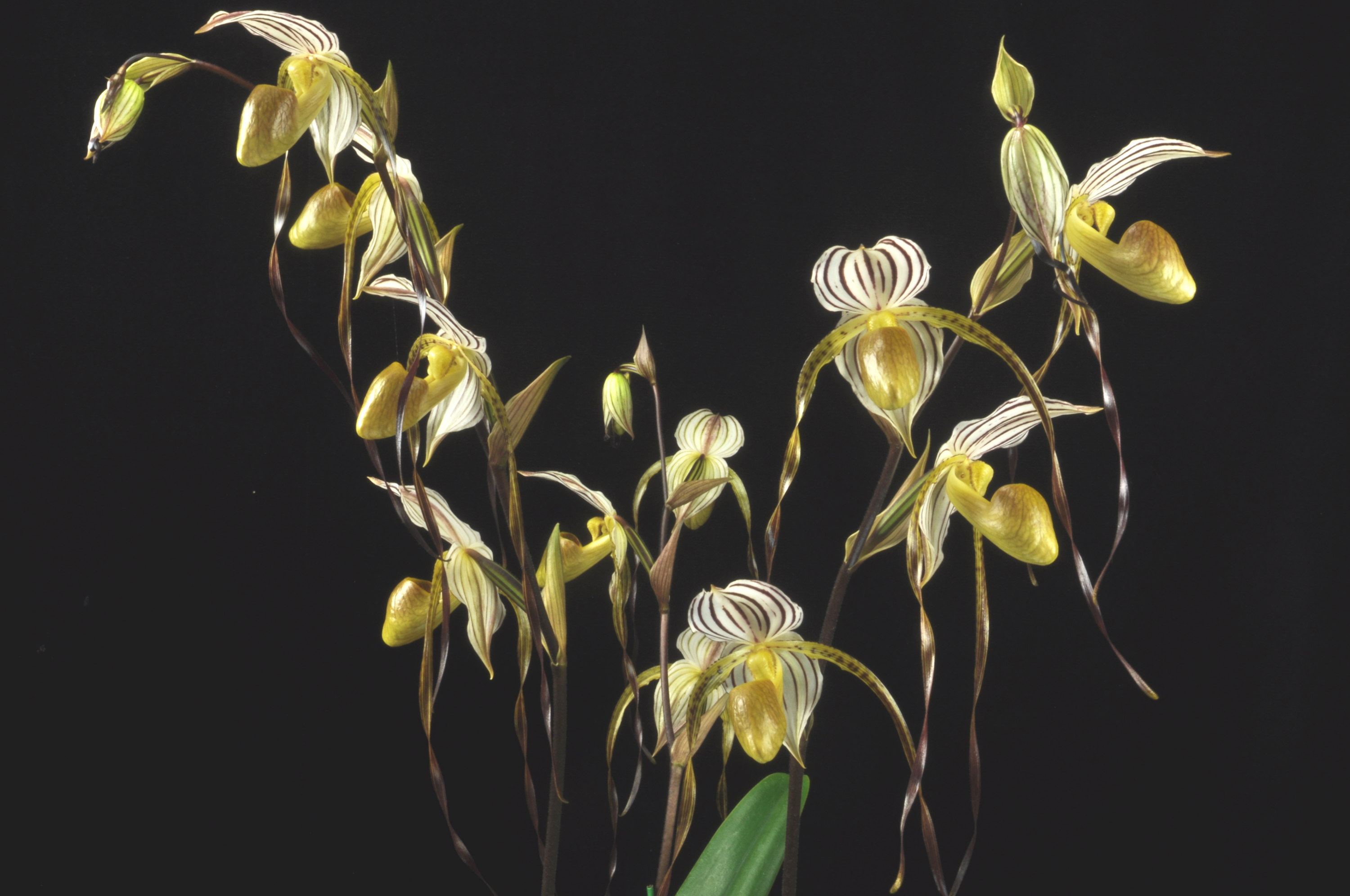
Phragmipedium Memoria Frank Louwe
(Pink Panther x Hanne Popow)
Pollinated: Nov 22, 2018
Sowed (dry seed): February 26, 2019 (3mths)
First Flower: Aug 17, 2020 (1.5 years seed to first flower)
Why This? Hypothesis – My first phrag flasking and hybrid, making it a special project. Pink Panther’s compact, vigorous growth and Hanne Popow’s raspberry-scented blooms (thanks to schlimii influence) seemed like an ideal match. I expected pink flowers resembling schlimii but with a richer tone, and I hoped the fragrance would carry forward, given both parents are primary schlimii hybrids.
Outcome: These plants proved exceptionally fast-growing—one bloomed at 18 months, with another spiking shortly after. The first flower blended both parents beautifully: Pink Panther’s color stretched across a Hanne Popow-like shape. Fragrance? Maybe. I think I detect a hint, but it could just be wishful thinking. Either way, the hybrid lived up to its promise of vigor and beauty.
More about this plant: Registering my first orchid name
Photos (incl second bloom)
|
Outcome of this grex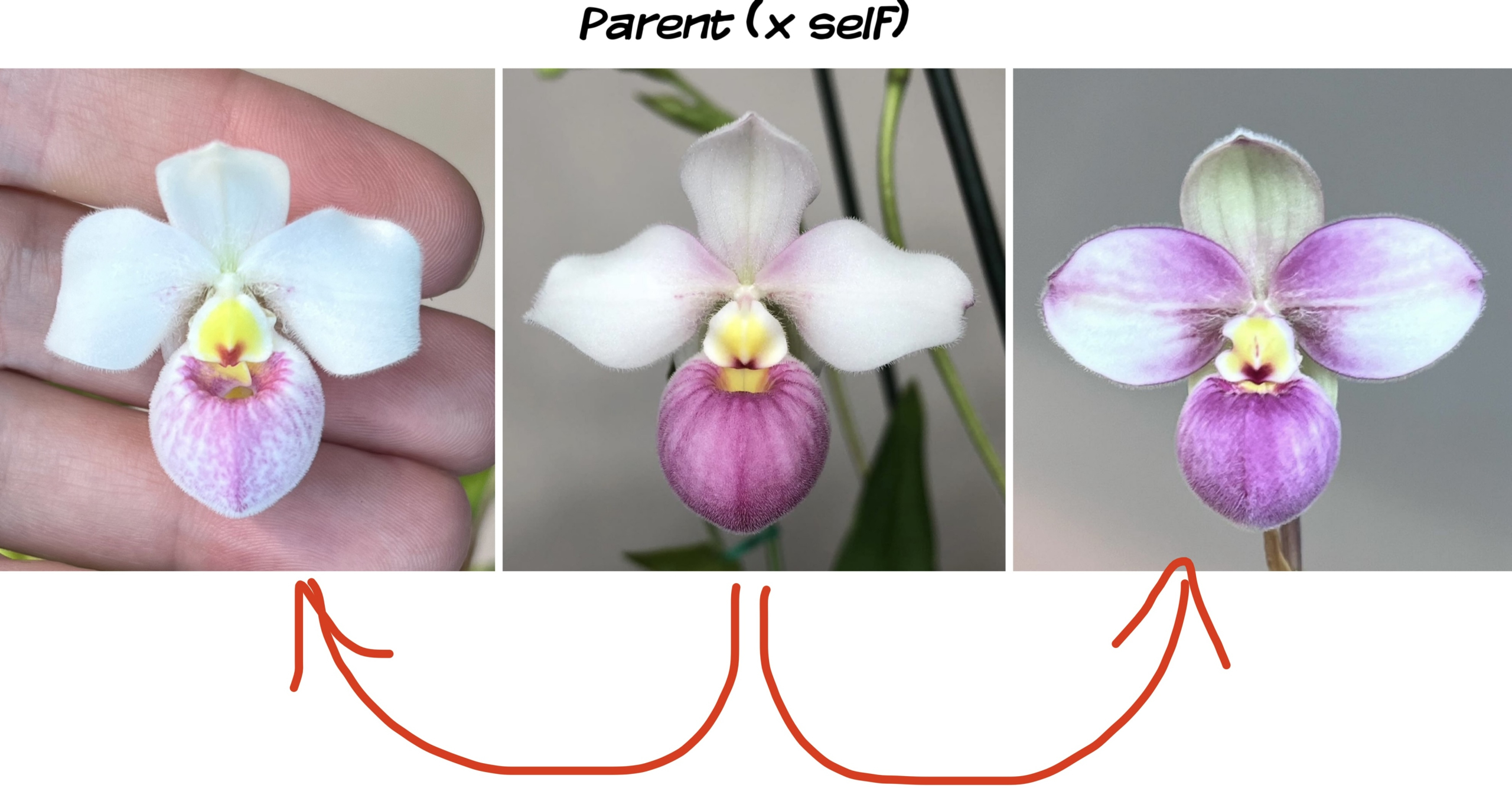
|
|
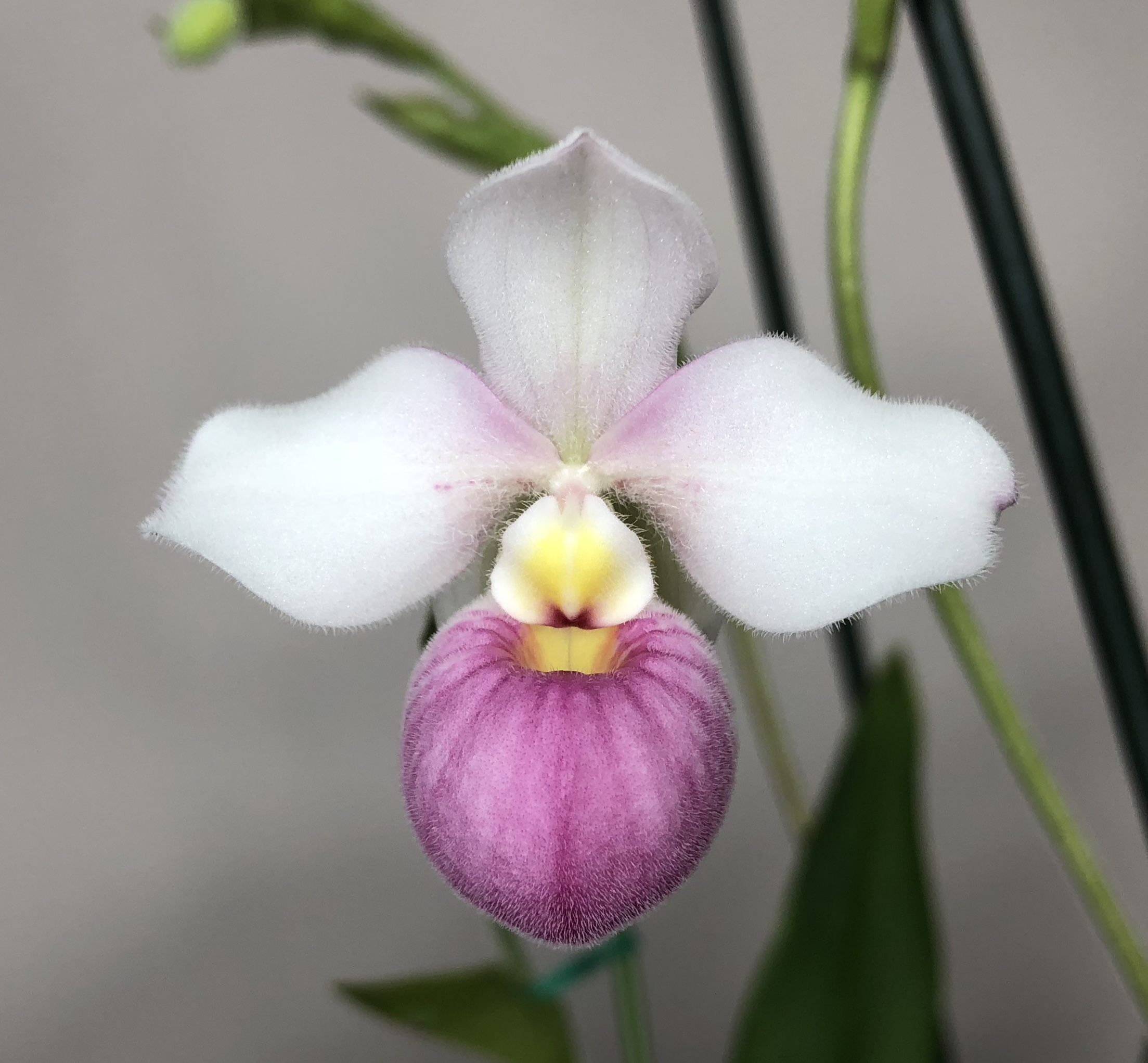
Phrag Pink Panther x self
(schlimii x fischeri)
Pollinated: Nov 22, 2018
Sowed (dry seed): February 26, 2019 (3mths)
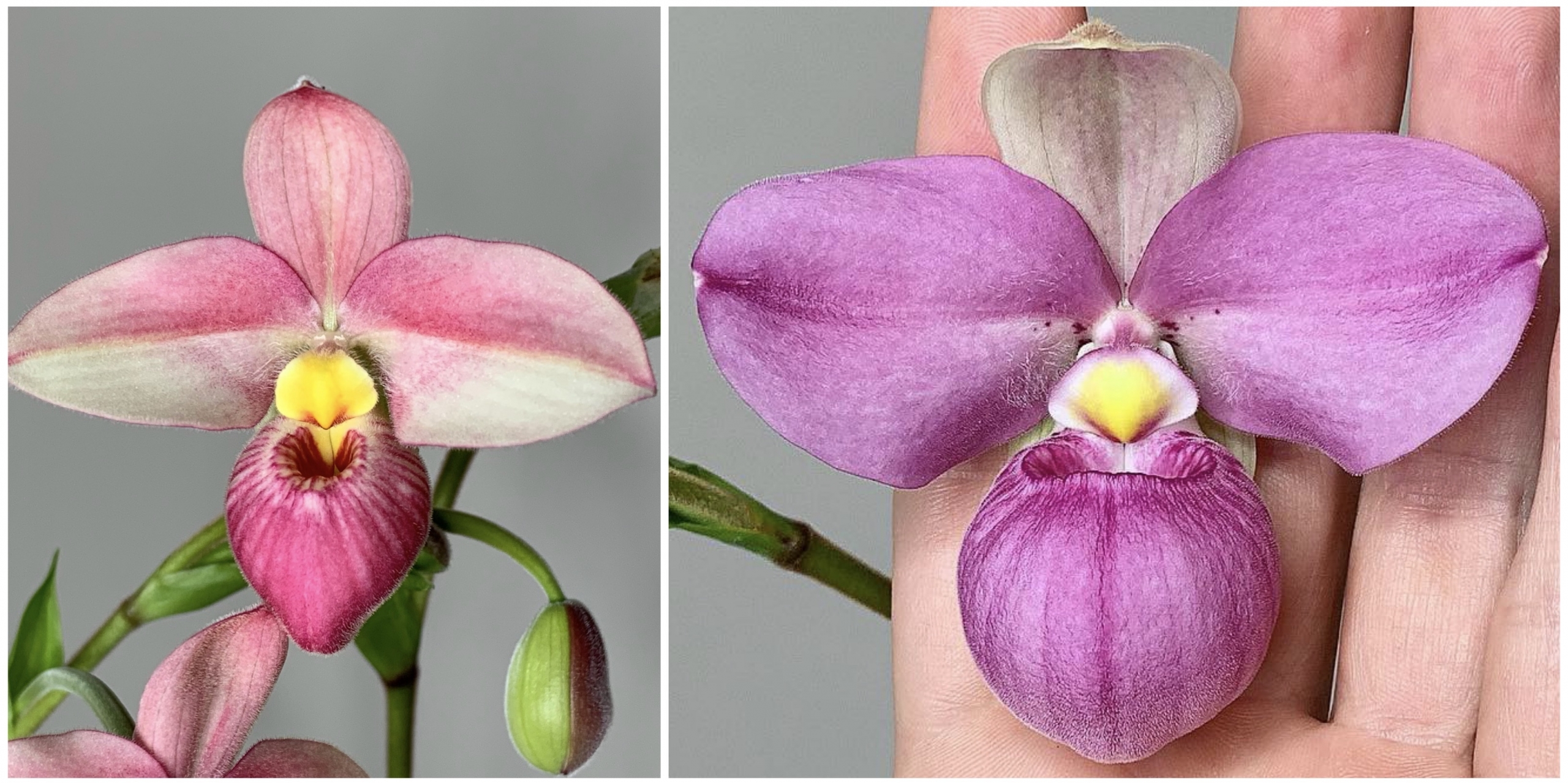
Why This? Hypothesis – I’ve always been curious about the results of selfing a primary hybrid—would non-dominant traits realign and shuffle, creating seedlings with wildly different appearances? This method also serves as a species vs. hybrid test: if the offspring are consistent, the parent was likely a species; if they vary widely, it confirms hybrid ancestry.
The irony? Taxonomy shifts mean fischeri is now being folded into schlimii, so technically, this is just a selfing of schlimii.
Outcomes: Surprisingly diverse results. Some seedlings leaned pink, others white. One had a flatter form than the parent, while another was so reflexed that its petals curled inward. The range of variation made this an interesting experiment—confirming that even with a seemingly simple selfing, unexpected traits can emerge..
|
 |
|
Phrag L’ Rock
(Hanne Popow x Sam Crothers)
Pollinated: Jan 1, 2019
Sow (dry seed): Mar 26, 2019 (3mths)
Deflask: Jan 1, 2020
Why This? Hypothesis – I expected mostly round, pink flowers, but with besseae and kovachii in the lineage, there was potential for deeper, richer colors. With both parents being primary hybrids, I anticipated significant variation as traits from besseae, schlimii, kovachii, and fischeri reshuffled.
Outcomes: A great case study in genetic dominance. Some hybridizers debate whether the mother plant influences the outcome of the progeny’s flower more due to mitochondrial DNA (which is fully inherited from the mother plant)—but that doesn’t shape blooms. This cross really illustrates that point: the pollen parent completely dominated. None of the flowers resemble the mother (Hanne Popow); instead, they’re large, round, and chunky like Sam Crothers…some even look like clones of the parent plant which was surprising to me. The mother did contribute subtle influence on some of the progeny, though: bicolor petal treatments, a strong raspberry fragrance, and besseae-like stolons—about half the plants send out runners like a spider plant, “jumping” out of their pots (an annoying trait…to be honest). And yes, the name Phrag L’ Rock is a pun—because who doesn’t love Fraggle Rock?
Photos
|
 |
|
Phal pallens x self
Pollinated: Jan 18, 2019
Sowed (dry seed): June 9, 2019
Replate: Oct 14, 2020
Deflasked: May 10, 2020
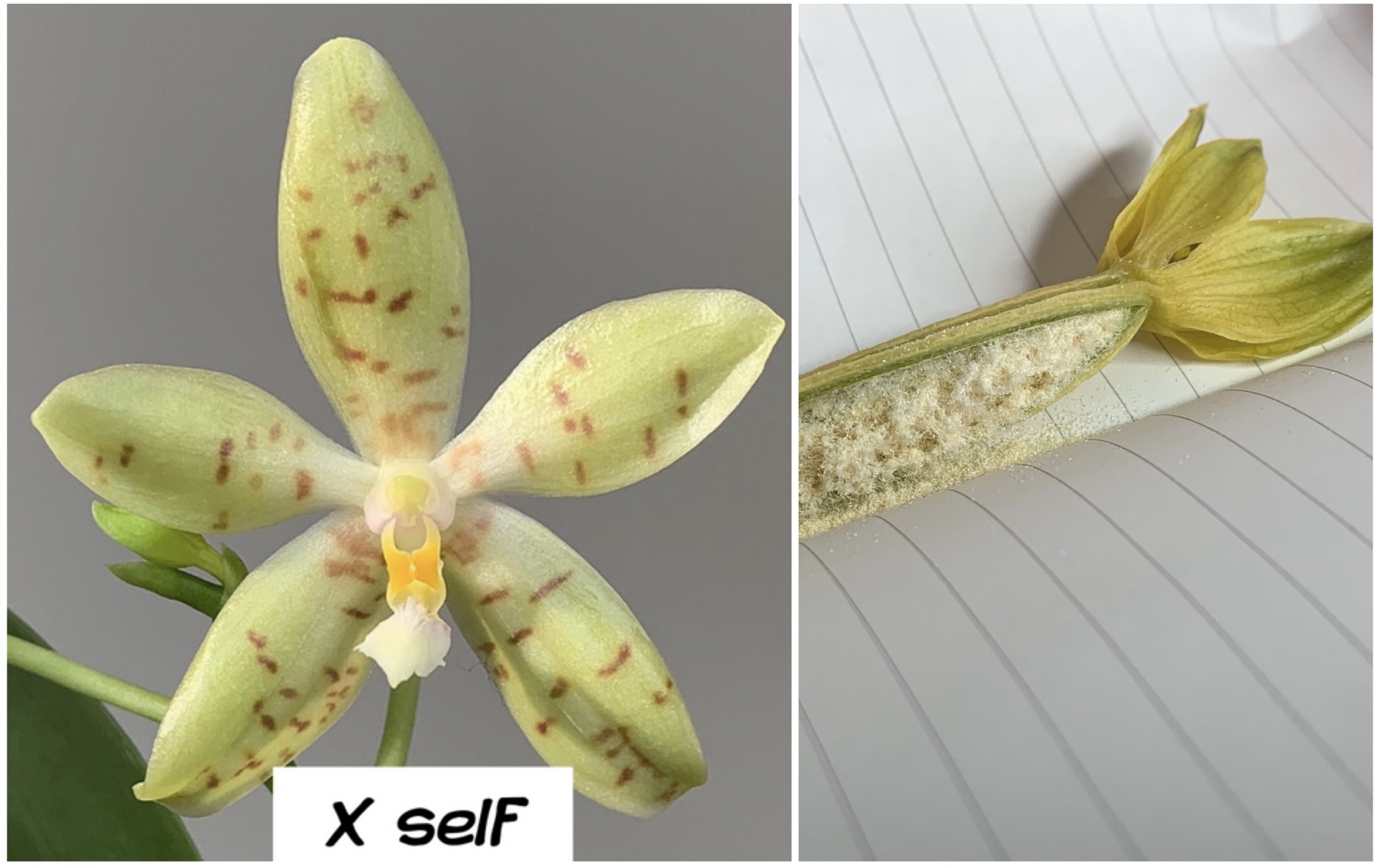
Why This? Hypothesis – Phal pallens is a fascinating miniature species from the Philippines, and I expected its selfing to produce near-identical offspring—pale yellow blooms with brown flecks. This was more of a test flasking than a hybridization experiment; I was struggling to get seed pods to hold but still wanted to learn the process. This pod became the subject of a series of orchid breeding tutorial videos:
Video 1: Sowing Dry Orchid Seeds
Video 2: Update / Germination
Video 3: Orchid Seedling Replate
Video 4: Phalaenopsis Seedling Deflask
Outcome: A complete surprise—I got alba flowers! Two plants have bloomed so far, both alba, which wasn’t at all what I expected. Initially, I thought the two might be clones from a single protocorm (because 2 albas in a flock seem abnormal), but side by side, the differences are clear: one has smaller petals, the other has better form and a slightly yellow lip. This likely means my mother plant was alba × typical form, and in theory, about half the seedlings should bloom in the normal color form. If that holds, I’m looking forward to seeing the more typical pallens blooms—possibly with even darker spotting than the mother. Or at least 25% should, if you’re following basic Mendelian genetics.
Photos
|
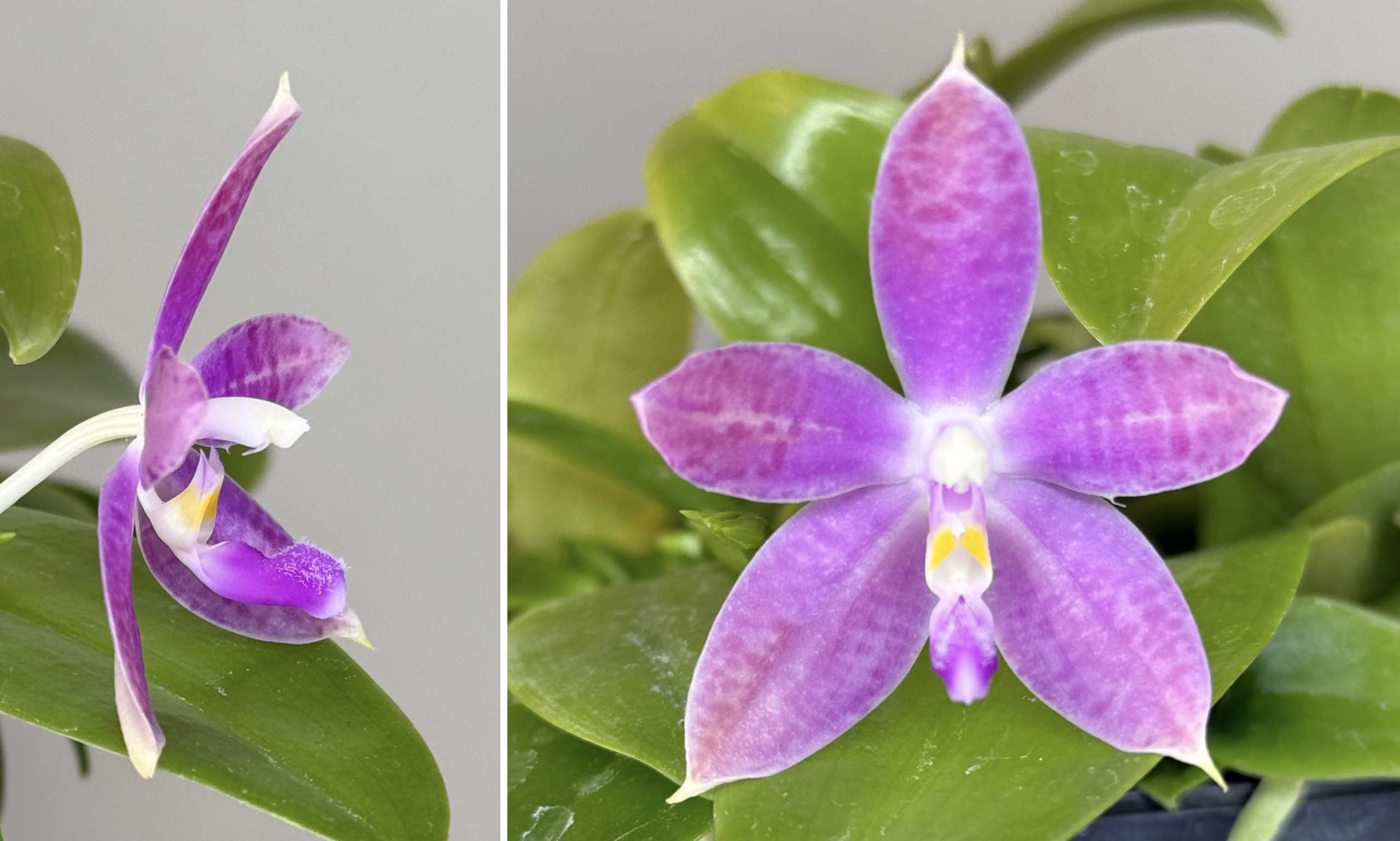
First outcome of this cross: Phal Bulous ‘Supernova’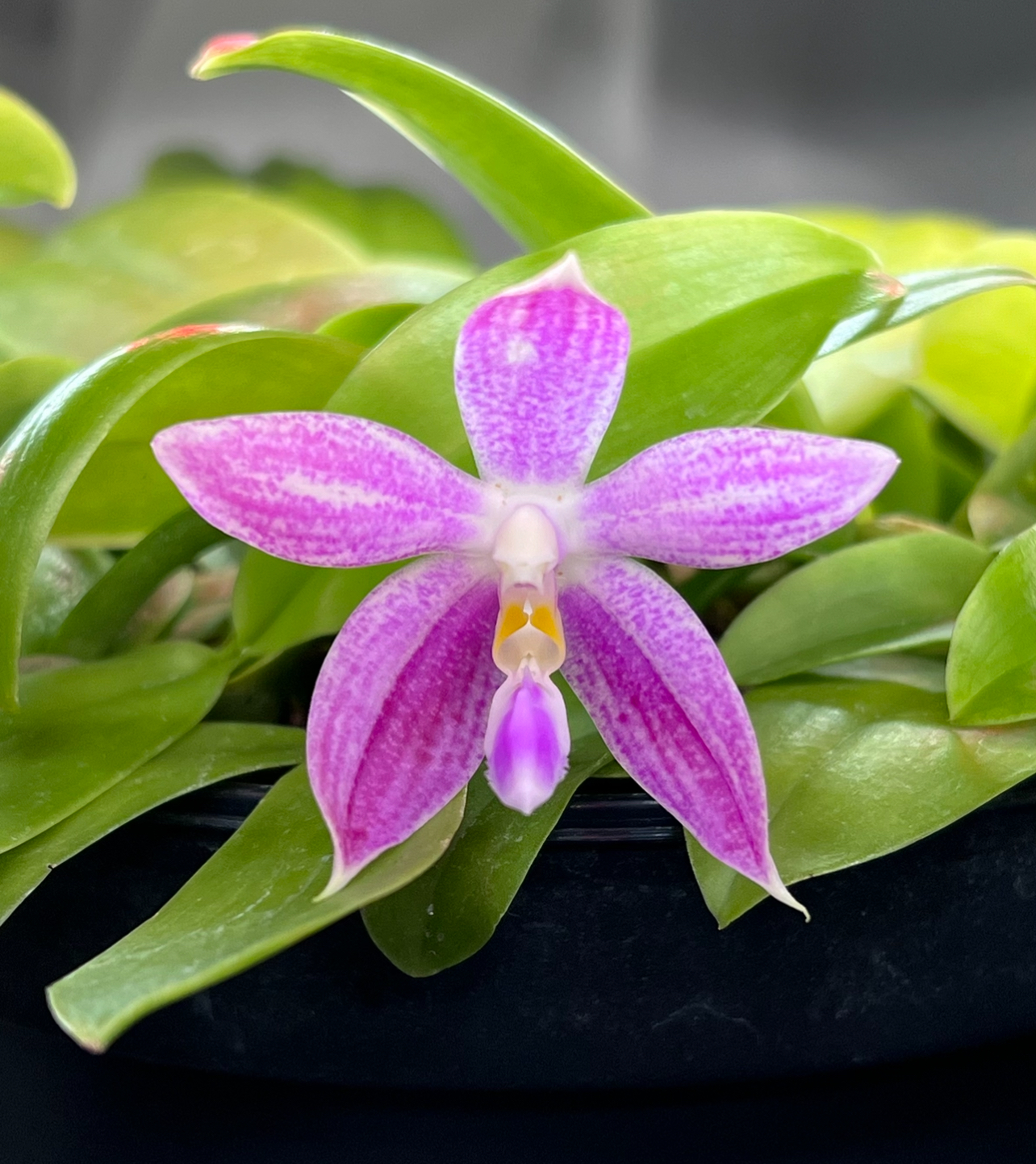
Second outcome of this cross: Phal Bulous ‘Tiger Shark’
|
|
Phal Bulous
(Li Sun High [mariae f. flava x tetraspis f. alba] x Jennifer Palermo [tetraspis f. alba x violacea f. indigo])
Pollinated: Dec 14, 2018
Sowed (dry seed): July 22, 2019
Replate #1: Sept 24, 2019
Why This? Hypothesis – With double tetraspis alba ancestry from both parents, I expected 25–50% of the progeny to be fully white. Initially, I dreamed of all sorts of bold possibilities from the flava × indigo (coerulea) mix—until research revealed that flava × coerulea often just results in red flowers. So, the non-white seedlings would likely be standard pink-to-maroon, similar to Phal Violet Charm.
Best case? White flowers with striking purple spots or pastel lavender tones. Form-wise, I anticipated cupped blooms—Li Sun High, mariae, and tetraspis alba all tend toward that shape, and with ~25% violacea in the mix, flat flowers were unlikely. This hybrid should also be a prolific bloomer, inheriting high flower count from mariae and the ever-blooming nature of tetraspis.
A personal motivation—I lost Li Sun High since making this cross, so I hoped to replace her with a seedling that had even better color and form.
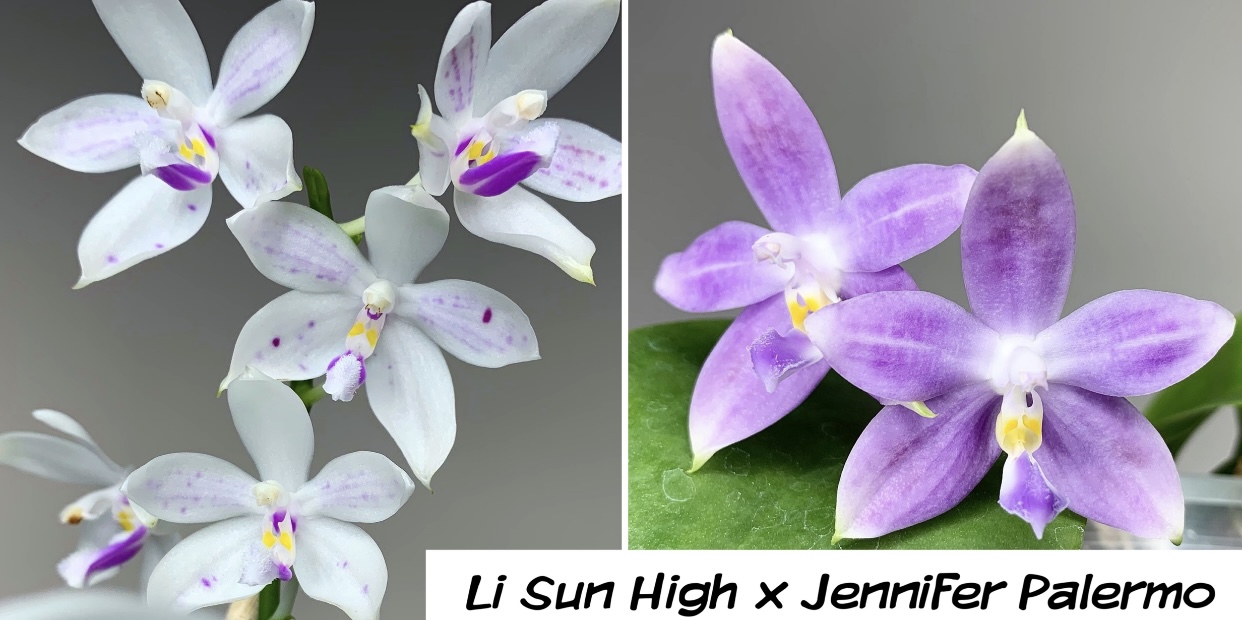
Outcome: The first bloom was a surprise: not solid white—but pink and highly spotted, with white or pink dots bursting from the center—far more pigment than I expected. A second sibling had better form (though still imperfect), with larger blotches—a pink flower with slightly darker pink spots. Oddly, the white “speed stripes” from Jennifer Palermo appeared on both, hinting at unexpected dominance. Feature or failure? Hard to say, but I’m eager to see what the next siblings bring.
Photos
 |
 |
|
|
 |
|
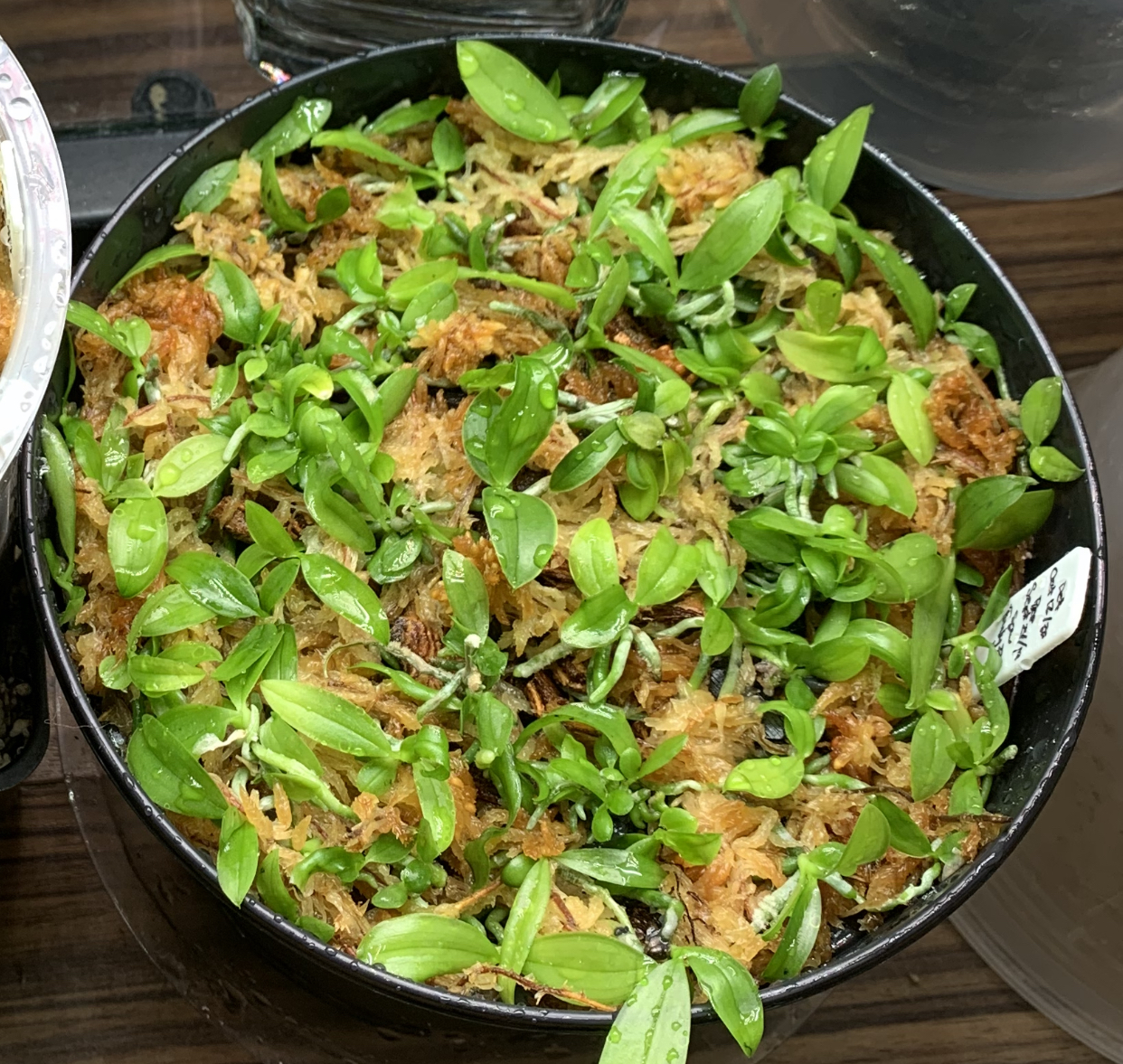
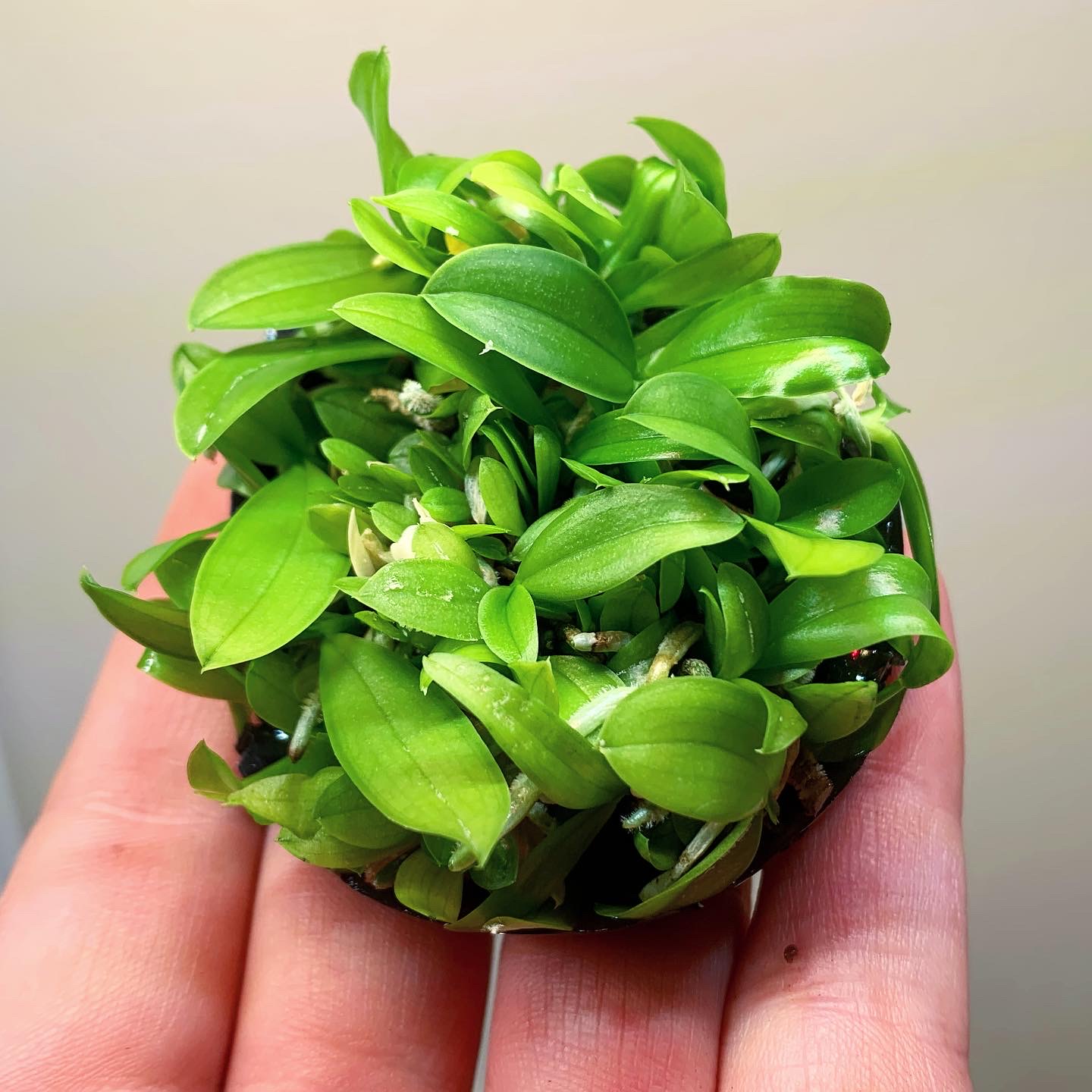
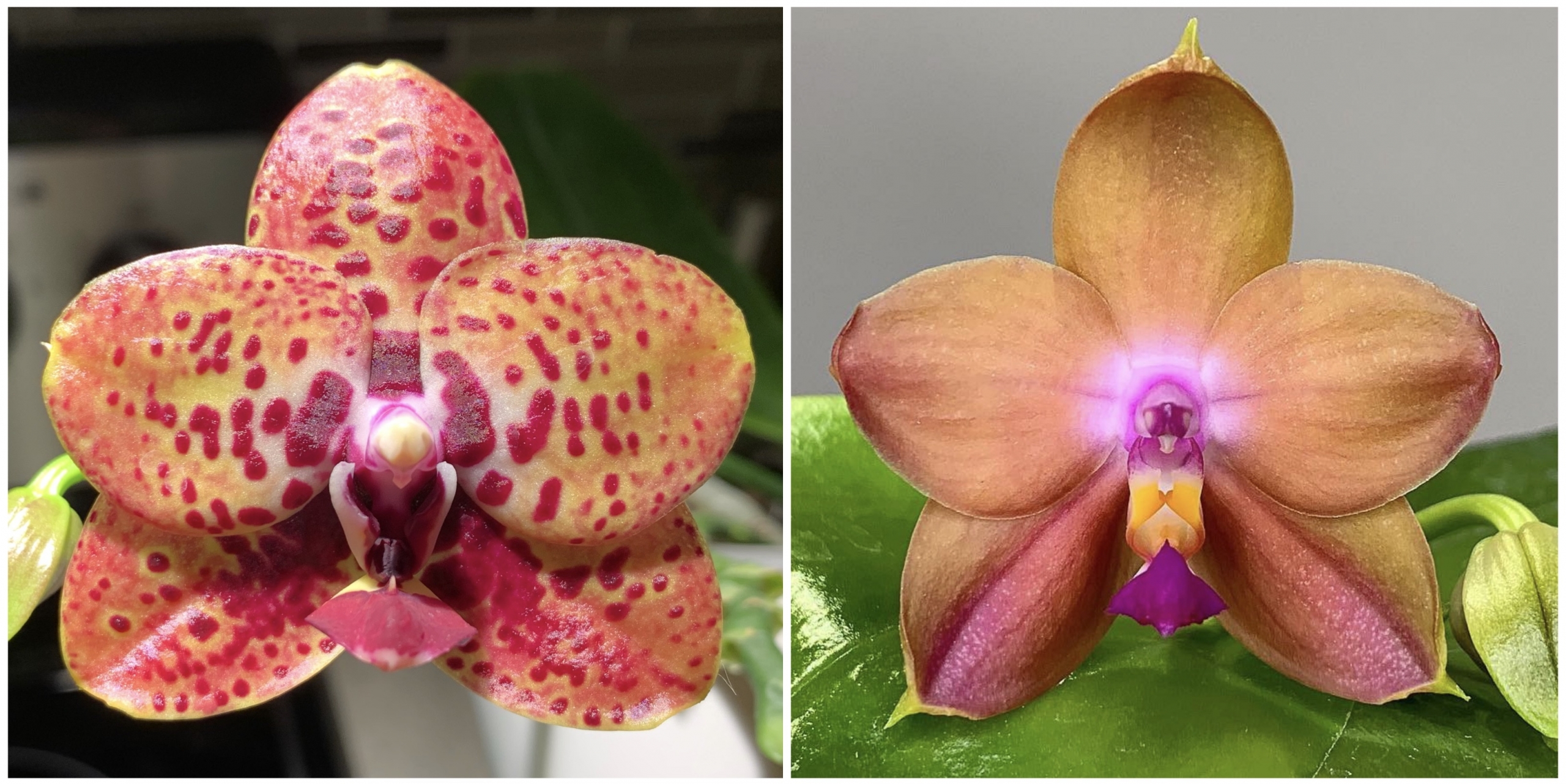
Phal bastianii x self
Pollinated: Apr 19, 2019
Sow (green pod): Mar 3, 2020 (11mths)
Why This? – I wanted to confirm that my bastianii is a species. Selfing it and flowering the progeny can help verify that. Plus, it’s a great plant – flowers like crazy – so it’s good to have a couple extra around.
Want to know more about this species? Read this
Photos
|
First to flower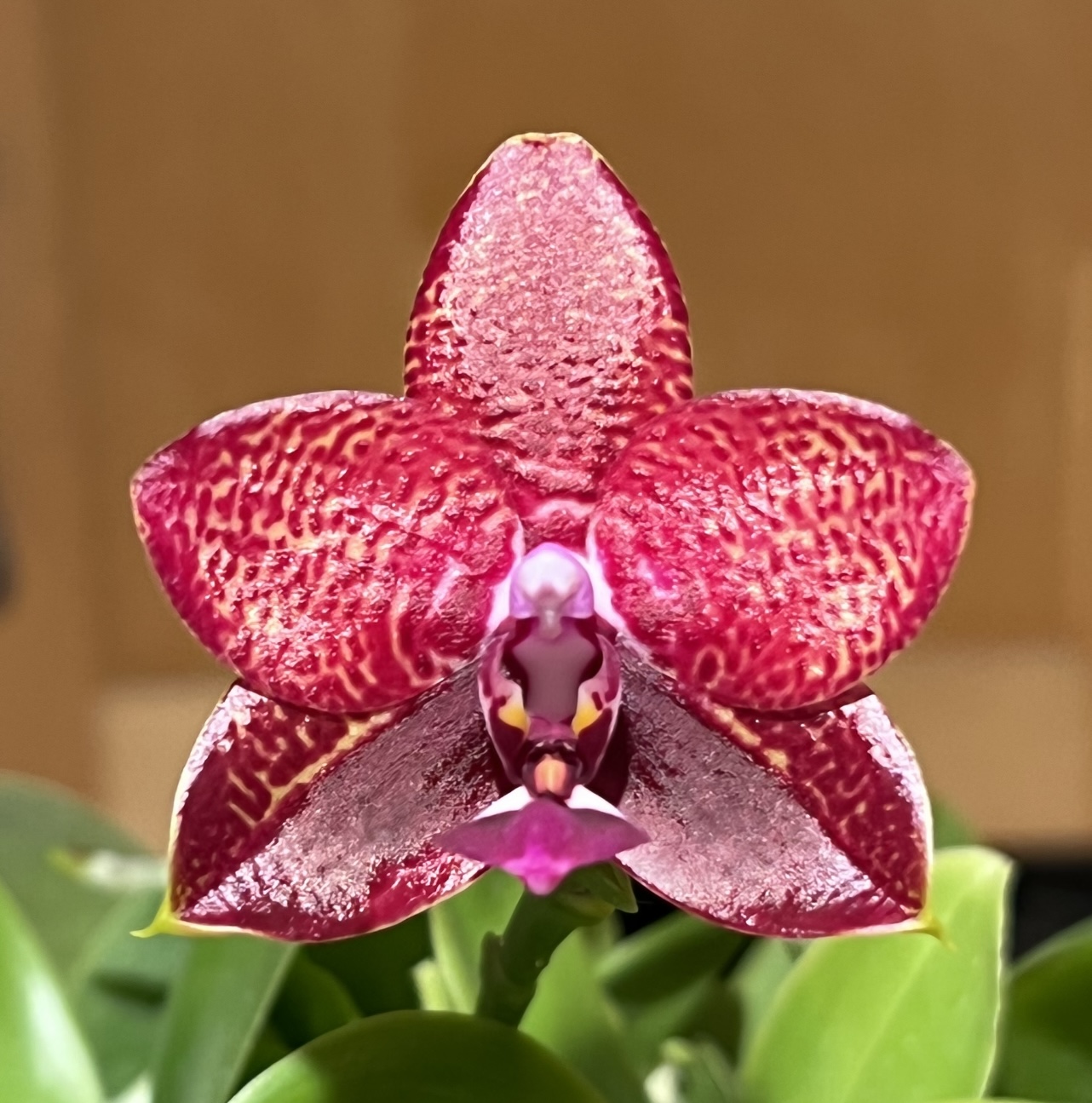
|
|
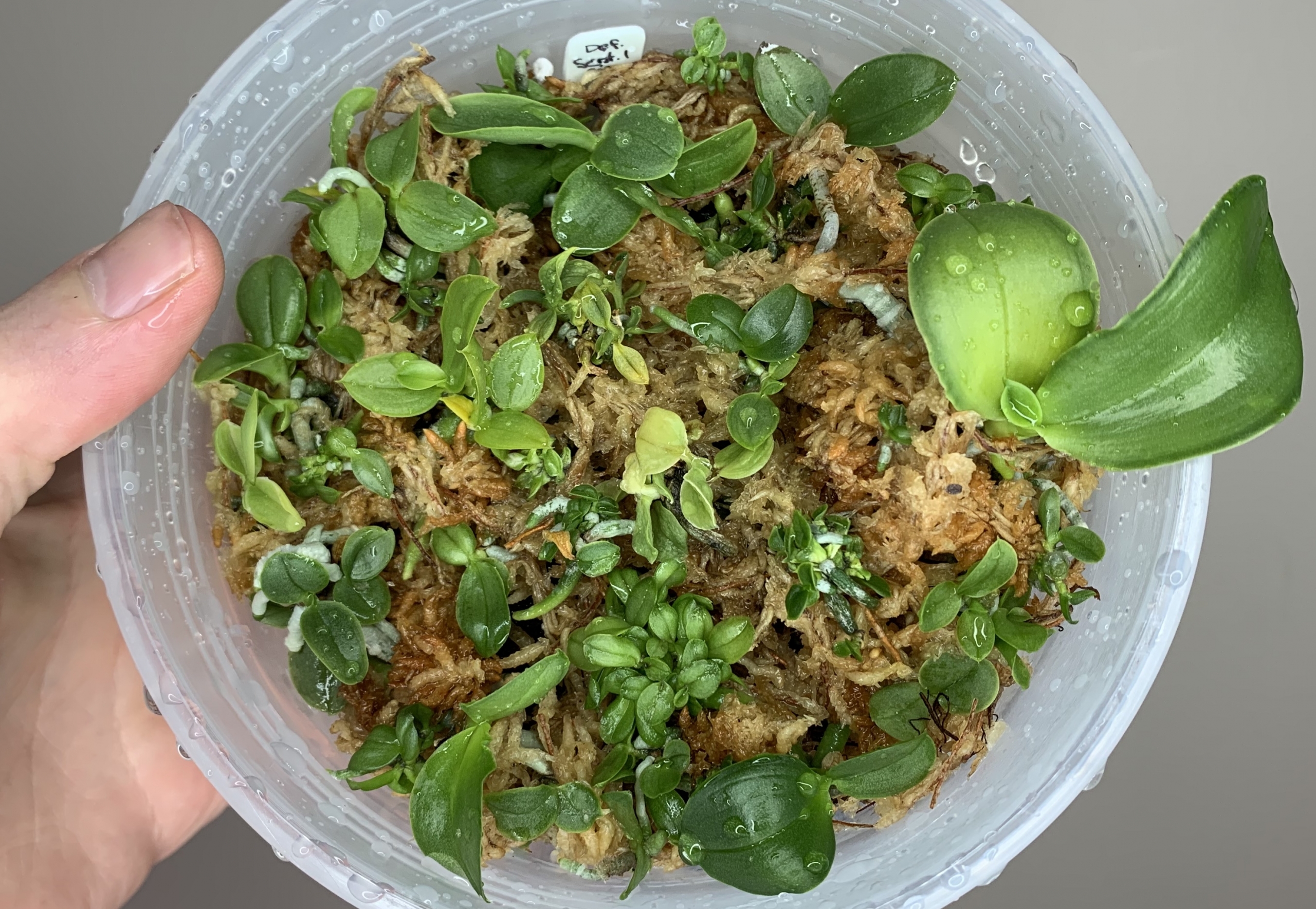
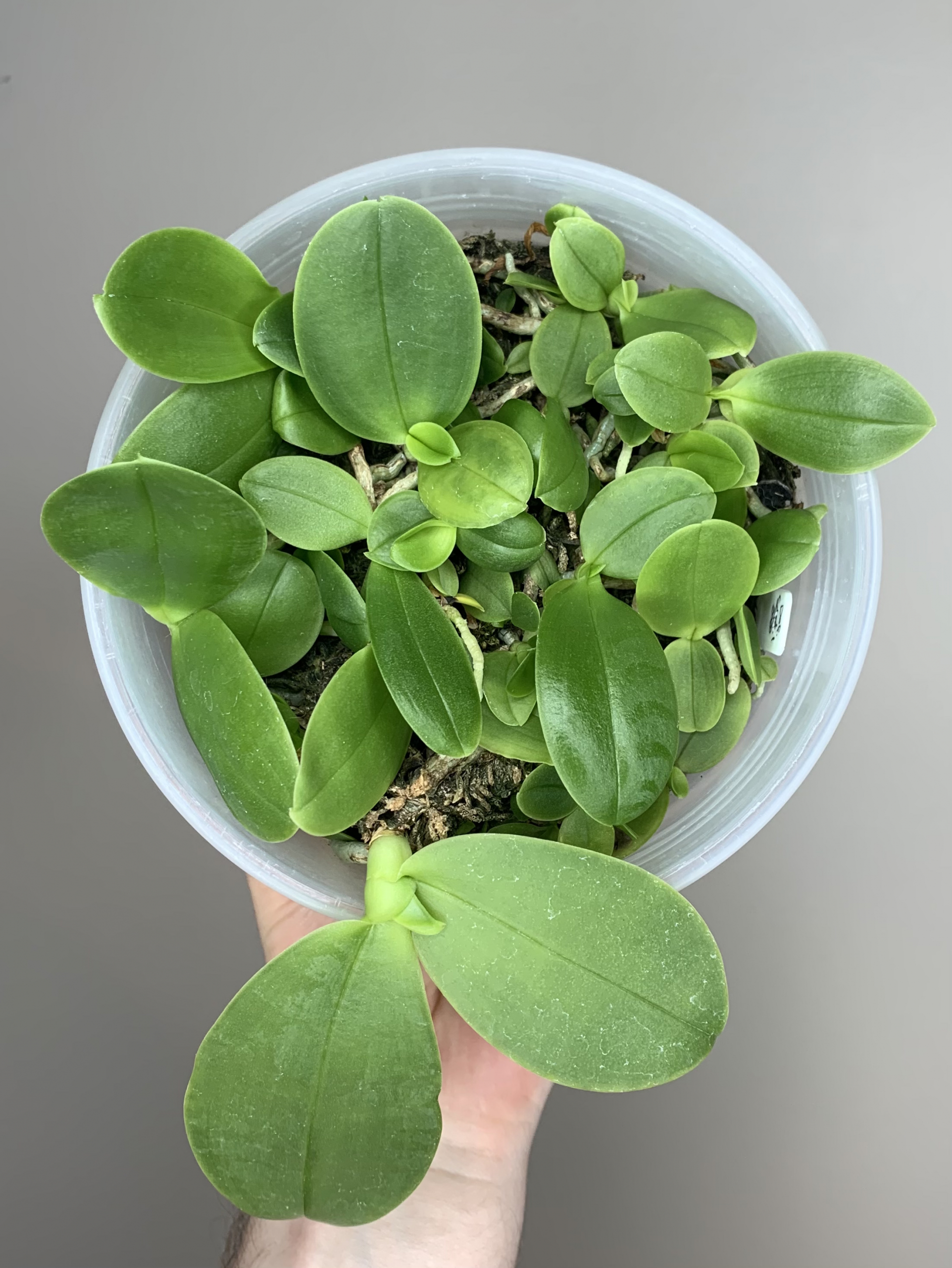
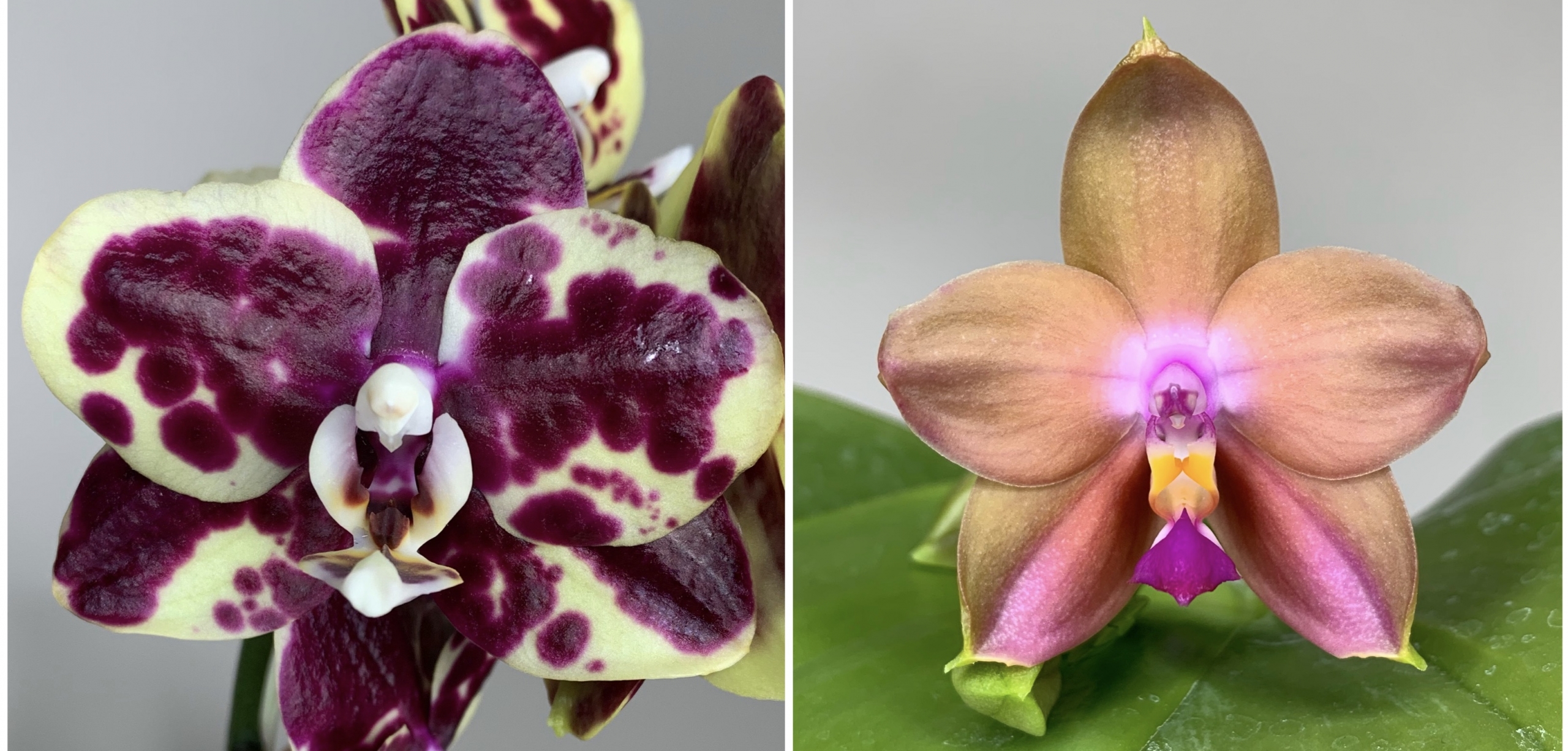
Phalaenopsis Entourage
(Zheng Min Anaconda ‘Peter’ x Matthew Chen [violacea H.P. Norton indigo x Penang Girl])
Sowed (dry seed): Oct 16, 2019
Replated: Mar 3, 2020
Deflasked: Sept 1, 2020
First flower: Sept 19, 2022 (3 years seed to flower)
Why This? Expected Outcomes – I was obsessed with Zheng Min Anaconda when I first got back into orchids—this plant is one of the reasons I started breeding orchids. It’s a wonderful looking harlequin (spotted) flower with lots of variation across the hybrid and it’s orange which is rare in the phal genus. My hope is for strongly fragrant orange flowers that have lots of pigment. Matthew Chen is made with indigo violacea and many of the siblings of my plant had incredibly deep red or magenta flowers; I lucked out with an orange colored flower. Matthew Chen is so strongly fragrant that it can fill a room with the smell of cinnamon with hint of baby’s breath. ZMA smells like an even blend of violacea and bellina (cinnamon + citrus), so I expect this will be quite a fragrant plant too.
Reflection based on first flower – Looking only at the parent, it’s a bit surprising how red the flower turned out. But I mentioned that the siblings of Matt Chen were magenta and red, so it’s not totally unexpected. I have high hopes that some of the seedlings will be bright orange. The hybrid is very close to Phal Zheng Min Smaragdine, so it’s interesting to see the similarities in outcomes. Fragrance on this plant isn’t quite as strong as I had expected, but I’ll give it more time to mature before I make an assessment.
Photos
 |
 |
|
|
 |
|
Phal (Lyndon Golden Age x Mituo Golden) x Matthew Chen [violacea H.P. Norton indigo x Penang Girl]
Pollinated: Mar 9, 2019
Sowed (dry seed): Oct 30, 2019
Replate 1: Mar 3, 2020
Why This? – I like harlequin phals because they tend to have a broad range of outcomes. This means growing and flowering out a flask of 50 plants is more “exciting” simply because of the possibilities. I don’t know what to expect for the flowers from this; however the plants seem to be quite vigorous and the cross was very fertile with many many seeds germinating and growing up.
Photos
|
 |
|
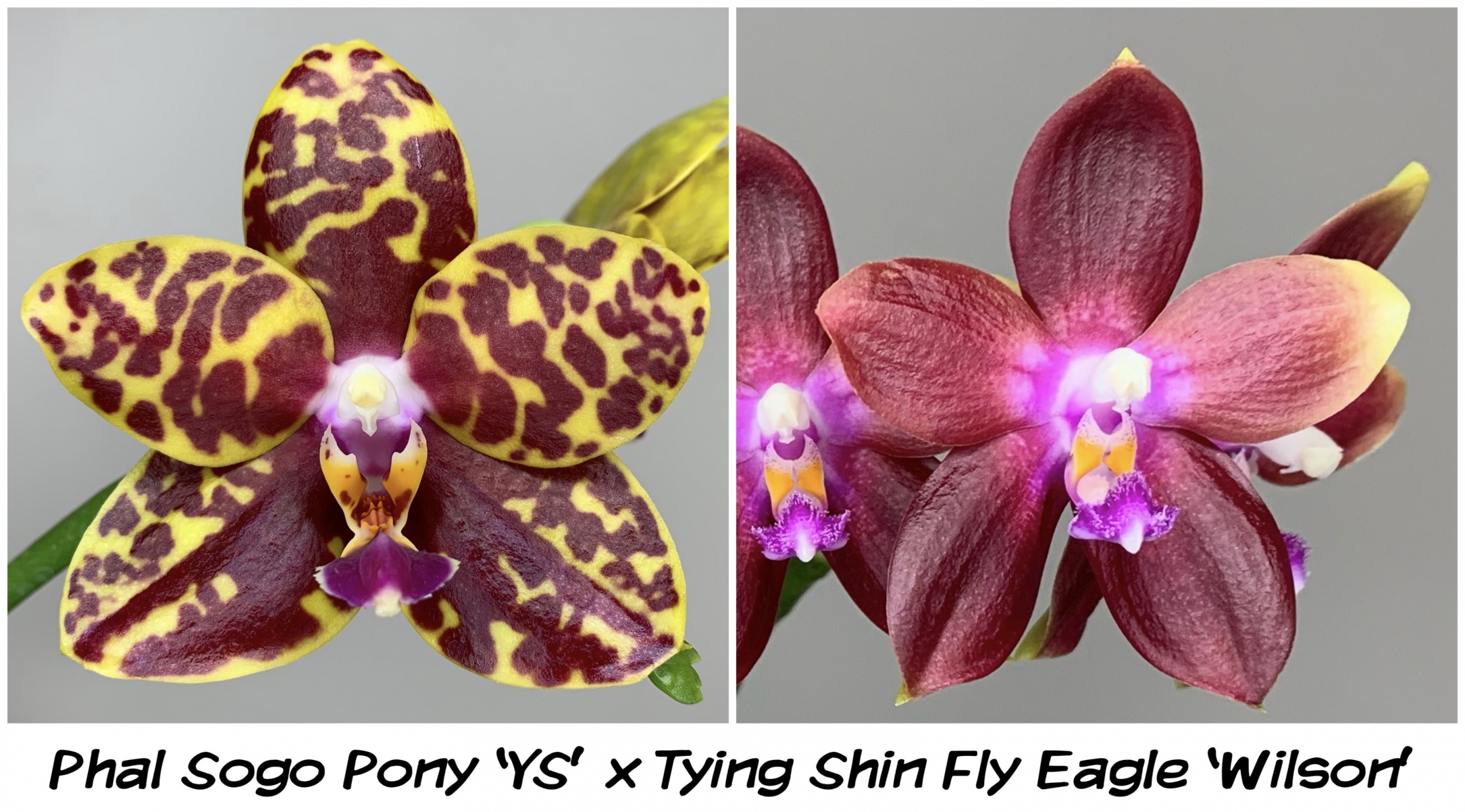
Phal Sogo Pony ‘YS’ x Tying Shin Fly Eagle ‘Wilson’
Pollinated: Mar 9, 2019
Sowed (dry seed): Sept 1, 2019 (6mths)
Deflasked: July, 2020
Why This? Expectations – In theory, this cross shouldn’t be possible. In practice, it clearly is! When I first posted about this cross, a couple people barked that Sogo Pony was a ‘triploid’ (3n) and would therefore be sterile—a mule—and that I wouldn’t get any seeds. This resulted in a research spiral to find out what that meant for my -then- developing seedpod. I ended up having lots of unanswered questions – “how does anyone know this specific plant is actually triploid?” (answer: they don’t unless they’ve counted chromosomes themselves), “Is it possible that one plant of a hybrid is triploid, while others of the same cross (from the same seed pod) are diploid?” (a: turns out, yes you can have a mix of ploidy from a group of progeny [source]), “how is it possible that this plant is triploid—and allegedly sterile—if I have a seed pod (which since proved to have viable seeds)?” (a: it turns out ploidy isn’t as black and white as some people think it is, and in about 31.9% of triploid plants, seed production is possible and across those progeny, diploid and tetraploids are a more common occurrence than you would expect [source – see p478–483]).
I sowed the seeds expecting none to germinate based on what I had been told, but many did and I have well over 30 plants growing either in a pot or still in flask. This plant is an experiment and proof point for me and I suspect the flowers of the progeny will be impressive. From that study I linked above, there is evidence that progeny from triploid plants (either crossed on diploid or triploids) have a higher chance of being tetraploid (4n)—with an average of 6.3% of the progeny being tetraploid, but up to 13.9% in select cases. 3n x 2n crosses specifically had an average of 9.8% outcome of 4n progeny. So, it’s a good lesson about understanding complex topics and while I’m sure I still have much to learn, it’s important to remember just because someone says, “you can’t” or “don’t” and maybe has the loudest voice…doesn’t necessarily mean they’re right. Let your curiosity guide you.
Notable Outcomes: From a care/culture perspective, these are more like a classic grocery store phal—the roots need to dry out between watering. I unknowingly used too much sphagnum on the first deflask and lost some roots. After decreasing the depth of the moss, those plants are recovering and the second set of deflasked seedlings are growing on well with the first.
Photos
|
 |
|
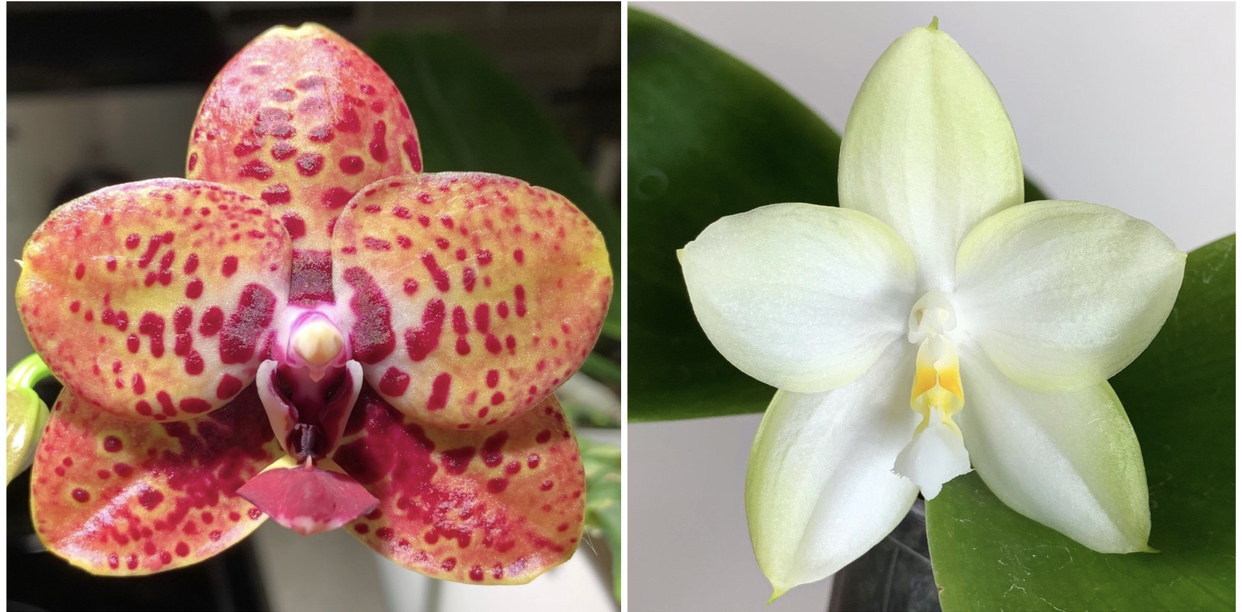
Phal Zheng Min Anaconda ‘Peter’ x Kingfisher’s Lemon Drop ‘HBN#4’
Pollinated: July 14, 2019
Sowed (dry seed): April 21, 2020 (9mths)
Why This? Expected Outcomes – Like I said – really love that Zheng Min Anaconda. Was curious what a white flower might impose on the spotting. This is experimental—perhaps high contrast spotting on well-shaped flowers. The Kingfisher’s Lemon Drop is also fragrant but of citrus—you can read more about that hybrid in this other post.
|
 |
|
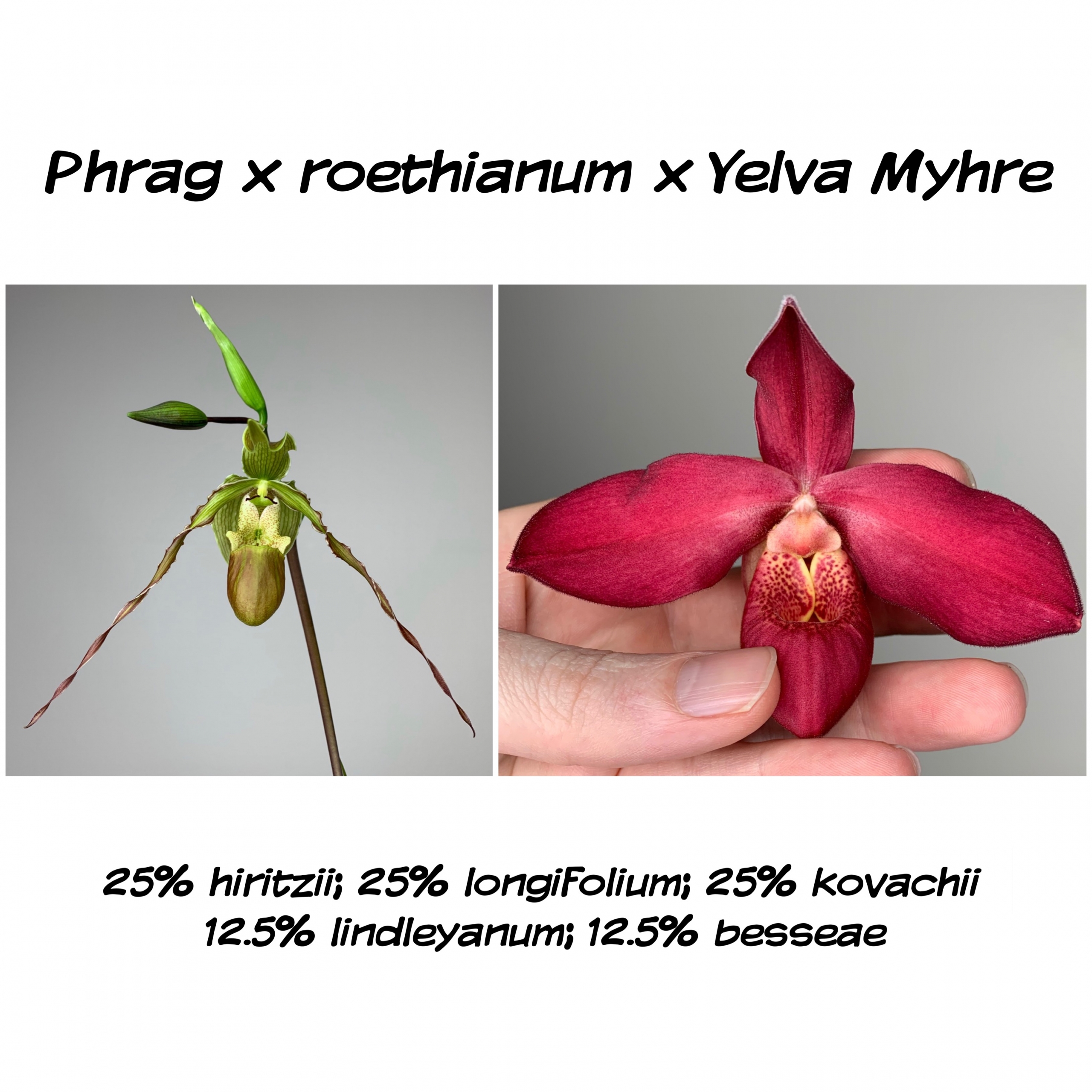
Phrag x roethianum x self
Pollinated: May 27, 2019
Sowed (dry seed): July 22, 2019
Deflasked: Feb 14, 2020
About this cross – I expected deep red flowers with elongated petals, but it turned out to just be an accidental self-pollination. The flowers are identical to the seed parent with no influence from the pollen donor.
From my notes before flowering: the contribution of kovachii from Yelva Myhre should increase flower size a bit and keep the general petal form more round. Not many seeds from this cross were viable and the seedlings did poorly in vitro. I deflasked much earlier than is normally recommended in an effort to save the 8 seedlings that remained. 3 of the smallest didn’t make it and I’m down to 5 plants. The remaining plants are quite vigorous and I am anxious to see the first flower. And yes, one of the seedlings is variegated. I hope that this variegation is stable and is present with the new meristem growths.
Photos
|
 |
|
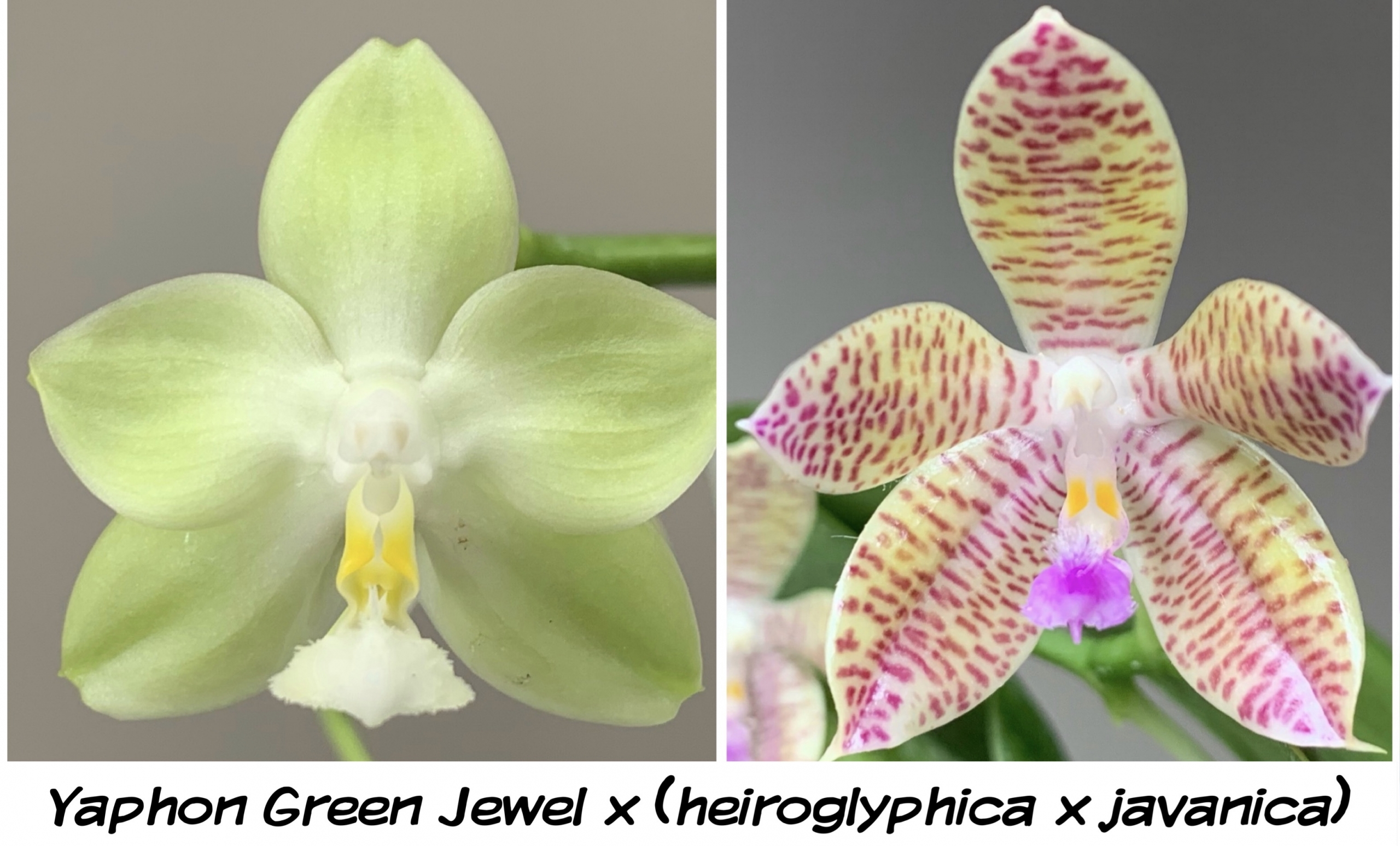
Phal Yaphon Green Jewel x Kloog (javanica x hieroglyphica fma. flava)
Pollinated: Dec 14, 2018
Sow (dry seed): Oct 30, 2019
Replate: Apr 21, 2020
Why This? Hypothesis – The world needs more javanica hybrids, so I made one. Both Yaphon Green Jewel and javanica are compact growers (though heiroglyphica can be a little chunkier), but I expect most of the offspring will inherit that smaller size, resulting in more manageable Phals. Beyond size, both parents are strong growers with prolific blooming habits, so this should be a rewarding plant overall. As for flower appearance? That’s the wildcard to me…will they be green, will they have less spots, or will the mutations from each side that have produced unique colour variants fix and produce more stanard colour flowers? Regardless of postulation, with two floriferous, resilient parents, it should be an interesting outcome.
Photos
|

First Flowering
Siblings from the Grex
|
|
Phalaenopsis August’s Occasion (schillerina ‘Silver Leaf’ x Yaphon Green Jewel)
Pollinated: Jan 18, 2019
Sowed (dry seed): July 7, 2019
Replate: Oct 6, 2019
Deflasked: May 7, 2020
Why This? – The flowers might not look like the best pairing. My schilleriana doesn’t have the “full form” (round) flowers that everyone has come to know and Yaphon Green Jewel is small and quite round; BUT, Yaphon Green Jewel also has mannii in it’s lineage and mannii x schilleriana (Bronze Maiden) has really cool leaves and nice flowers. This cross was largely experimental and I really wanted to make a cross between the subgenus phalaenopsis with polychilos AND use schilleriana in at least once.
Notable Outcomes: The leaves of the progeny are varied. Most are olive-green and flecked with spots or fringed with color. None are fully mottled like the parent schilleriana; but I’m looking forward to seeing these grow up and flower. From a care/culture perspective, these are more like a classic grocery store phal—the roots like to dry slightly between watering and the plants seem unphased by my dry climate.
First flower: looks like a perfect blend of both plants; pink flowers with the texture of schilleriana but shape closer to that of Yaphon Green Jewel.
Photos
|

First Flowering

|
|
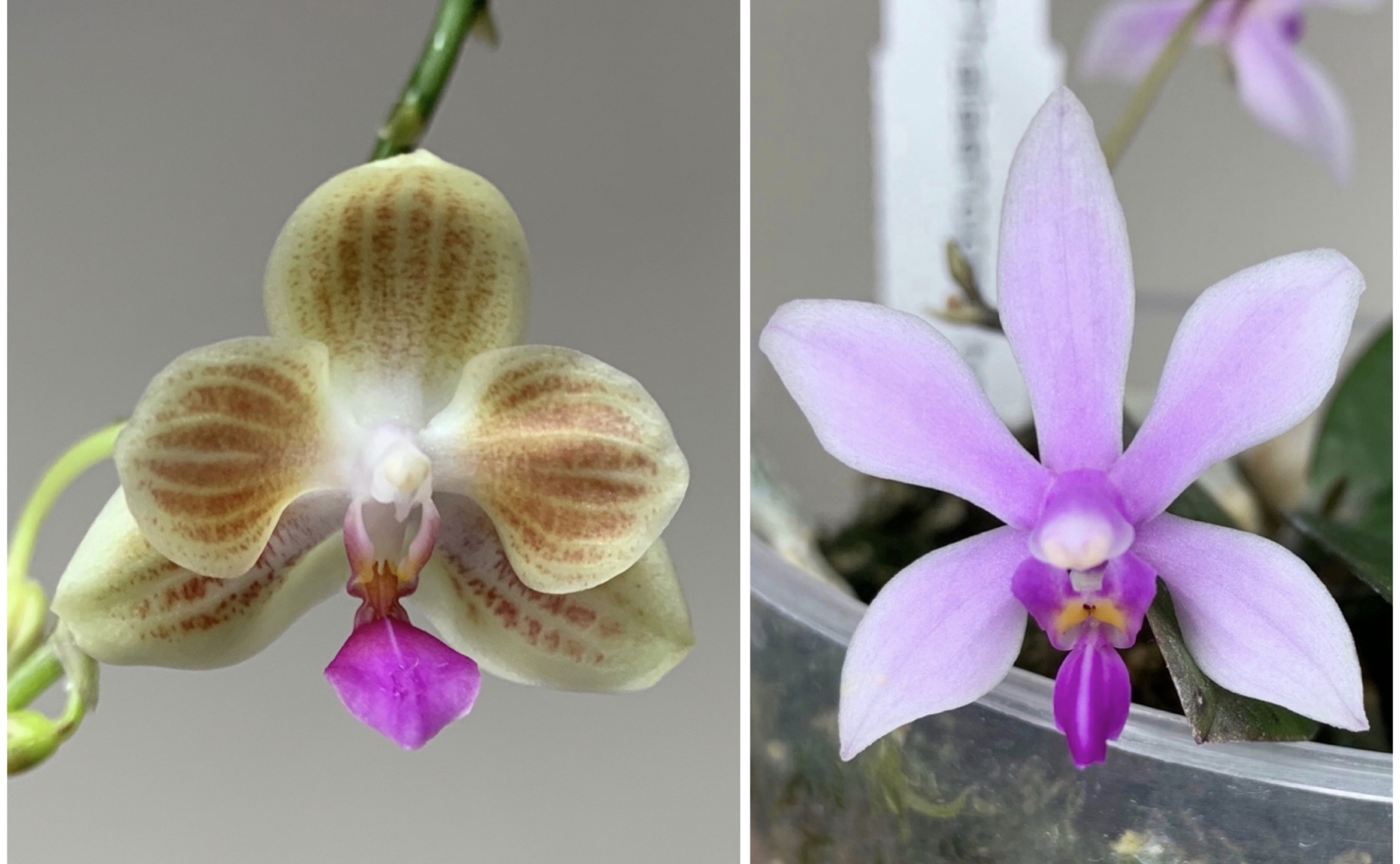
Phragmipedium Ketchup Chips
(Memoria Dick Clements x Sam Crothers ‘HBN#1’)
Pollinated: Feb 10, 2019
Sow: April 20, 2019
Deflask: Oct 27, 2020
Why This? Hypothesis – I expected dark, round flowers—something shaped like Phrag Vyonne Fay Wilson, ideally with the rich red tones like Phrag Acker’s Beauty. This cross had a rough start in flask, struggling due to a bad batch of media. The first deflask in October was slow to get growing, but a second batch in July took off with much better vigor, showing strong potential. I also had a theory about regional adaptation in Phragmipedium species: Lindleyanum, sargentianum, and their relatives from NW South America thrive in soft, low-mineral water. Western Andes species, however, tolerate alkaline, mineral-rich limestone habitats. Given this, I wasn’t sure how these seedlings would handle my tap water. But no RO water for them—this was a survival-of-the-fittest experiment.
Outcome: Winter bloomers (typically January) and strong growers. So far, I’ve bloomed over a dozen plants. Nearly all are red with a dusty pink or pale yellow undertone—hence the Ketchup Chip name. One plant did bloom pink though. Plant size varies significantly, with some staying compact (8″ leaves) while others stretch to 14–18+”. Surprisingly, they show some fertility—complex Phrag hybrids often struggle to produce seed due to aneuploidy, but I have at least one successful cross growing. Sibling crosses, however, haven’t taken—so I’ll need to experiment further. A smart next step for me would be to select the most compact, large-flowered plants and work those into a new cross.
Photos
|
Second Flowering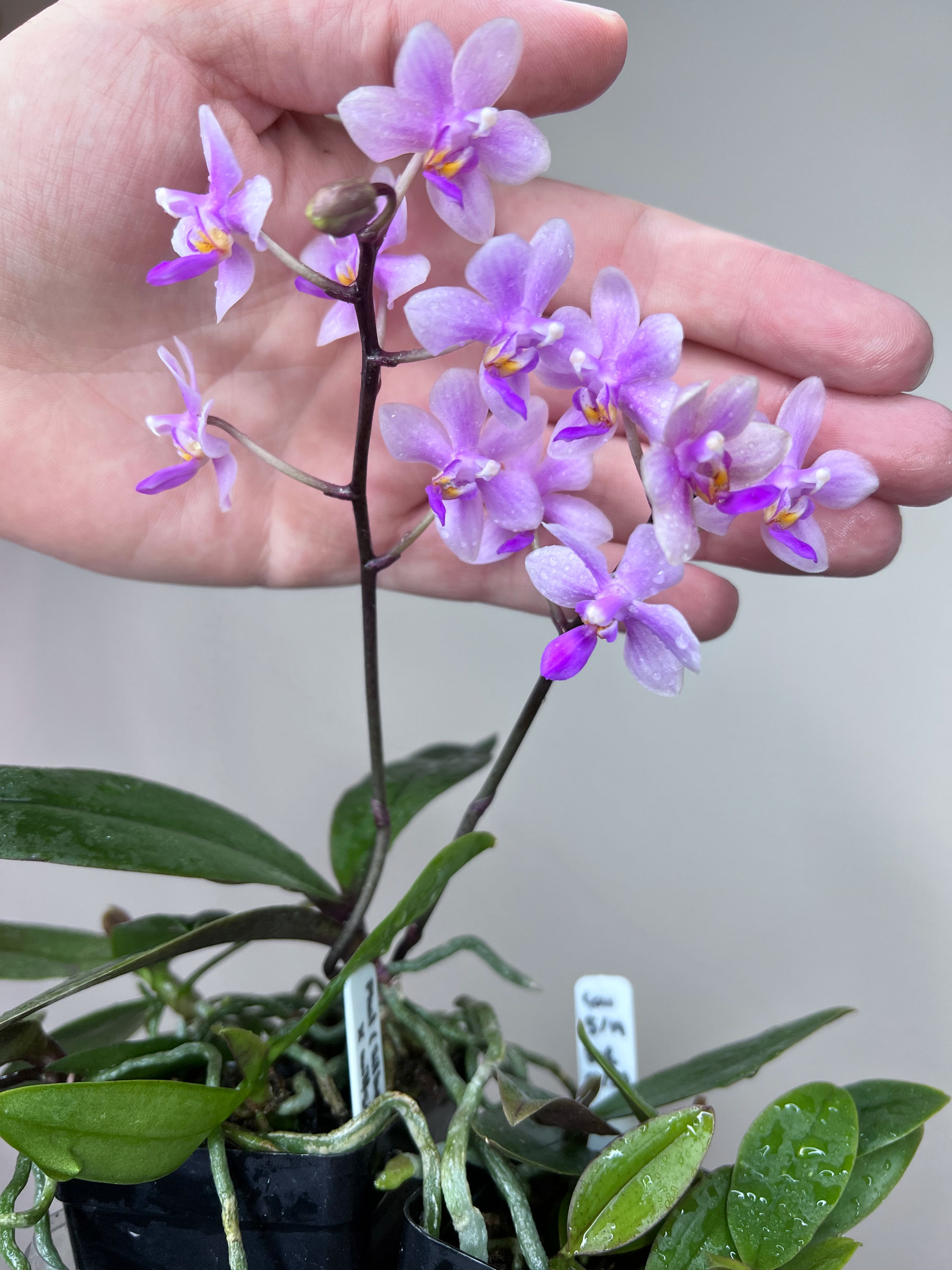
|
|
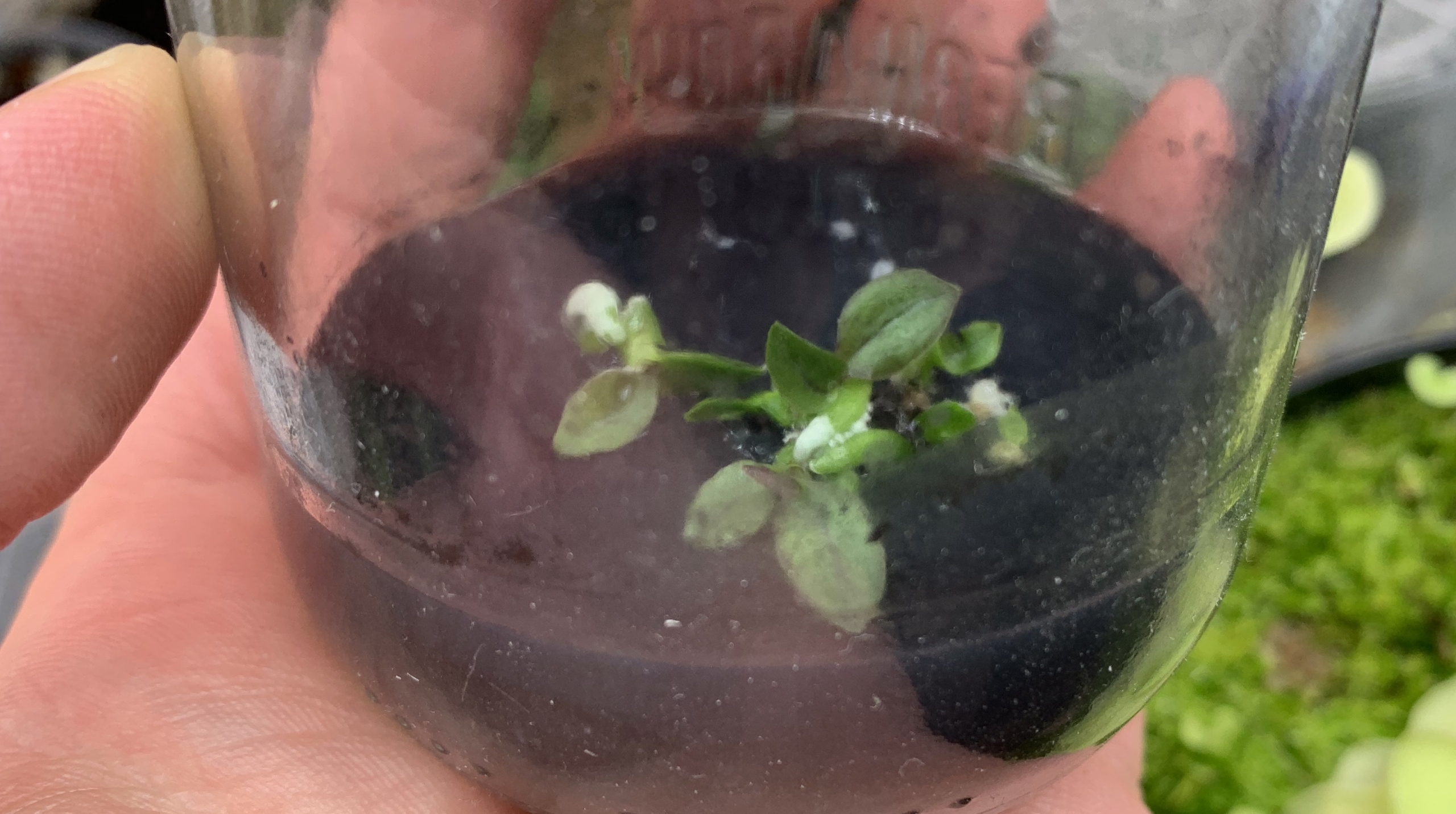
Phalaenopsis Micro Mini Milli Willi
(MD’s Mercy Me x wilsonii)
Pollinated: Feb 18, 2020
Sowed (Green pod): Jul 30, 2020
Deflask: Jan 11, 2021
First to Flower: Feb 12, 2022 (1 year, 7 months after sowing seeds)
Why This? – The world needs more Aphyllae hybrids—like WAY MORE! Not only are they extremely compact and well adapted to mild and dry home conditions, they’re also unlike other phalaenopsis and look a bit like an epidendrum flower. Aphyllae is a subgenus of phalaenopsis which are typically high-elevation (cool-growing) small plants. They tend to be harder to hybridize because their chromosome count is 4 or 2 less (34-36) than your normal phal (which is 38). From this cross, only few seeds germinated (12). I am very excited about this cross.
I expect the plants and flowers will be compact; wilsonii has a tendency to override flower shape/form, but wilsonii x javanica really brings forward a nice blend of the two species. Phal celebensis seems to have a dominance for shape, so the flowers might be a bit wonky in that regard; but typically the further you dilute the cross, the less those oddities are inherited. I have a hunch the flowers will be fragrant; the flowers of the wilsonii I used in this cross smell like grape soda and the javanica hybrid smells like orange blossom.
First Flower: pink, a lot like wilsonii, but with more round petals
Photos
 |
|
|
|
 |
|
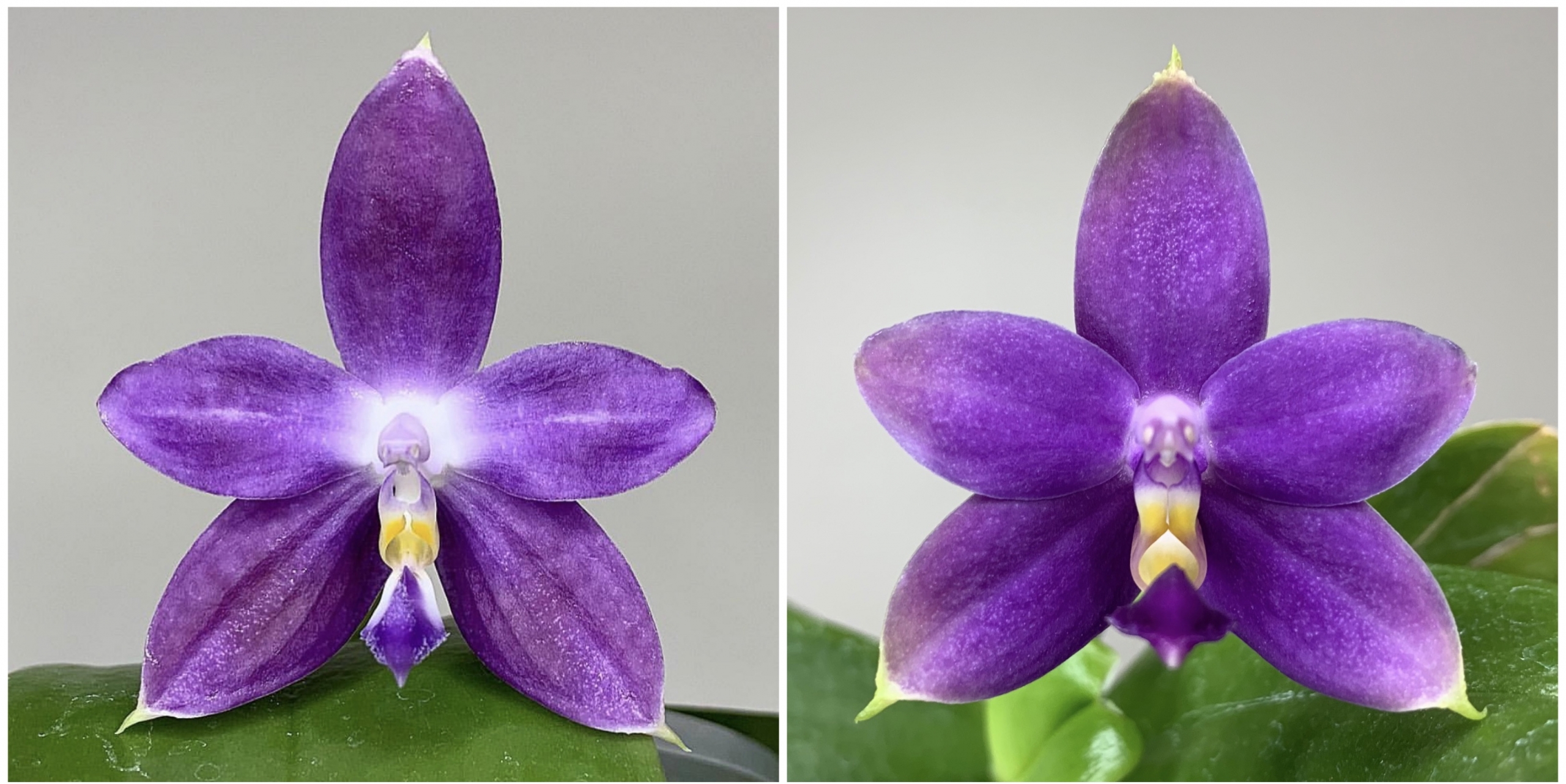
Phal Yaphon Pool Remake
(Jennifer Palermo [tetraspis f. alba x violacea f. indigo] x violacea ‘HP Norton’)
Pollinated: Aug 11, 2019
Sowed (Dry Seed): TBD
Why This? Hypothesis – Why not, right? I’m a huge fan of coerulea (blue/purple) Phalaenopsis violacea, but my pollen parent plant used to make this cross died. So, I’m hoping a few seedlings from this cross can fill that void (and maybe be a little more resilient than the violacea species is). This is a remake of a cross registered by Yaphon Orchids in 2016. With the reclassification of the tetraspis alliance (speciosa), there are many similar crosses. Bottom line: I suspect this hybrid will be easier to grow than Phal. violacea and if I’m lucky, some will have both good saturated color and flower shape.
|
![]()  |
|
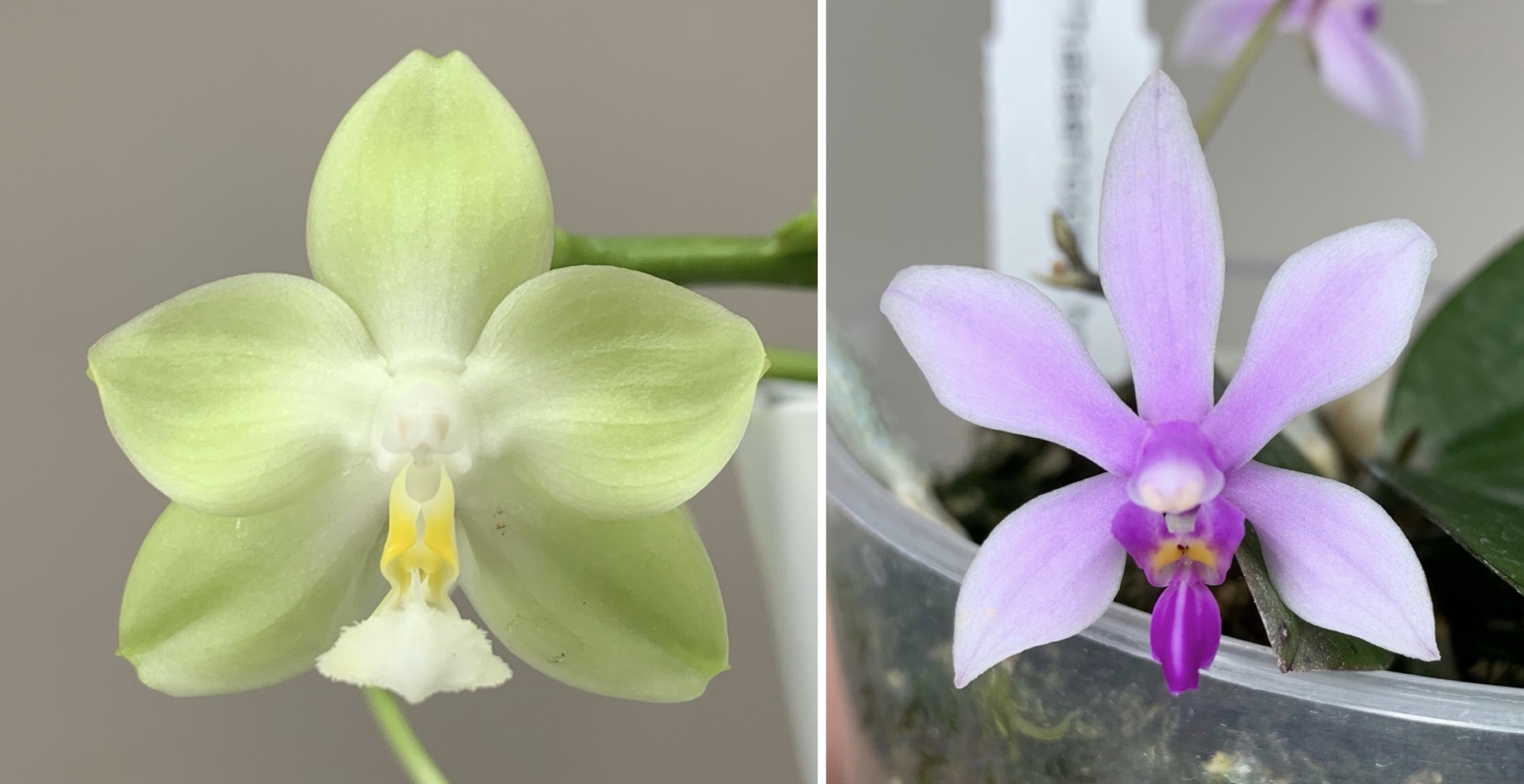
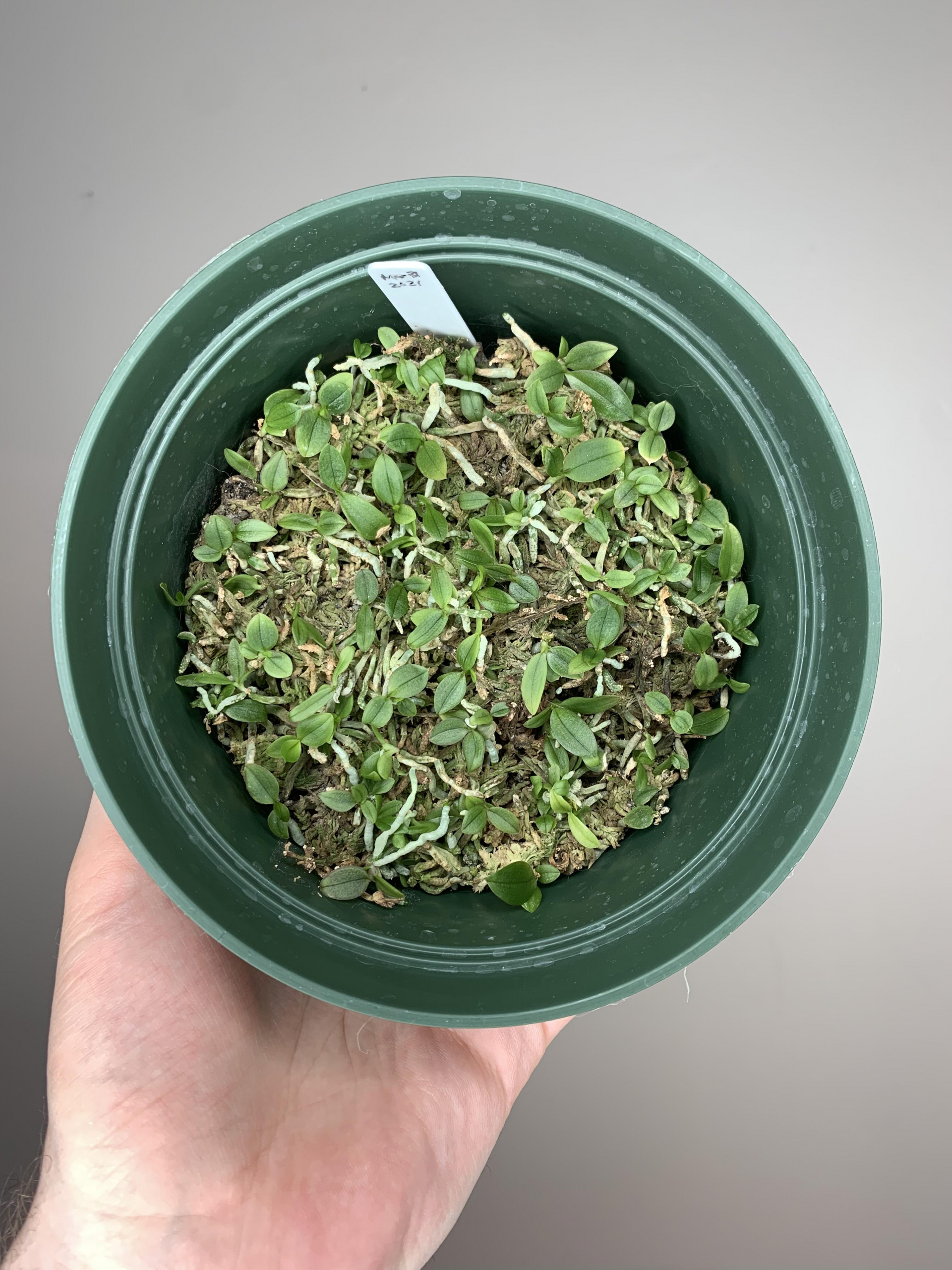
Phal Yaphon Green Jewel x wilsonii
Pollinated: Feb 12, 2020
Sowed (Dry Seed): July 30, 2020
First Flower: Mar 22, 2023 (2.75 years seed to first flower)
Outcome: Really nice mini phal with white flowers that blush pink in the center. The flower is flat and as you would expect, wilsonii’s influence is unmistakable in the genetics. The flowers look like a bloated version of wilsonii—wider and less star-shaped—but you likely wouldn’t be able to identify Yaphon Green Jewel in the parent lineage by only looking at the flower. The lip is nice, a vibrant purple like wilsonii, that creates a focal point in the middle of the flower, and it’s shape is uniquely balanced between the two parents. The leaves are small and dark green, the roots are abundant and do well with drier indoor conditions (likely making it an ideal houseplant). I’m happy with this outcome and I hope it flowers abundantly like Phal Micro Mini Milli Willi.
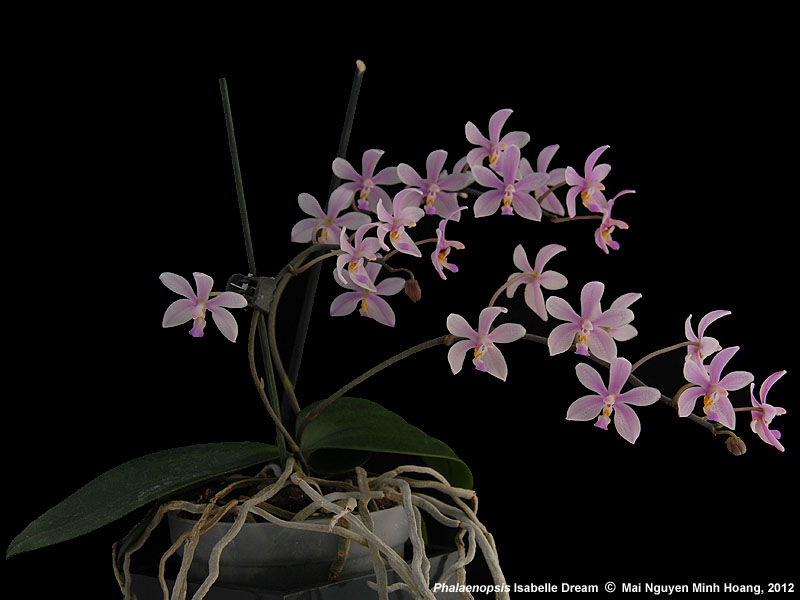
Why This? Expected Outcomes – When I said, “WAY MORE Aphyllae”, I was serious. Yaphon Green Jewel is made up of 25% of each: micholitzii, amboinensis, violacea, and mannii; so I think this cross should have some good outcomes. Both parents are fragrant, both parents are small plants, and a slightly-related hybrid, Phalaenopsis Isabelle Dream (mannii x wilsonii) looks insanely cool—so I am optimistic for what will come of this hybrid.
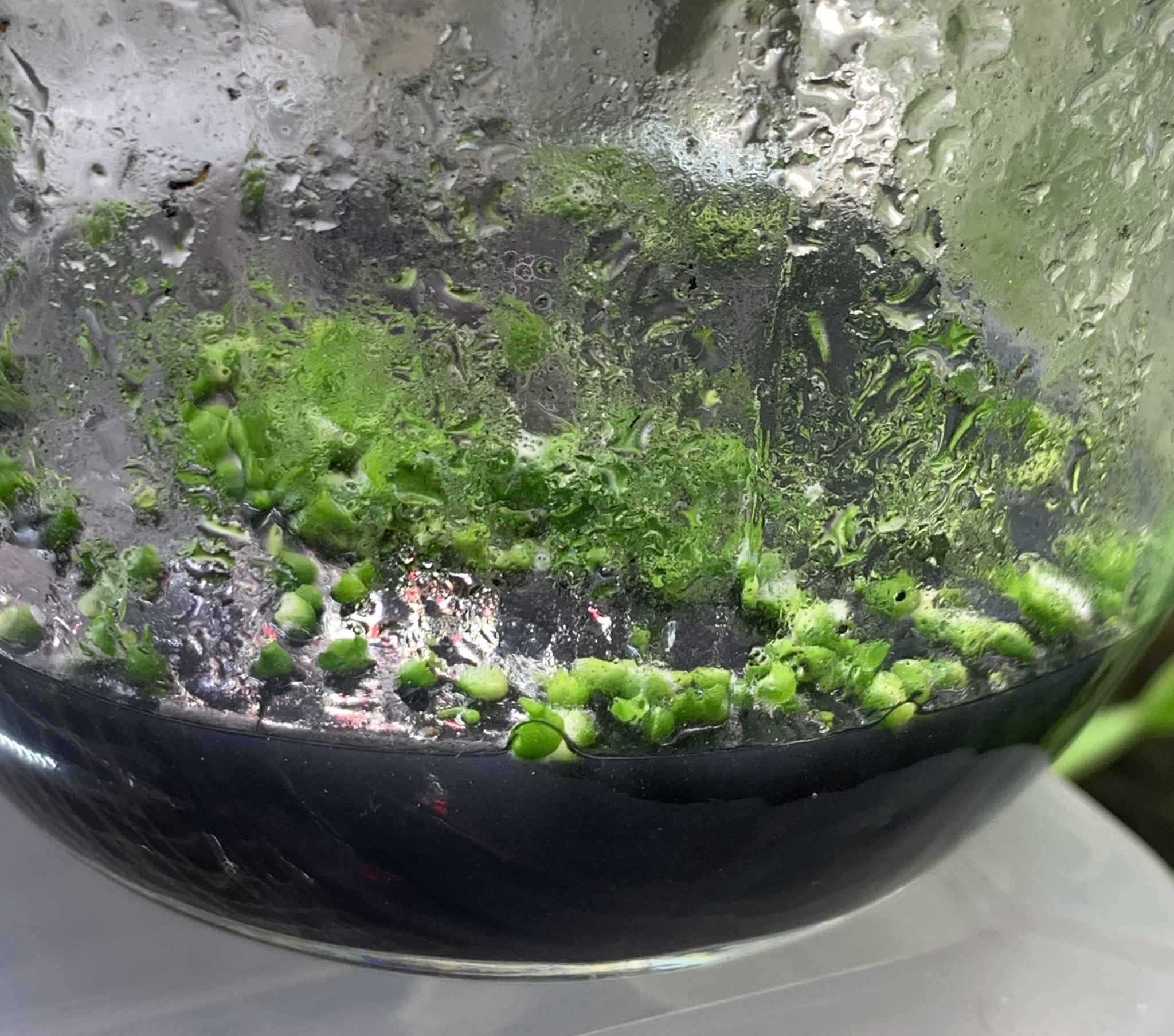
Story time: I sowed these seeds without sterilizing the seeds or pod because it had broken open while I was away on vacation. There were so few seeds that I wouldn’t be able to capture them for sterilization in hydrogen peroxide. So, on a whim, I just pulled the chaff from the seedpod over open flasks (in the glove box) and let whatever few seeds existed, fall into the flasks. It worked surprisingly well and of the 4 mothers I sowed, only 1 had contamination (so far and it’s been over a month).
Photos
 |
 |
|
|
 ![]() |
|
Phalaenopsis Kloog (javanica x hieroglyphica fma. flava) x (Yin’s Pure Love Isles x Yaphon Super Jaguar)
Pollinated: Mar 27, 2020
Sowed: Oct 26, 2020
Why This? Expected Outcomes – I wanted something new and unique—imagine neon summer colors on a glossy flower! I expect a high bloom count, lightly fragrant flowers, and a spring blooming period (January–June). The pollen parent has an electric pink color—like those pink popsicles from childhood—so vibrant that the flowers glow from across the room. My hope is that this color, combined with waxy texture, results in bright, eye-catching blooms. Similar crosses include Phal Arlington (pulchra x heiroglyphica), which has white flowers with bright pink flecks, and Phal Adyah Prapto (javanica x luedde), that has more sunset tones with pink. This hybrid should push those colors even further, ideally with larger pink spots and yellow-orange hues from javanica. Contributions from violacea and tetraspis should intensify saturation beyond the reference hybrids.
Potential Challenges: Bad form is likely—expect cupped, downward-facing, and flowers that just aren’t flat, thanks to javanica, hieroglyphica, and the “pink mess” of the pollen parent. But novelty trumps perfect form for this one—I’m here for something wild, not award-worthy!
General Ancestry:
25% P. javanica
25% P. hieroglyphica fma flava
23% P. violacea
15% P. lueddemanniana (fma pulchra?)
9.4% P. tetraspis
3.1% Phal. amboinensis
|
 ![]() |
|
Phal Kingfisher Lemon Drop ‘HBN #9‘ x (Yin’s Pure Love Isles x Phal. Yaphon Super Jaguar)
Sow: April 8, 2020
Replate: Jan 19, 2021
Why This? Hypothesis – Both parents are intensely saturated, but I had some concerns about how the colors would combine. I’ve read that crossing yellow × magenta often creates the illusion of red flowers, which isn’t my ideal outcome. Red in Phalaenopsis can feel like an “all-in” blend of every pigment—like when you mix too many colors in paint and end up with brown. I prefer distinct colors rather than red. That said, I wanted to see it play out firsthand, and even if I got reds, I could still appreciate a saturated, high-quality, well-formed red flower. Given the complex genetic background, there should be high variation among siblings, despite both parents appearing solidly colored.
Expected Traits
– Patterns & Spots Likely → Thanks to significant contributions from amboinensis, lueddemanniana (pulchra), tetraspis, mannii, and venosa (48.5% of the genetic mix).
– Pigment-Packed Flowers → Regardless of color outcome, these will likely be highly saturated.
– Form Concerns → Both parents have cupped flowers, but Kingfisher Lemon Drop produced some very flat siblings. Hoping for some well-formed blooms in the mix..
General Ancestry:
35.4% violacea | 18.5% amboinensis | 16.0% leuddemanniana | 9.8% micholitzii | 9.4% tetraspis | 6.3% bellina | 2.3% mannii | 2.3% venosa
Outcome: I expected red or yellow flowers depending on whether the pod parent dominated and poor flower shape due to both parents’ obvious shape. Instead, the first bloom was spectacular—perfectly flat, well-balanced, and a bright pink like the pollen parent, unexpectedly there was a subtle coerulea gradient, adding another layer of interest. About 4 or 5 more siblings are spiking now and I’m excited to see what type of variation they show.
|
![]()  |
|
Phal GZZAS Rainbow (amabilis fma aurea x stobartiana) x bellina alba
Pollinated: June 14, 2020
Sowed (green pod): Oct 26, 2020
Why This? Expected Outcomes – Hybrids of hybrids with the section aphyllae (stobartiana etc) are rare. It’s likely because Aphyllae Phals have a lower chromosome count than the rest of the genus and when you cross them on to ‘regular phals’, the resulting progeny have odd-numbered chromosomes (which are largely sterile?) I have tried crossing this mother plant on to many other plants an none have produced viable seed except for this one cross…kind of. Only one single seed germinated. Just one. It had slowed down in flask and needed to be replated; the roots were also reaching up away from the media which can be a sign the media is too wet, so I deflasked this plant very early in the hope that extra airflow and light would help it grow better. As long as I don’t kill it, it’s going to be a very cool flower: I expect very high flower count on a compact plant. I assume the flowers will be yellow or green, but there’s a chance the amabilis combined with alba bellina produces a fully white flower.
|
|
|
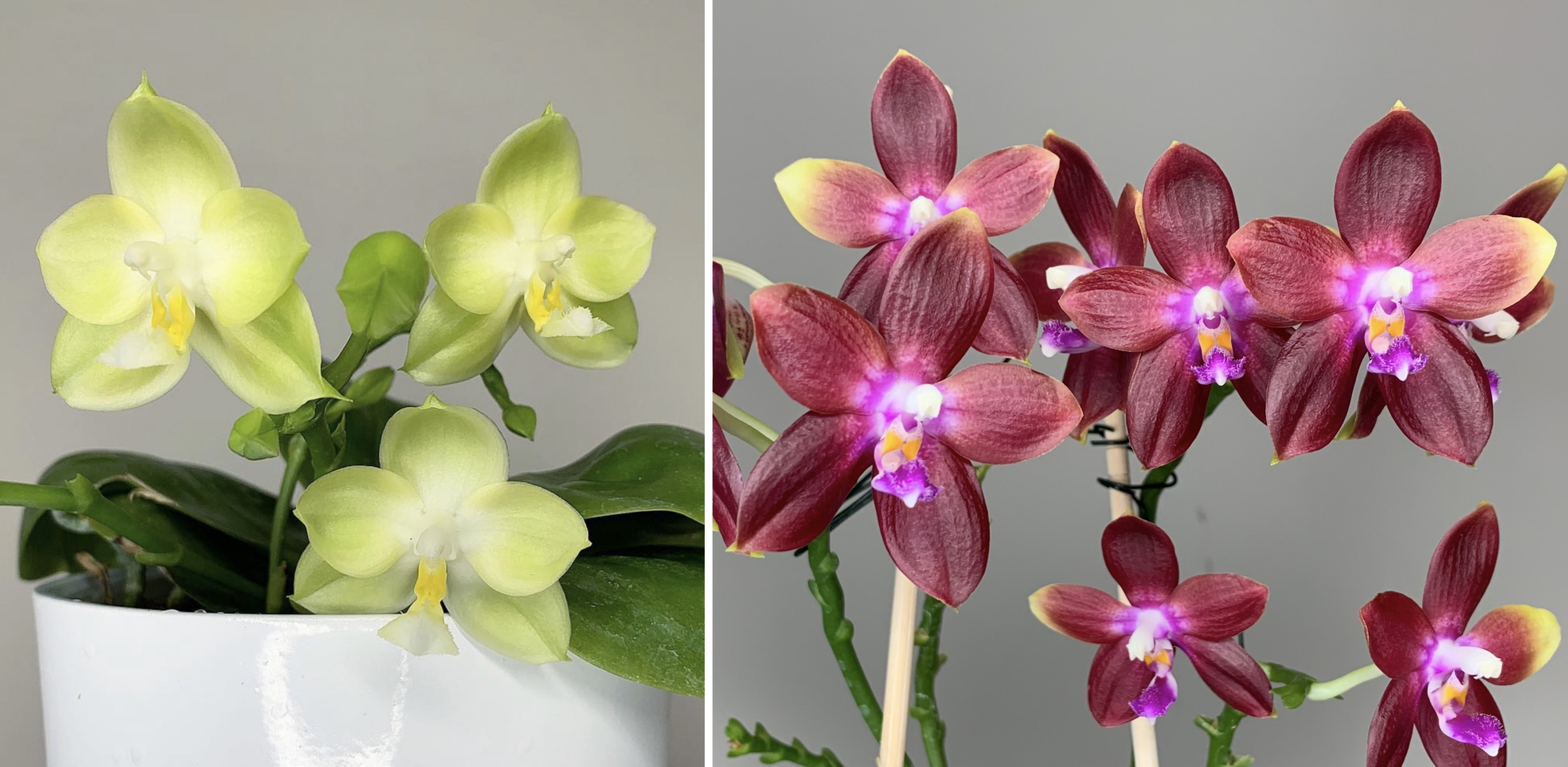
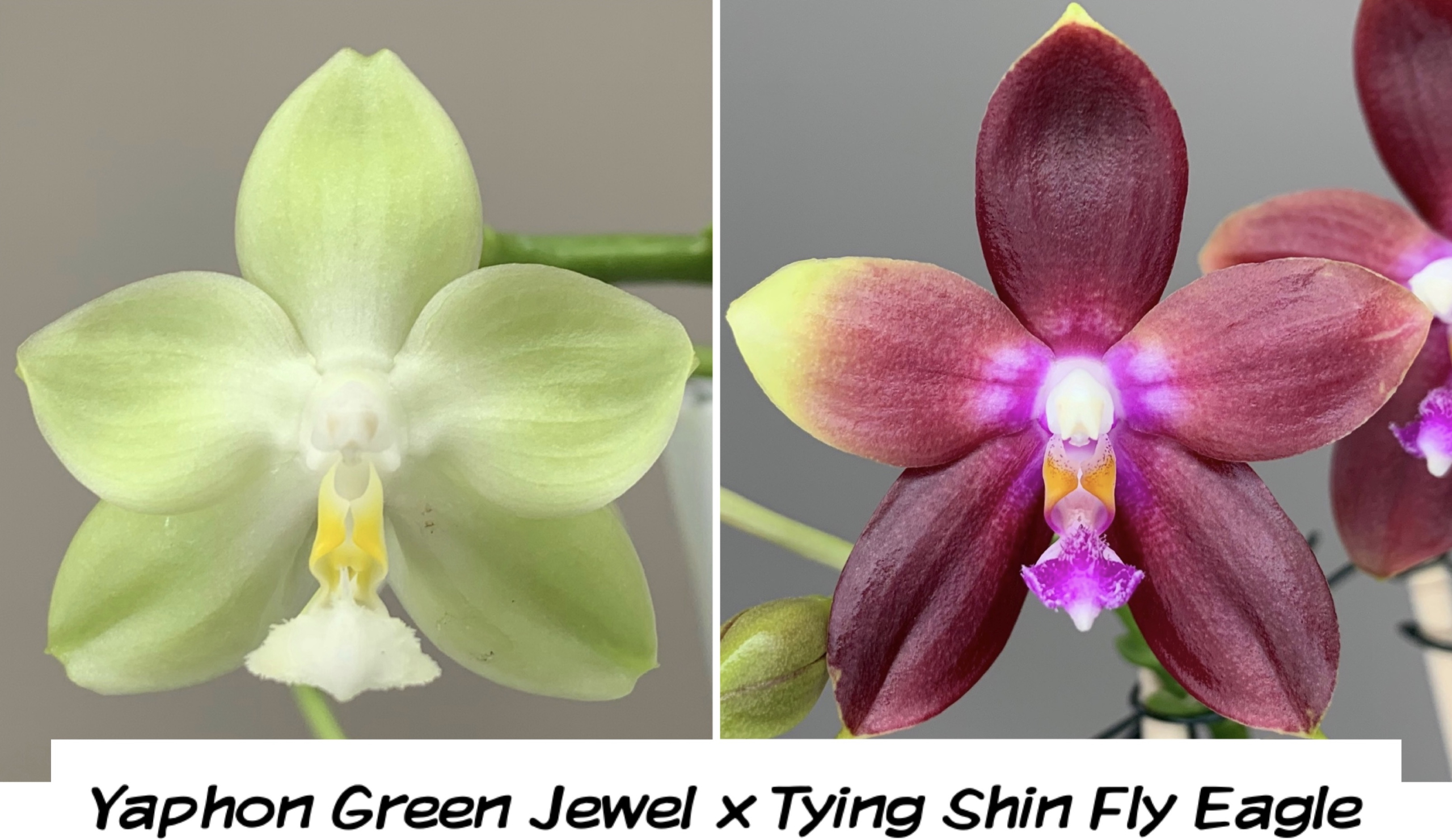
Phal Yaphon Green Jewel x Tying Shin Fly Eagle
Pollinated: Jul 24, 2020
Sow (dry seed): ???
Replate: Apr 21, 2020
Why This? – Both parents are vigorous growers, and I was eager to experiment with their combination. I anticipated offspring with high flower counts, likely in shades of pink. Upon further reflection, there’s potential for Tying Shin Fly Eagle’s intense pigmentation to be altered, possibly leading to blooms rich in pigment but not necessarily red.
Interestingly, many deeply-green-flowered hybrids seem to have parents that were red. This raises the question for me: for a plant that would normally be highly pigmented, if we turned off the pigment-production pathway with an alba plant, would/could we produce darker-green hues? For context, an alba plant can be white or green, the difference is that the white variant doesn’t produce pigment at all, while the green version produces pigment that is “not coloured” (but green—because chlorophyll). Often with phals, red flowers are the result of pigment layering of yellow and blue (coerulea) which visually appears blended as red, but that colour is not the a single pigment. It’s plausible that manipulating the coerulea pigment pathway might produce green flowers—which could also be why so many ‘green’ flowers often fringe on yellow-chartreuse…because they’re mostly yellow, overlaid with a bit of chlorophyll…but I want a VERY GREEN flower, so this is my attempt and if it doesn’t work, I might need to try a sibling cross to refocus the alba trait. This hypothesis also sort of aligns with observations of bellina coerulea which often exhibits green tones near the tips of the sepals and petals, possibly suggesting a link between chlorophyll’s predecessor role to becoming pigmentation.
|
![]()  |
|
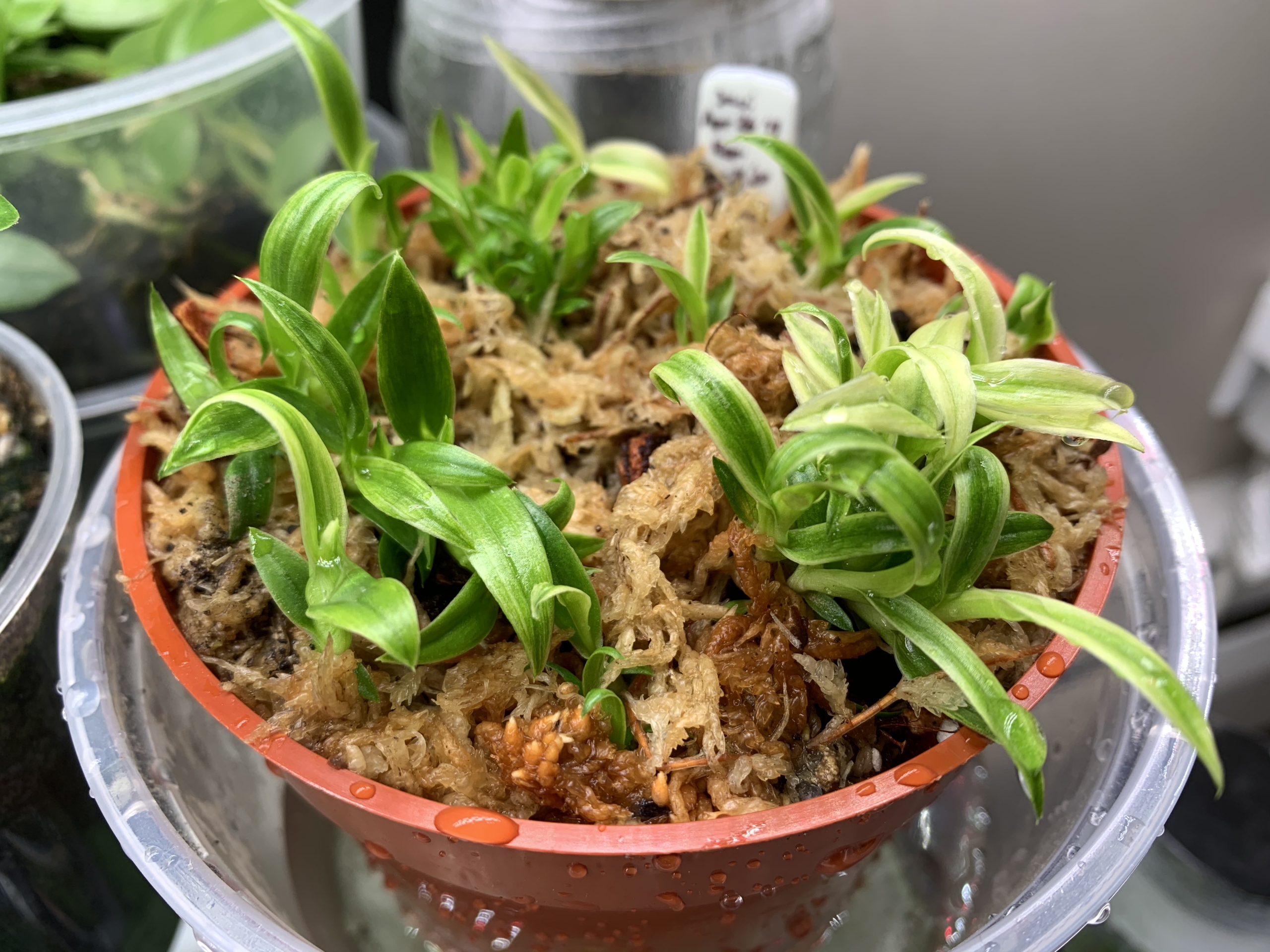
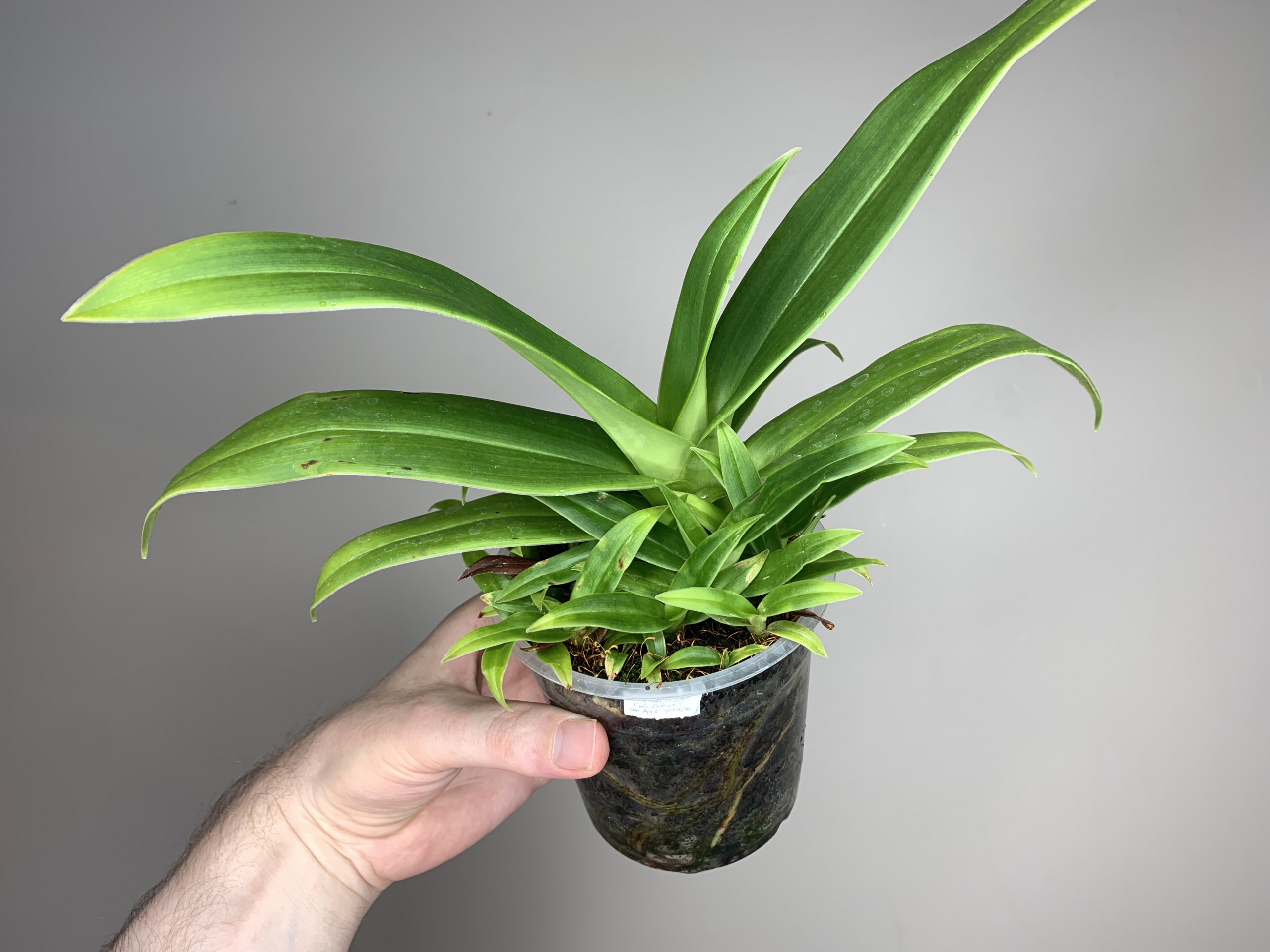
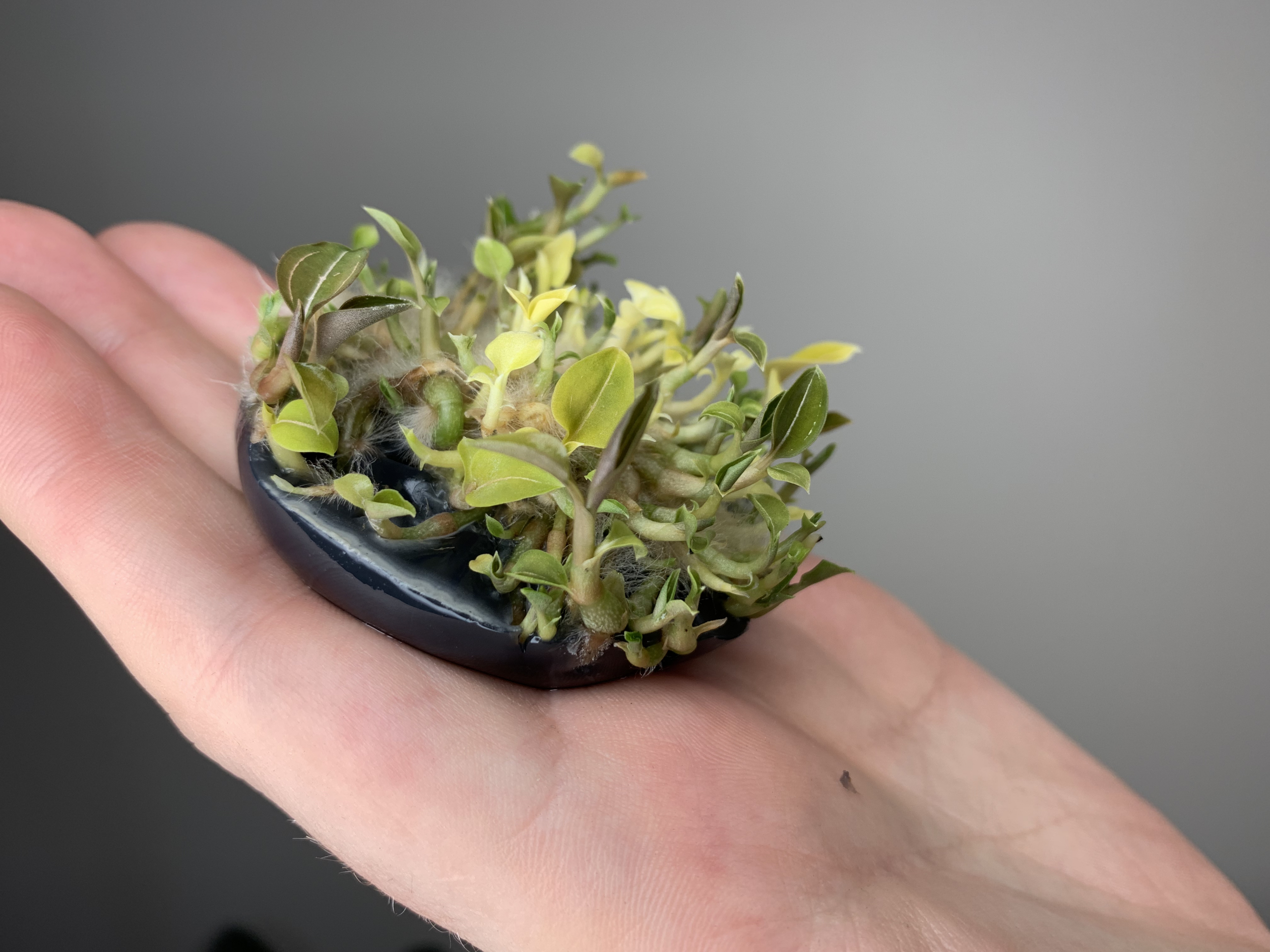
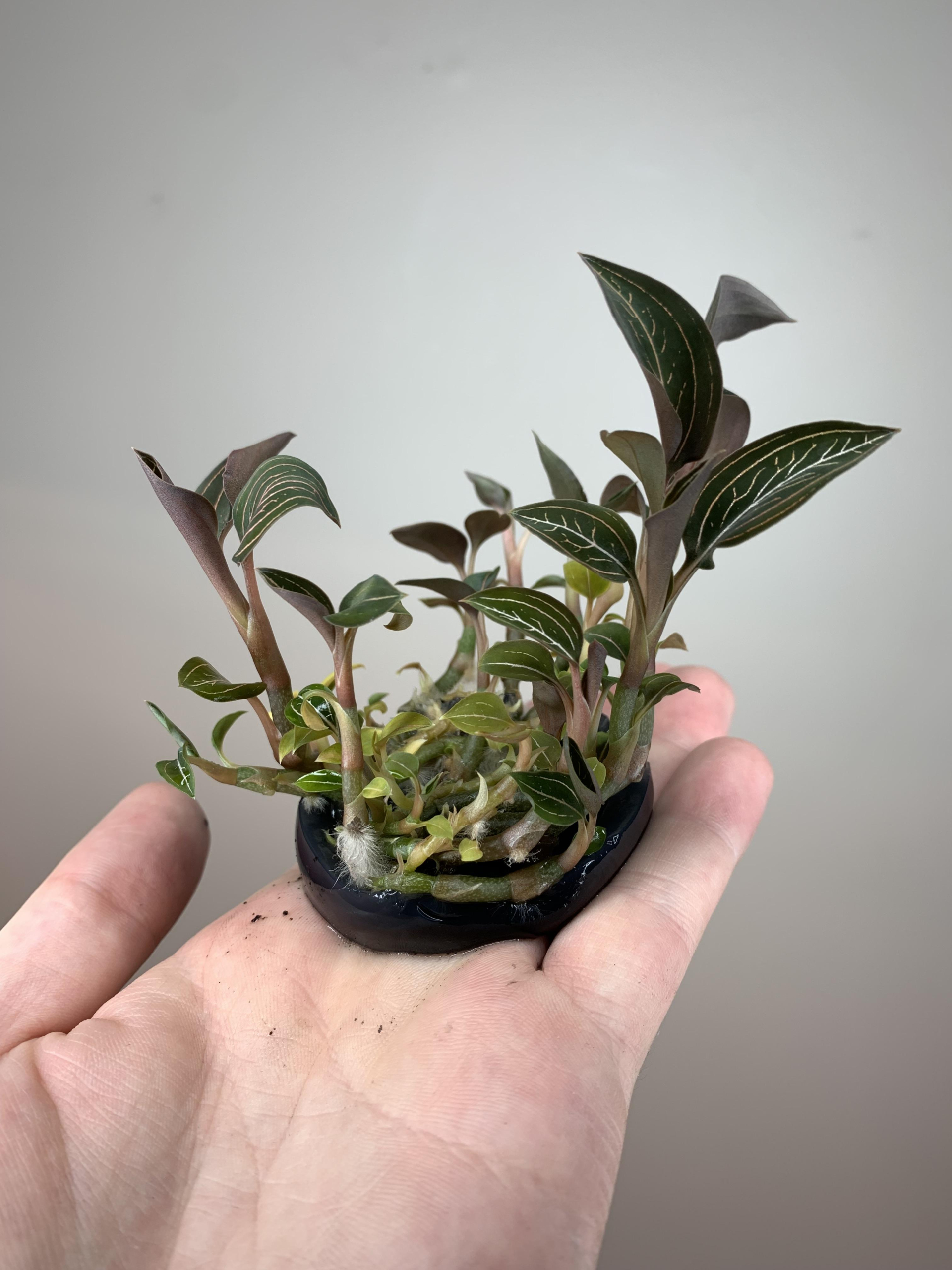
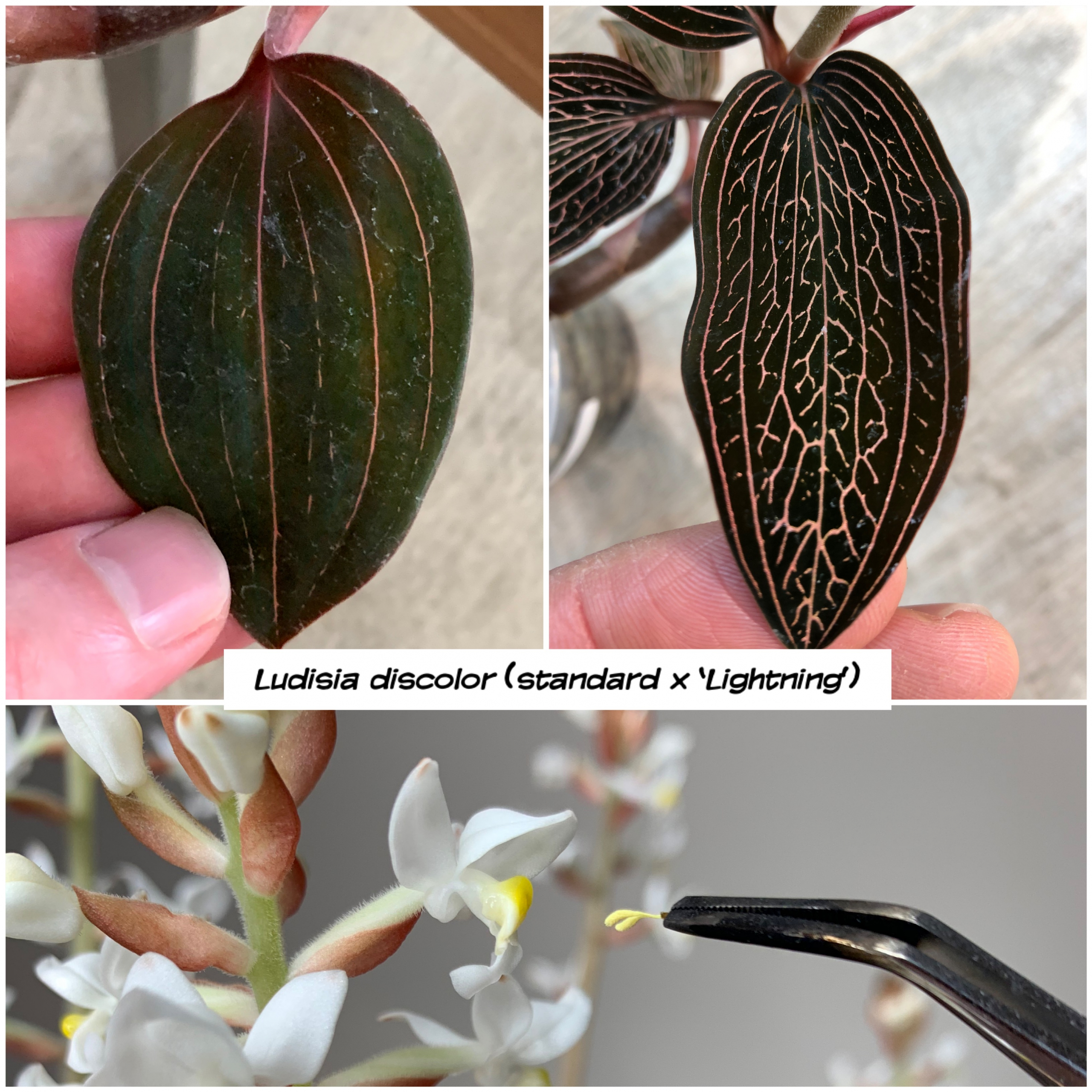
Ludisia discolor (‘Standard Form’ x ‘Lightning’)
Pollinated: January 10, 2021
Why This? Expected Outcomes – I tried self-pollinating my parent Ludisia, but the seeds failed. A friend here, Marquess had the Lightning form in flower at the same time as mine, so he sent me some pollen and we got viable seeds! I expected leaves somewhere between my plant and his, but already I see a lot of variation in leaf color—some are green, some dark, and some are yellow (which will most likely die?). It will be interesting to see them grow out, but at this point it’s nice to have seedling Ludisia that aren’t clones of the same dang plant (which seems common at the moment for available Ludisia discolor plants across North America—most are clones, not seed grown).
Photos
|
 |
|
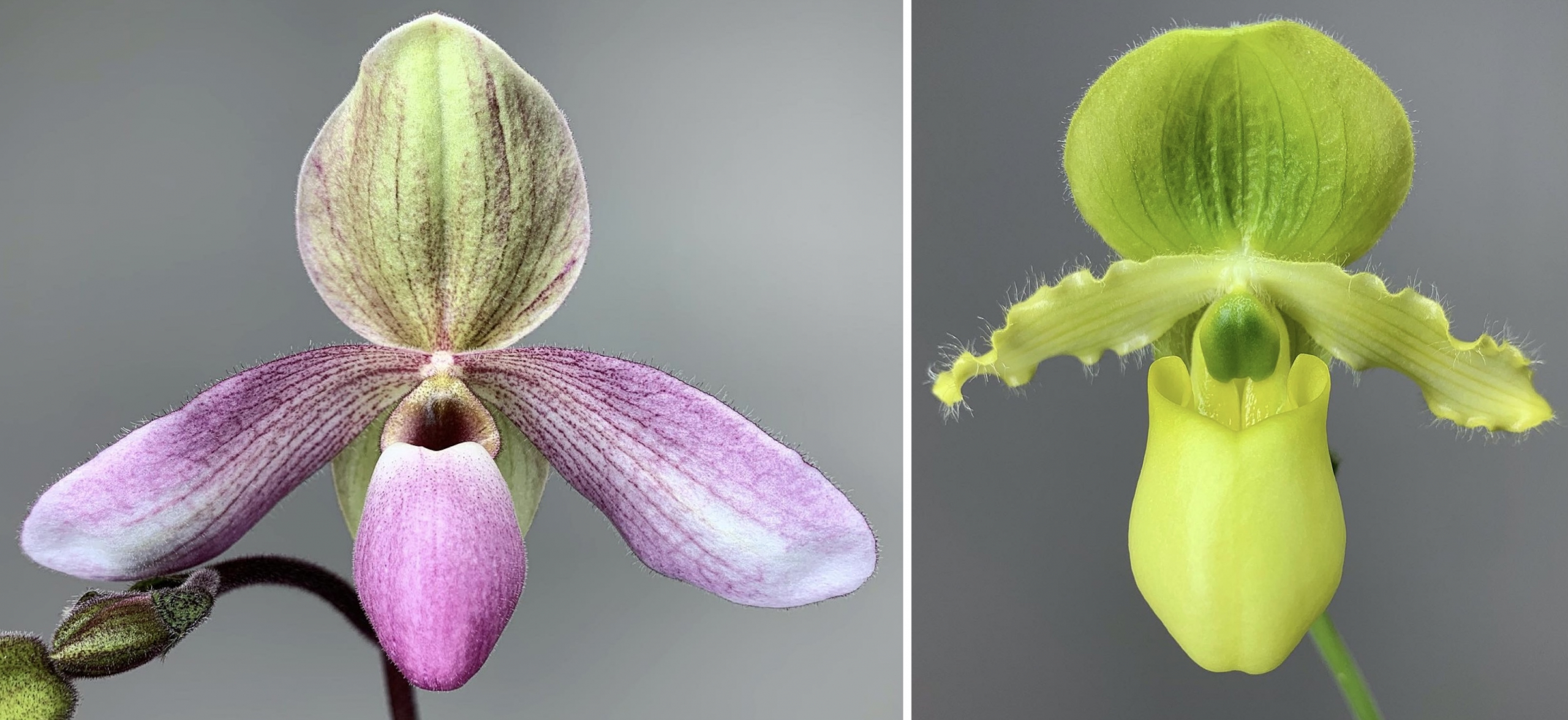
Paph Delophyllum x primulinum fma. alba
Pollinated: Nov 8, 2020
Sowed: TBD
Why This? Expected Outcomes – There is a very similar hybrid, Paph Cahaba Angels, made with Deperle, so I suspect these will look nearly identical to that cross. Given the high occurrence of the alba/flava form of primulinum, I wouldn’t be surprised if many of these seedlings also come out yellow (depending on what my Delophyllum had in its lineage). Best case I’m hoping for a broad range of colors from yellow to pink, and ideally with a high level of saturation because of the amount of color in my primulinum and the amount of pink in my Delophyllum.
|
 |
|
Paph tigrinum ‘Beetlejuice’ AM/AOS x self
Pollinated: December 19, 2020
Sowed: December 6, 2021 (1 year after pollination)
Notes: This pod was on the plant for nearly a full year and it still had not split. I decided to crack the pod and see if it even had seeds. To my delight, it did. I sowed the seeds without sterilizing them (or the pod)—basically, I used sterilized tweezers to dislodge a small amount of seeds over an open flask. I’ve done this a few times now with great success. I keep the remaining dry seed just incase the first attempt results in contamination, but so far my results are good. All three mother flasks did not have contamination after 6 weeks and germination started roughly 3-4 weeks after sowing. The flasks were not kept in total darkness, but they are on the bottom shelf under the active flasks and receive very little light.
Why This? Expected Outcomes – It’s a self-pollination from a sibling-crossed plant. The outcomes are expected to be the same as the parent. I’m hoping to create some of these to distribute to other collectors though, as Paph tigrinum are very rare. They are also reportedly difficult to raise from seed with many attempts resulting in failure as a result of poor germination and/or early death of the protocorms.
Update: Not good! In the end, almost all of the seedlings died in flask; those that didn’t brown out early on, struggled to grow. I did replate the largest, but they still struggled on the new media; in the end, I had 3 or 4 deflasked seedlings, which all did poorly and are circling the drain at this point. I will try again in the future, but want to use outcrossing rather than another self-pollination attempt.
|
 |
|
Phal Mikken x equestris
(tetraspis fma speciosa × stobartiana)
Pollinated: Jun 26, 2021
Why This? Expected Outcomes – this is a throwback to one of my first “special” phalaenopsis which was a Braquestris Melmi. That plant had earthy colours and produced a lot of flowers. I expect the same from this cross. I do find them a bit of a fussy grower though, so we’ll see if they ever get to blooming size.
|
  |
|
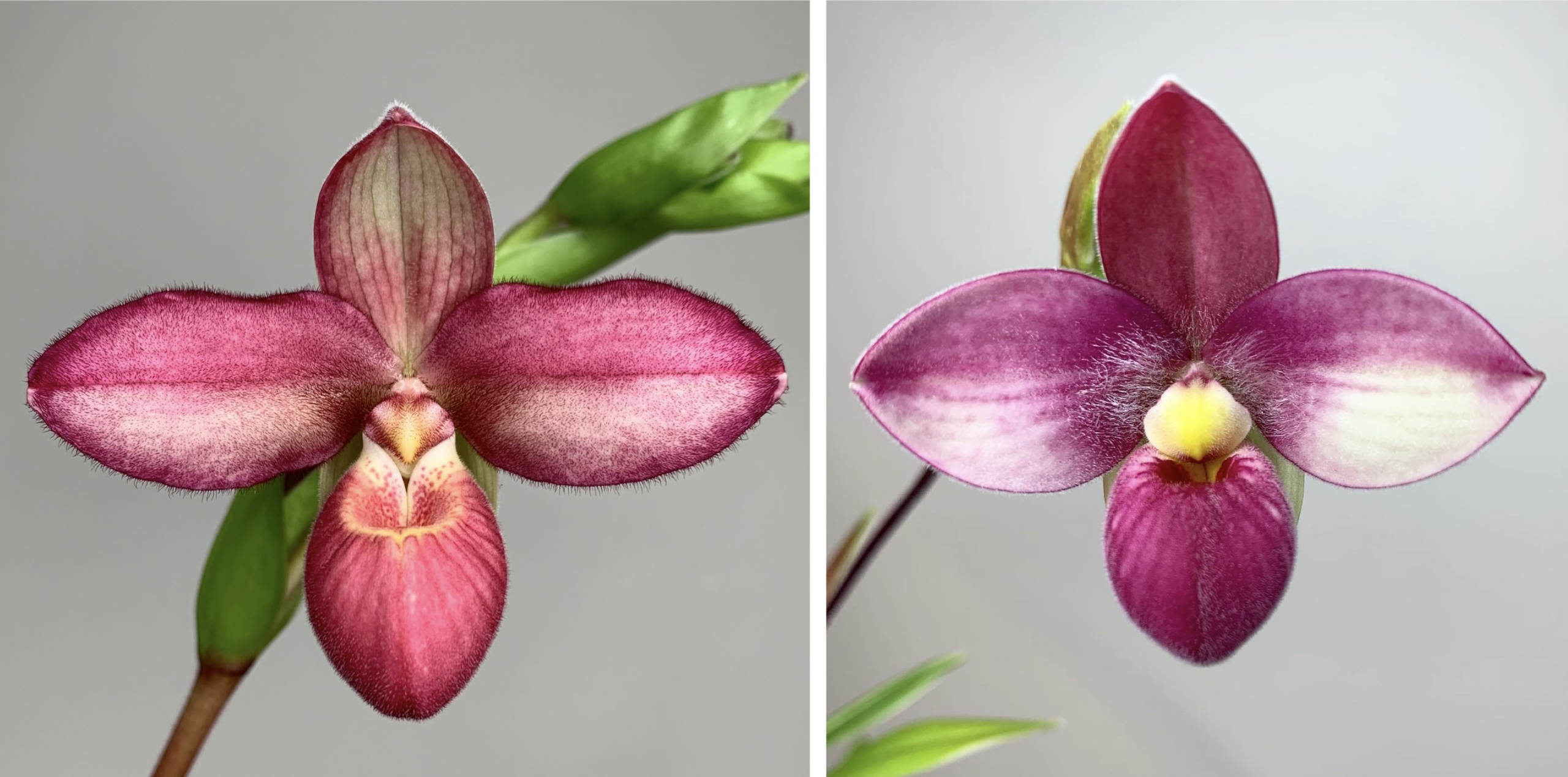
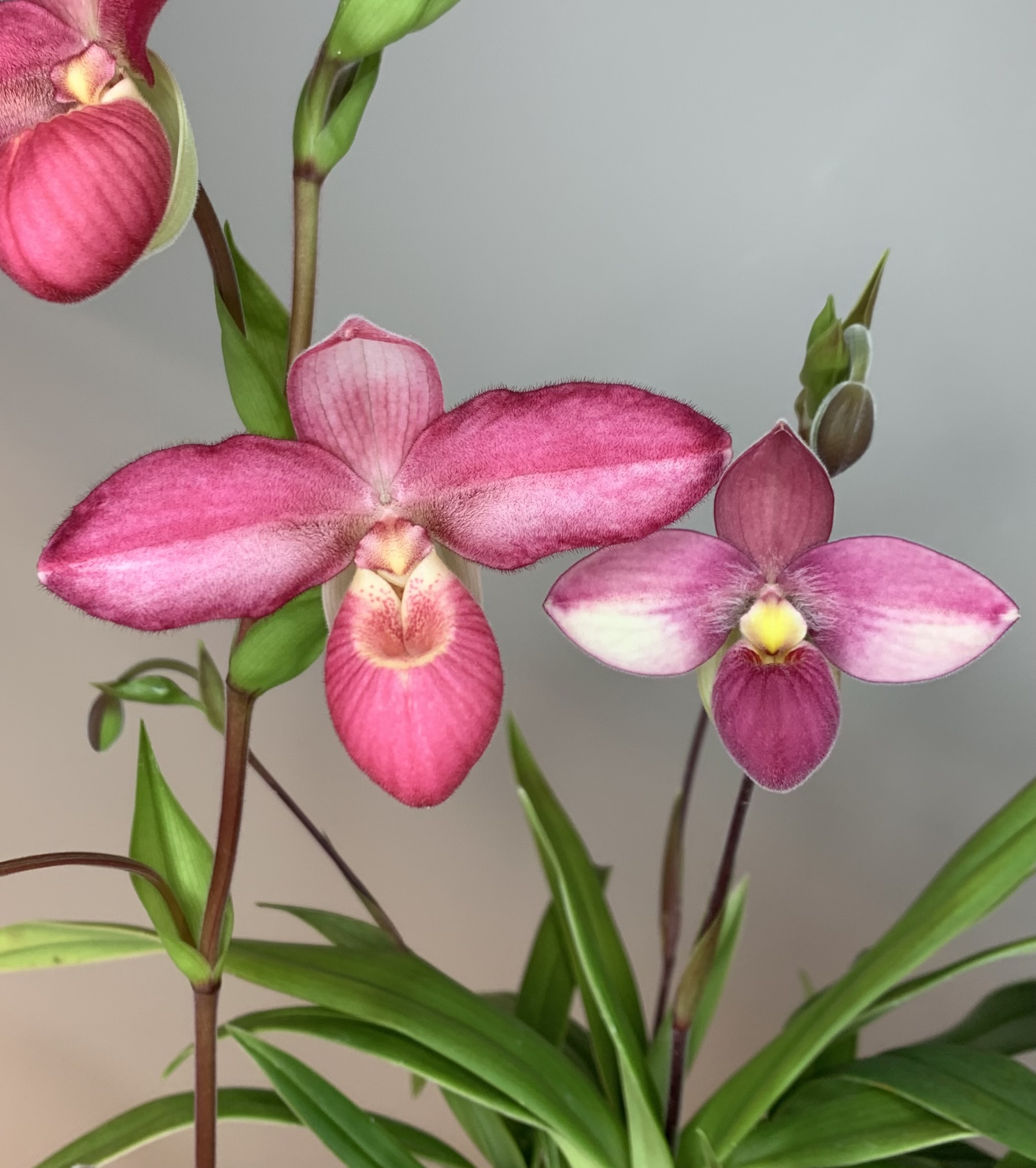
Phrag Ketchup Chips x Mem. Frank Louwe
Pollinated: Nov 23, 2021
Why This? Expected Outcomes – This is my first second generation cross using exclusively my own hybrids, but it was a low-yield cross with only about a dozen plants. I am hoping for brighter colours (like red or magenta flowers) as both of the selected parents are the best-coloured of their cross…HOWEVER, nearly all of the other siblings from Mem Frank Louwe were pink or white, so these could end up looking a lot like phrag schlimii . What will be the most interesting is the picotee (dark fringe) that both flowers have, along with the sort of 2-tone petals which have more colour above than below. As this is a more complex hybrid, the range of outcomes should be greater too – perhaps some will be more pink, more white, or at the very least more varied in shape and size.
Ancestry:
• 25% – schlimii
• 25% – fischeri
• 25% – besseae
• 12.5% – kovachii
• 12.5% – sargentianum
|
 |
|
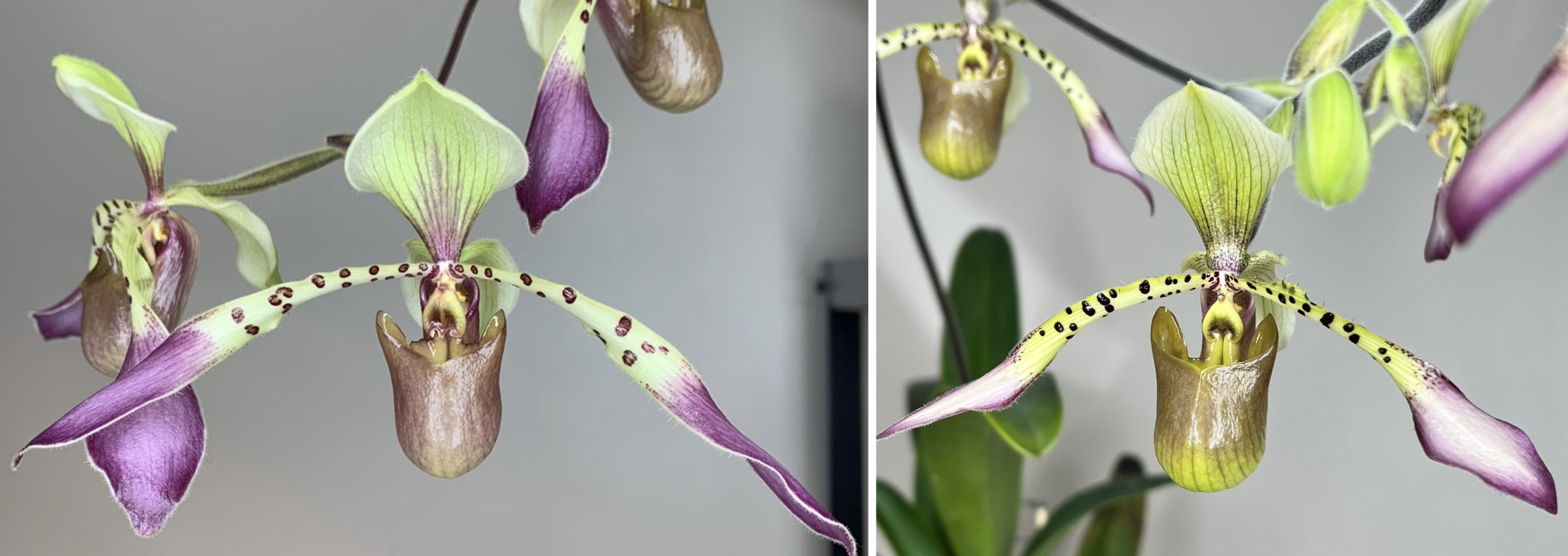
Paph Judy Adams x philippinense
Pollinated: Mar 8, 2022
Why This? Expected Outcomes – Judy Adams is lowii x lowii var richardianum—which is technically just paph lowii (if you believe lowii var richardianum is just a variety of lowii; given some morphological differences, I think it’s important to include the complete lineage). That said, the expected outcome… likely just like Paph Berenice. Hopefully with better red colouration from the highly pigmented philippinense parent that I used. Plants will probably be fairly robust and big – with leaves averaging 12-18″.
|
 |
|
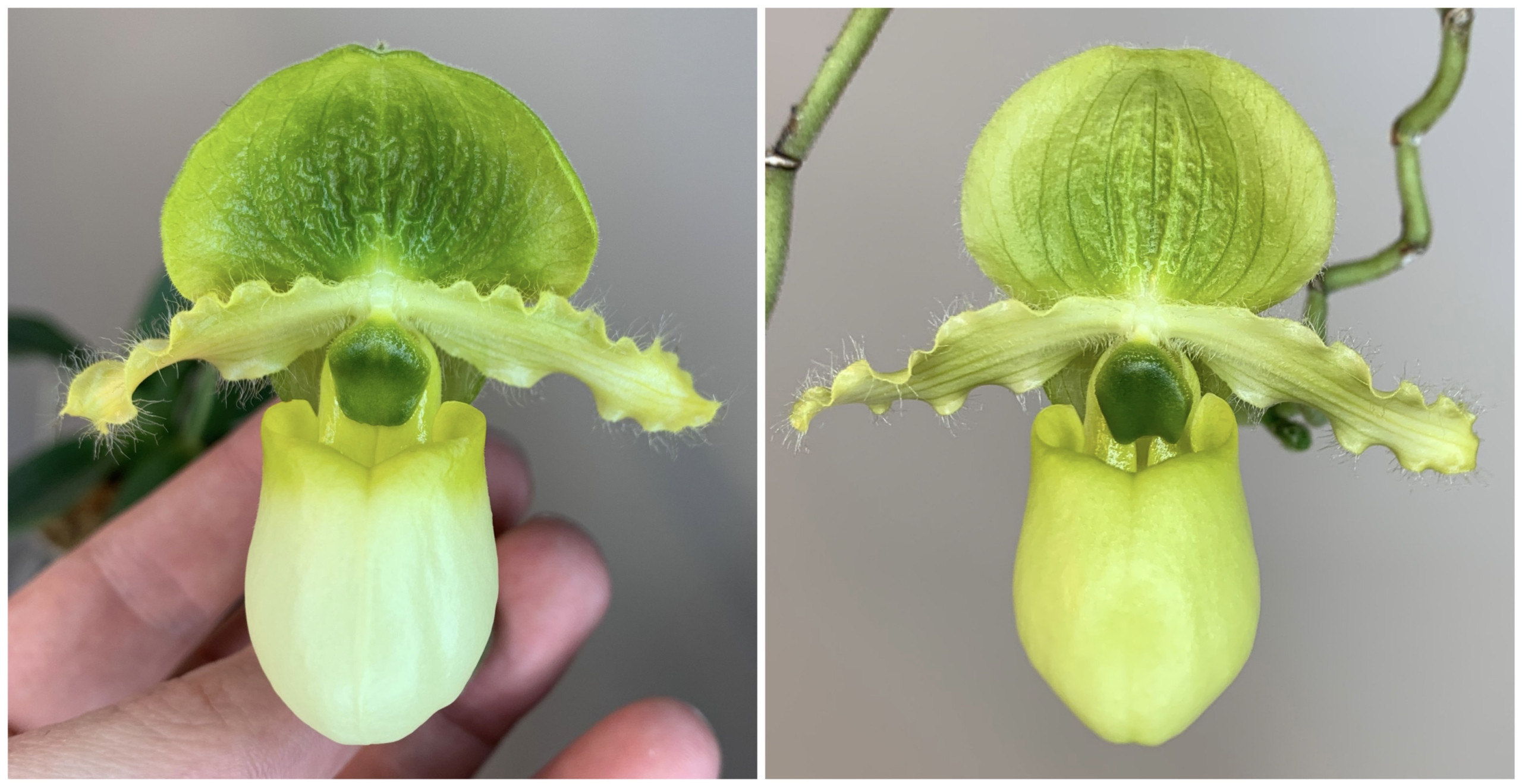
Paph lowii x Judy Adams
Pollinated: Mar 30, 2022
Why This? Expected Outcomes – Guaranteed not-inbred paph lowii! With Judy Adams being lowii x lowii var richardianum, this may not technically be considered “a hybrid”; I’ve kept the lineage in tact, just in case richardianum ever regains its species status (like what happened with phal violacea & bellina). Regardless of the taxonomic details – this is pretty much just Paph lowii (with a 1/4 contribution from lowii var richardianum). The mother plant came from awarded parents and has great colour but it also gave me grief if conditions or water chemistry was off; the father (Judy Adams) grows very well for me. My hope is for robust and easy to grow lowii plants that have good colour.
|
 |
|
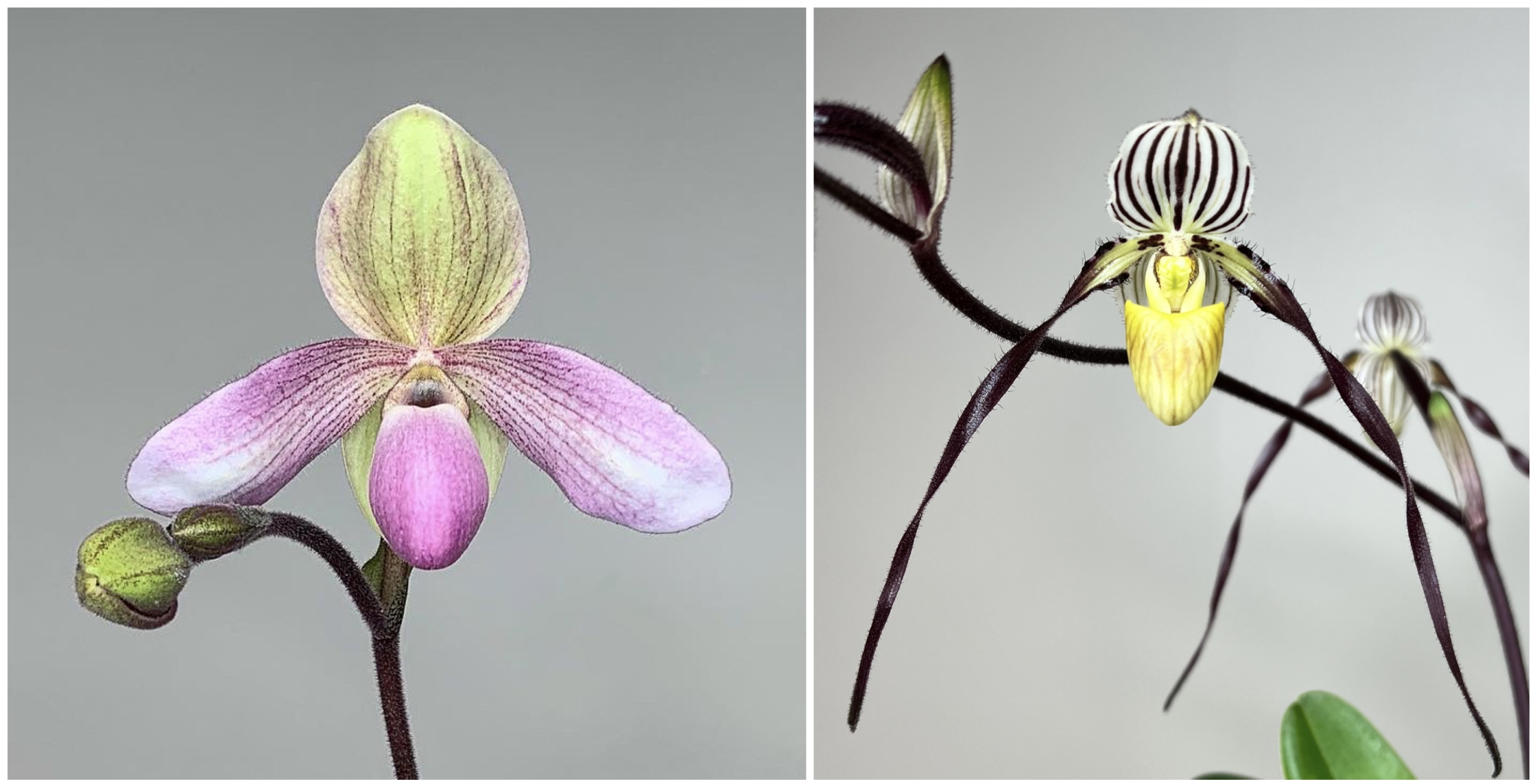
Paph primulinum (‘HBN Huge Dorsal Sepal’ x ‘Orchid Inn HBN Yellow’)
Pollinated: Dec 9, 2021
Sowed: Oct 12, 2022
Why This? Expected Outcomes – I have always wanted a green primulinum. The mother plant is mostly green and has a very large dorsal sepal that sometimes restricts the flower from opening; I’ve noticed this with a few other maduiae paphs that have over-sized dorsal sepals. The father (I feel) has a better balance of proportions and darker pigment though it’s more yellow. I’ve crossed them in the hopes of pulling forward the good traits from both and maybe if I’m lucky I can get a few that are more green than yellow with a large dorsal sepal that’s balanced enough to not affect the bloom as it opens.
|
 |
|
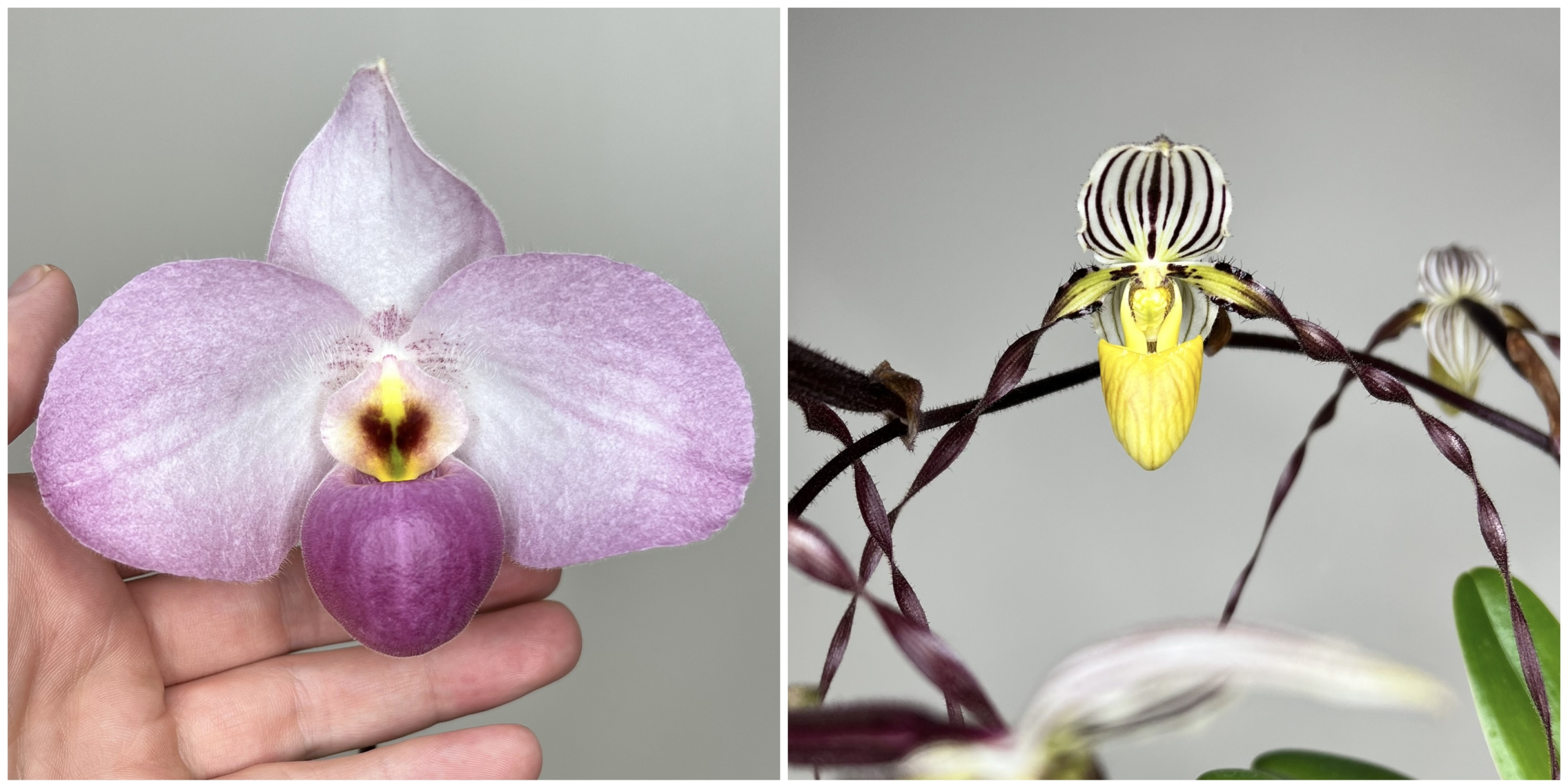
Paph Miva Adele Hugo
(Delophyllum x philippinense)
Pollinated: Mar 8, 2022
Why This? Expected Outcomes – This is a remake of Miva Adele Hugo. I could find one photo of the cross online and I think there’s a chance to really improve the outcome. My Delophyllum has a lot of colour and likely used a vinicolour delenatii; similarly my philippinense is very dark; so, I expect the outcome will be good. I had sown 1 mother and it had a small contamination, so I did an emergency removal of the media that had the growth and -surprisingly- it caught the contamination; I’ve tried this since and not been so lucky. My point – I only have a small number of seedlings from this cross – maybe a dozen or less. Will be neat to see flower one day.
|
 |
|
Paph Saigon Pink
(Ho Chi Minh x philippinense)
Pollinated: Mar 26, 2022
Why This? Expected Outcomes – Like the previous cross, this has contribution of delenatii and philippinense. It is a remake of Paphiopedilum Saigon Pink which has quite stunning flowers. They are pink with a white pouch and have the flat-wide-and-pointed petals like many multifloral-parvisepalum crosses. I don’t have many of these in flask and they seem a but fussy with the media I’ve chosen, but they are still progressively getting larger, so I’m hopeful I’ll end up with a few plants to deflask eventually.
|
 |
|
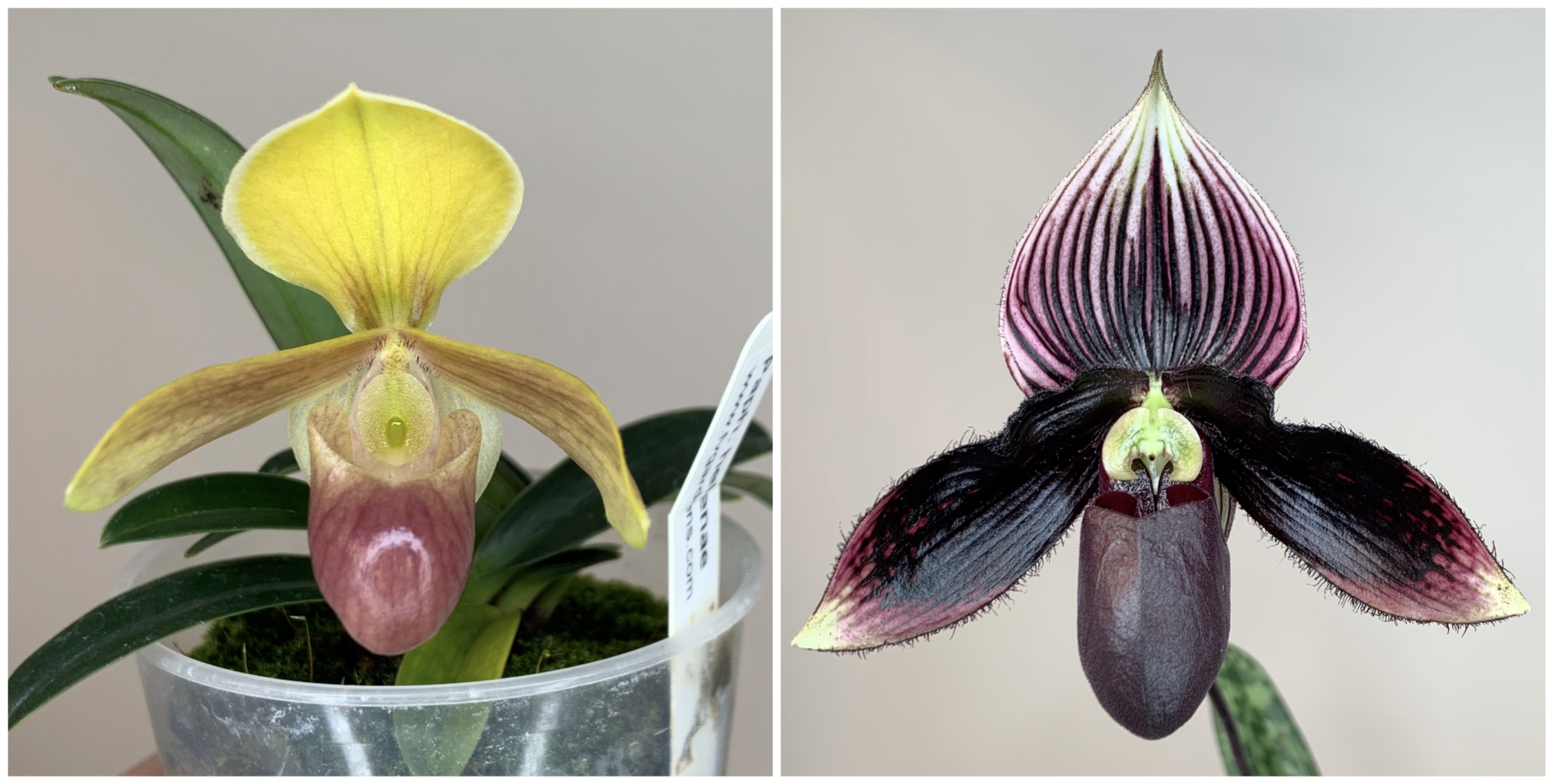
Paph helenae x Mystically Contrasting ‘HBN#1’
Pollinated: Dec 27, 2021
Deflasked: M1 Oct 15, 2023
Why This? Expected Outcomes – Dark compact flowers – obviously. This cross is my second most anticipated paph cross. They have grown really well in flask, the leaves are slightly mottled with darker lines and with the nearly-black flower colour of Mystically Contrasting, the potential for a stunning flower is high. My only hold-back on this cross is that helenae doesn’t have the greatest presentation from an award-winning perspective (the petals sit forward rather than flat), but some of the funky traits of each plant should result in a better outcome. Mystically Contrasting for example has a big dorsal sepal that sometimes traps the flower petals as they’re opening—the smaller dorsal of helenae should fix that. I may try and sib-cross the progeny in the far far future; however, cross-sectional hybrids like this are often harder to breed, so…we’ll see.
|
 |
|
Paph Hawaiian Skies x Mystically Contrasting ‘HBN#1’
Pollinated: Dec 27, 2021
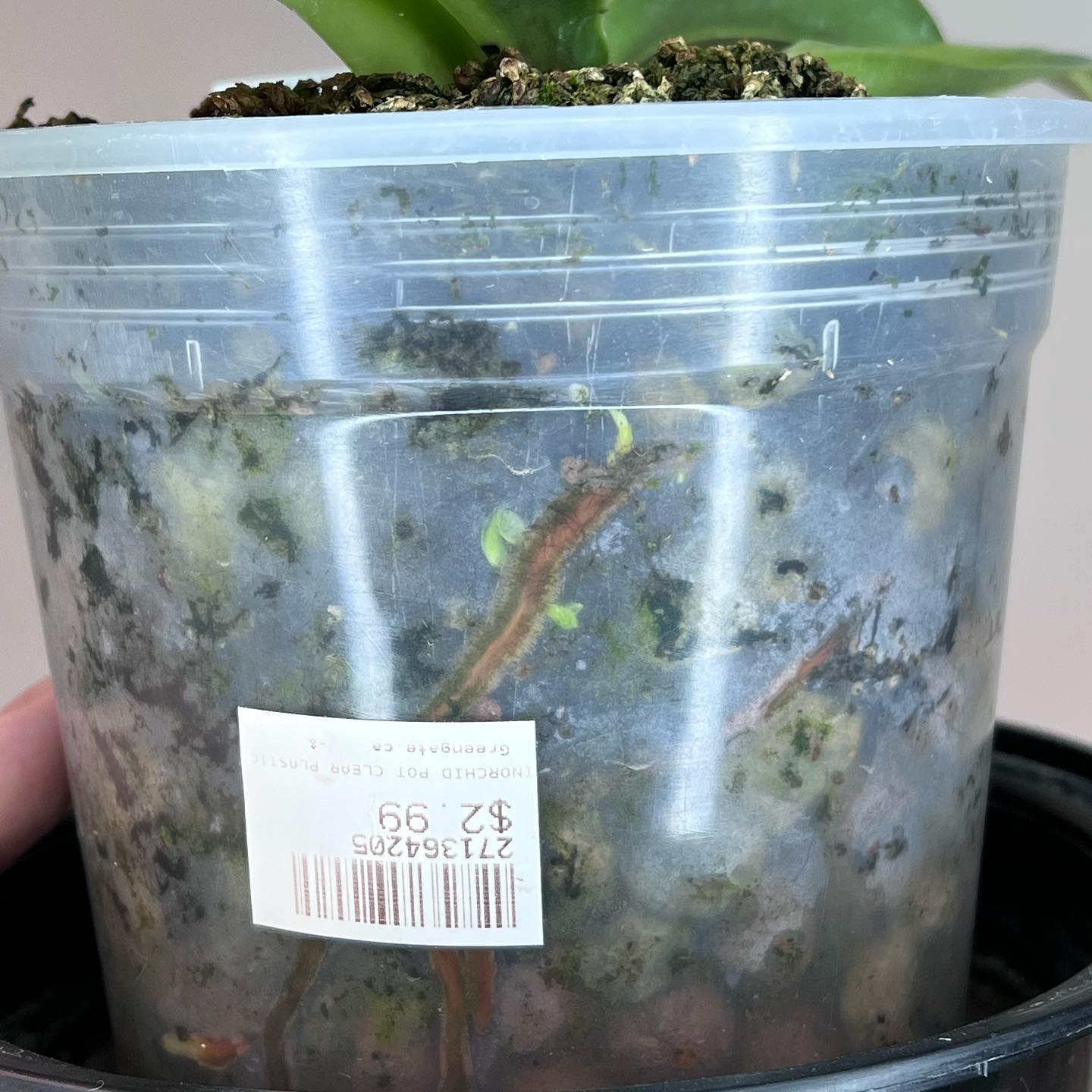
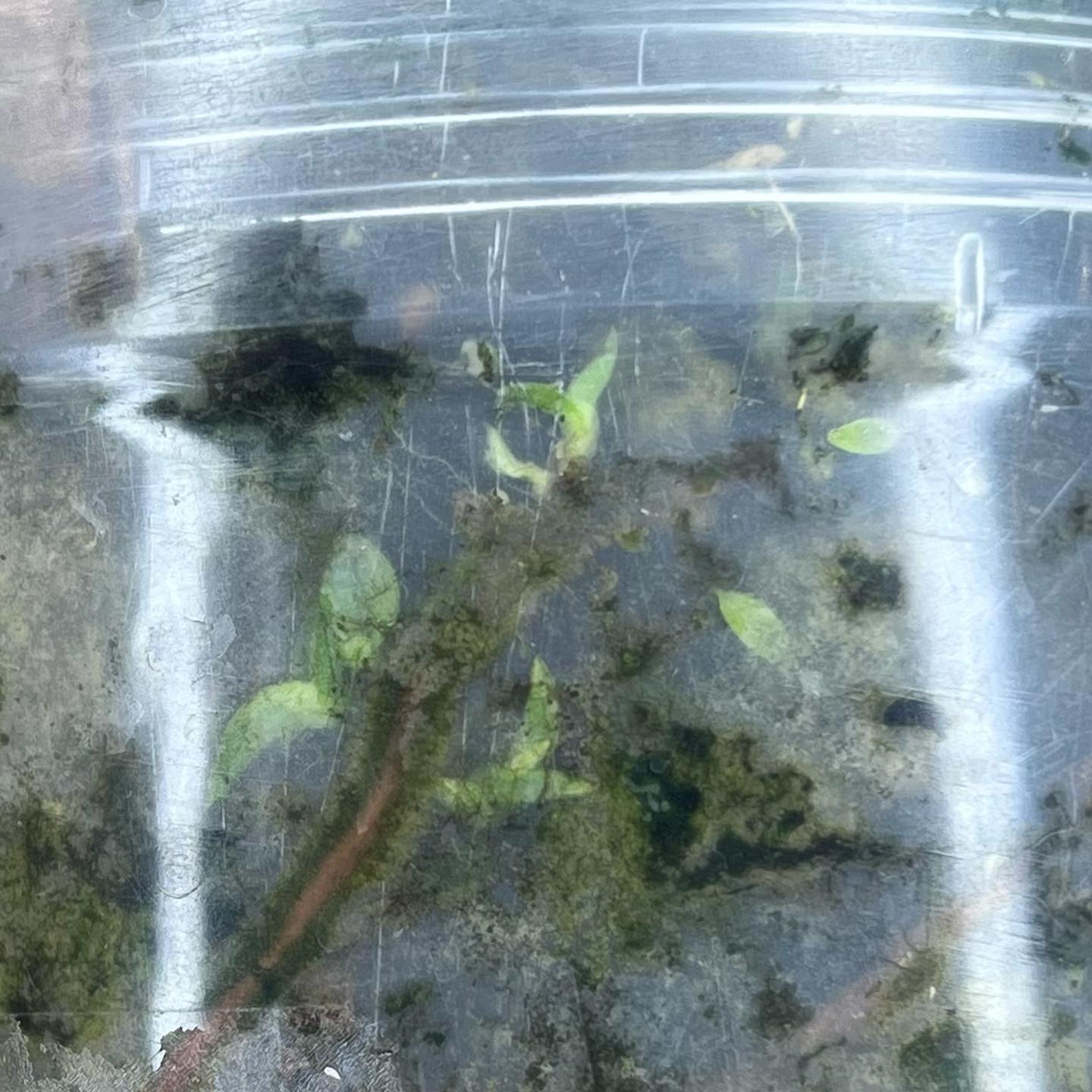
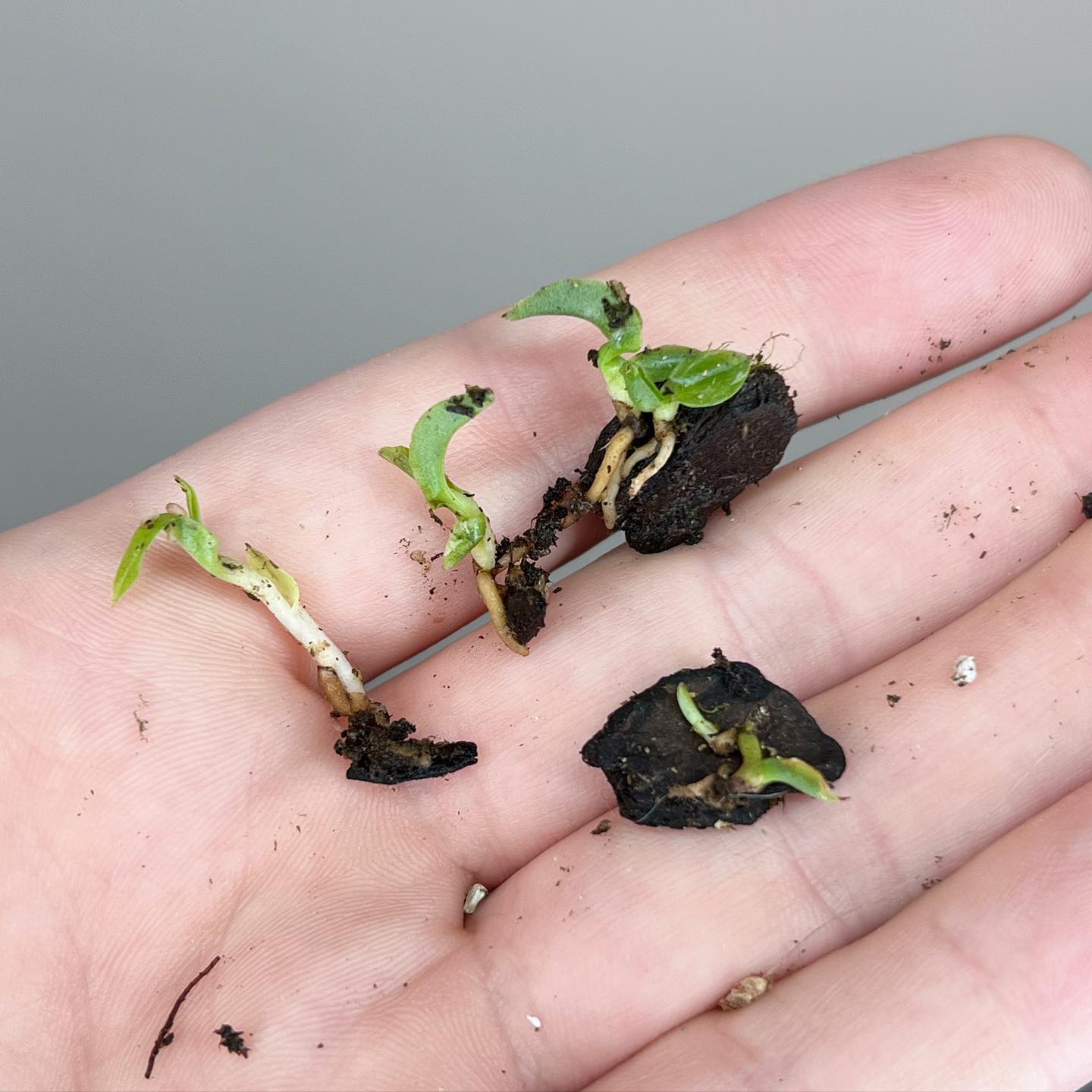
Why This? Expected Outcomes – This is me playing out of my comfort zone and the cross doesn’t really feel like my own as both of these plants came from Dave at Paph Paradise, from the same order. That said, I have had really poor success with maudiae crosses; my logic behind this specific attempt was to try and make a maudiae cross and grow the seedlings out under my conditions so that “natural selection” works in my favour. A lot of maudiae paphs come from non-calcareous habitats and those have then been further line-bred under fairly optimal conditions often with RO water that is low in minerals. My conditions are not like that, so I’m hoping that from a flask of many plants, I will find a few that thrive better. Might not work out, but it’s good to experiment.
|
   |
|
No-Flask (Pot-Sown) Paphiopedilums
Susspect: Paph. primulinum
Pollinated: Estimated Dec ’21 – Mar ’22 (5-9 months before August 2022)
Sowed: in pot (NOT FLASKED) after August 9, 2022
Deflasked: May 28, 2023 – removed from pot of Supreme Lady
Why This? Expected Outcomes – This is a bit of a messy situation—I don’t know exactly what these seedlings are! In early 2023, they popped up in the pot of my Paph Supreme Lady—that plant arrived August 9, 2022 and like all my plants on arrival I repotted it, stripping it to the roots (so whatever these seedlings are, they were not hitch hikers from old media). I let them grow as large as possible in the “mother pot” (about 8 months), but when the leaves started to jam up I dug them out and planted them into my established propagation box which is full of live moss.
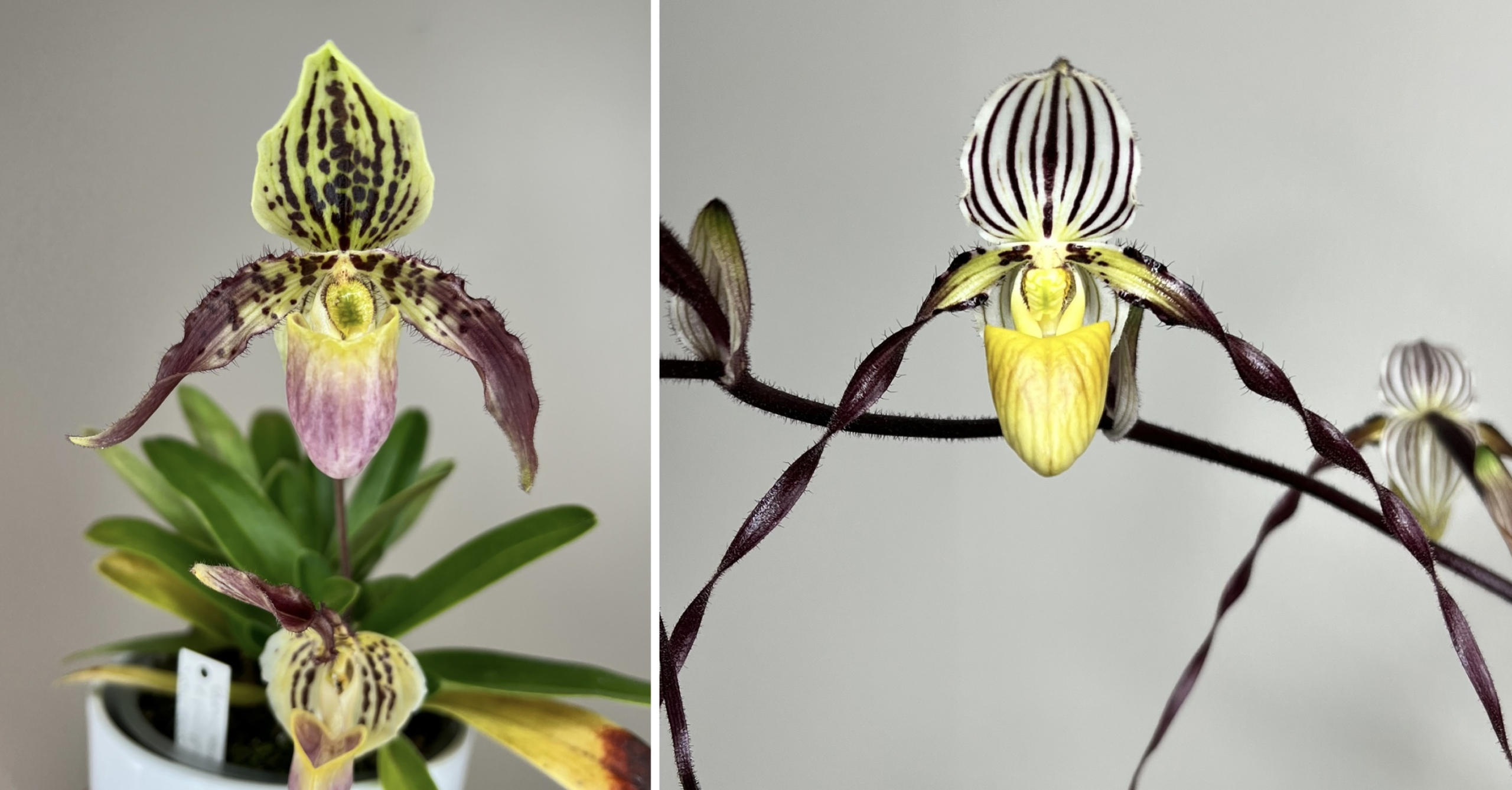
What are they? Most paph seed pods take 5-9 months to mature which means there’s a somewhat narrow widow on what these might be; there are only 3 likely seed pods I’d made in December that year (9 months prior to the repot): Paph primulinum (the grex listed up above), Paph helenae x Mystically Contrasting, and Paph Hawaiian Skies x Mystically Contrasting; in March I had also made Paph Miva Adele Hugo, Paph Berenice, a cocholopetalum-philippinense x philippinense, and Ho Chi Minh x philippinense, but 5 months a fairly short for most paph seed pods—I’ve only seen lowii pods mature that quickly. Based on this and how the seedlings currently look, I have a strong hunch that these are Paph primulinum. They continue to grow and have light tessellation on the leaves – so we’ll see…
|
 |
|
Paph (Tropical Magic ‘Mini Spots’ x philippinense fma album ‘Mini Green Tails’) x philippinense
Pollinated: Mar 16, 2022
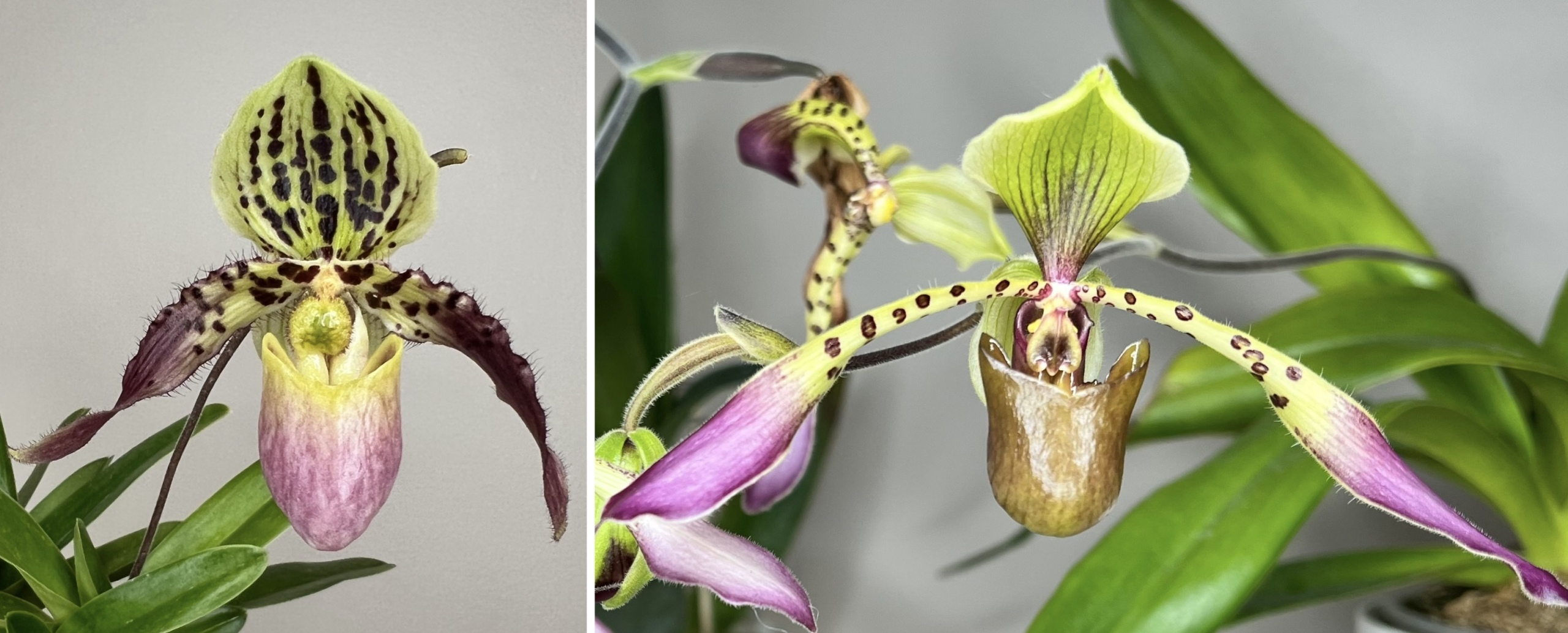
Why This? Expected Outcomes – Small to medium-sized philippinense is my guess. The mother plant is from Paphanatics and is VERY compact with leaves that are only about 3-4″ long. It flowers twice a year; however, there are only 1 to 3 flowers produced sequentially per spike. Back-crossing it on to my philippinense should introduce some size, but also bring up the flower count too. I expect these will be good growers; however, it’s quite a complicated hybrid with contributions from the sections Cochlopetalum, Coryopedilum and Paphiopedilum – that could mean a fertility barrier lies ahead that will limit the potential for future crosses from these plants.
|
 |
|
Paph (Tropical Magic ‘Mini Spots’ x philippinense fma album ‘Mini Green Tails’) x lowii
Pollinated: Apr 10, 2022
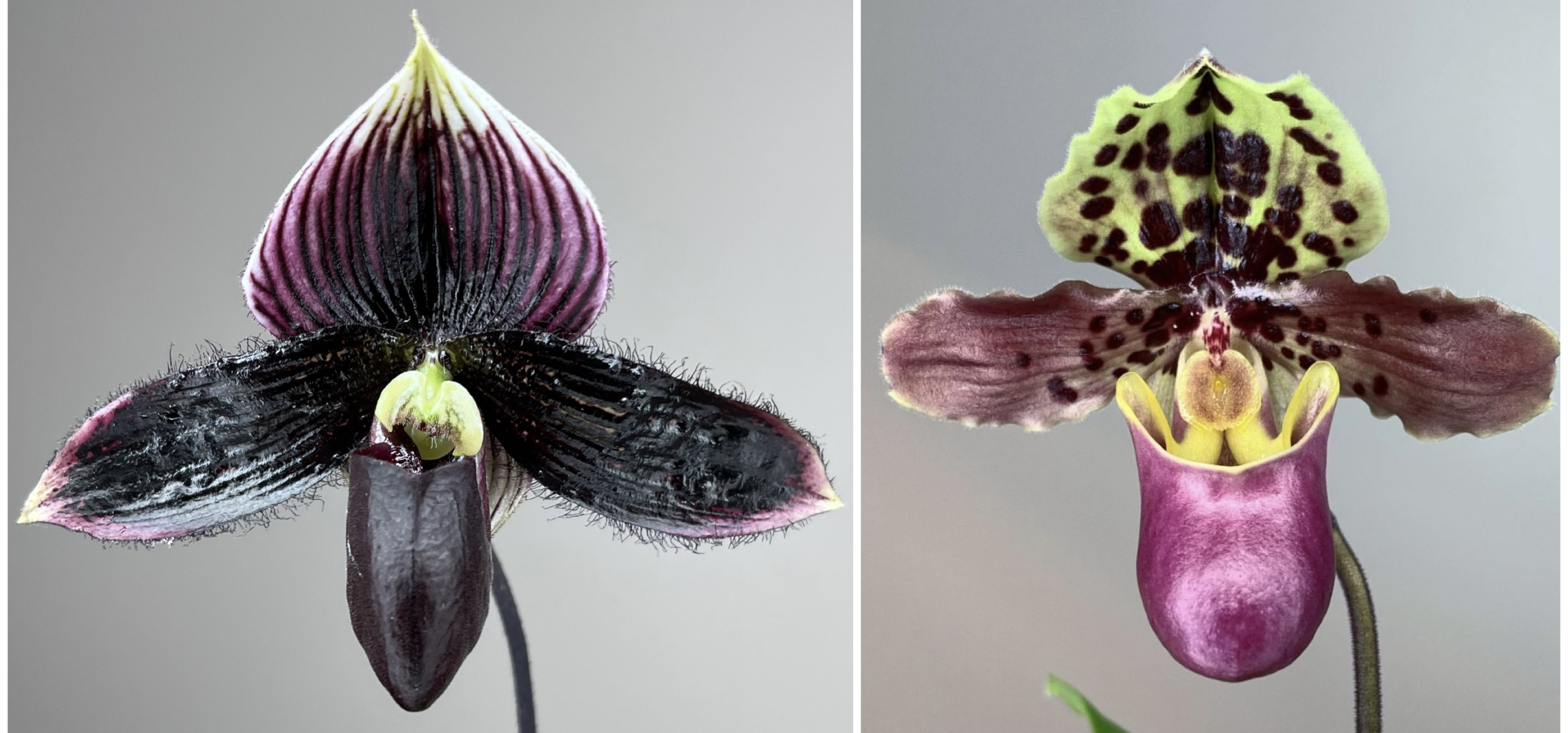
Why This? Expected Outcomes – This is similar to Paph Berenice and Paph Lipstick; So I’m expecting somewhere between the two. Should have good spotting on the petals and dark colouring at the tips of the petals.
|
 |
|
Paph Mystically Contrasting ‘HBN#2’ x henryanum
Pollinated: Jul 30, 2022
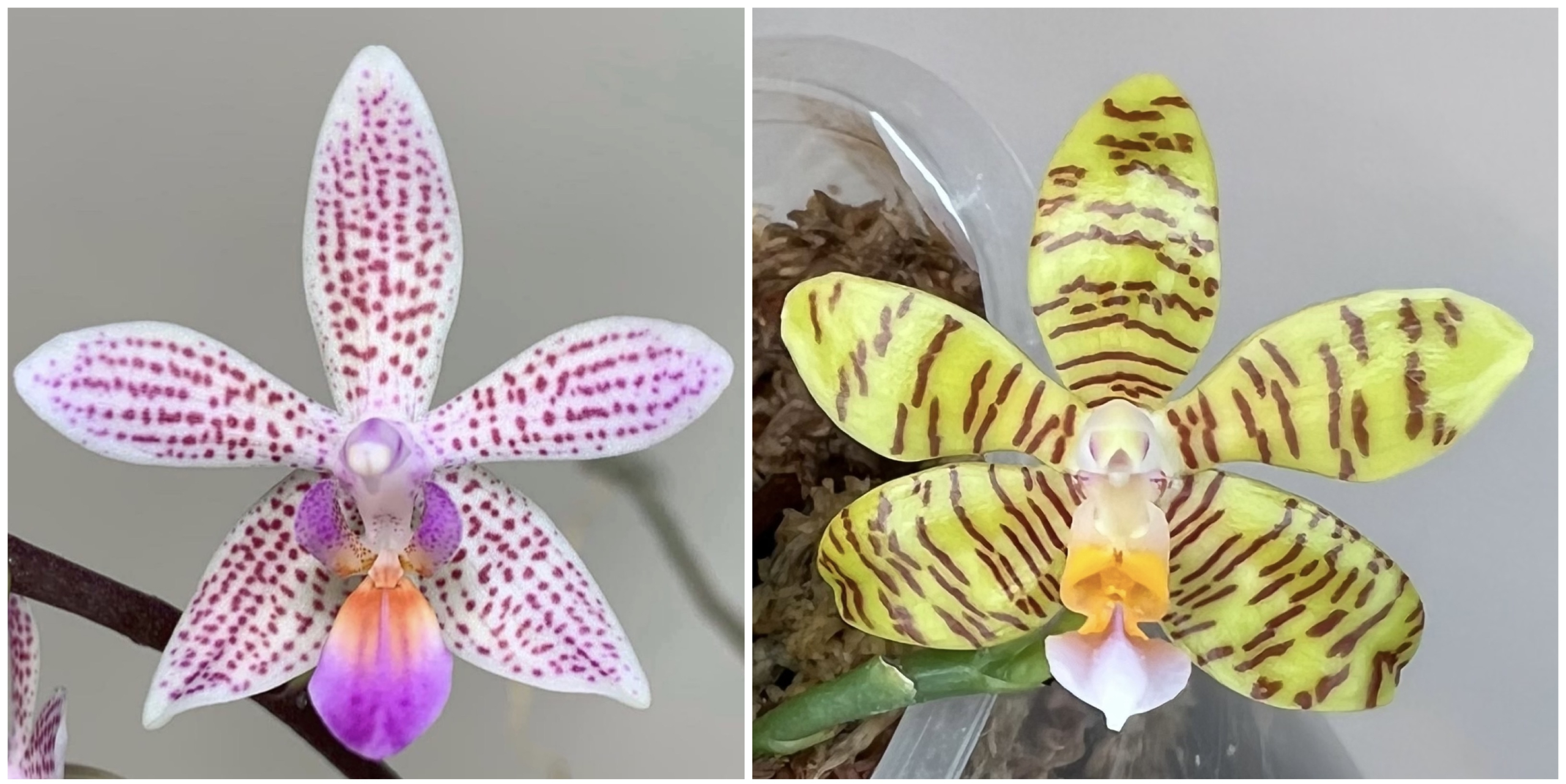
Why This? Expected Outcomes – dark and glossy flowers on very compact plants. This is somewhat similar to my Mystically Contrasting-helenae cross. The colour of my henryanum is dark, so these should be dark and have better shape than the helenae cross. Germination was not as plentiful with this cross, so we’ll see how they grow with time.
|
 |
|
Phal Li’l Bit x reichenbachiana
(maculata x lindenii) x reichenbachina
Pollinated: Oct 29, 2022
Why This? Expected Outcomes – Maculata and reichenbachiana look similar and they are somewhat closely related, which is probably the only reason this cross worked. I expect the outcome will look a lot like phal maculata or reichenbachina, but who knows. I haven’t seen a single F2 generation of phal Li’l Bit and while I had tried crossing it many times, all pods aborted. When this one carried to regular term, I wasn’t surprised when I found the pod had no seeds and was just full of chaff (the fluff inside the seed pod). I sow chaff even though no seed was visible because sometimes you get lucky—AND I DID! I have one protocorm that germinated.
|
 |
|
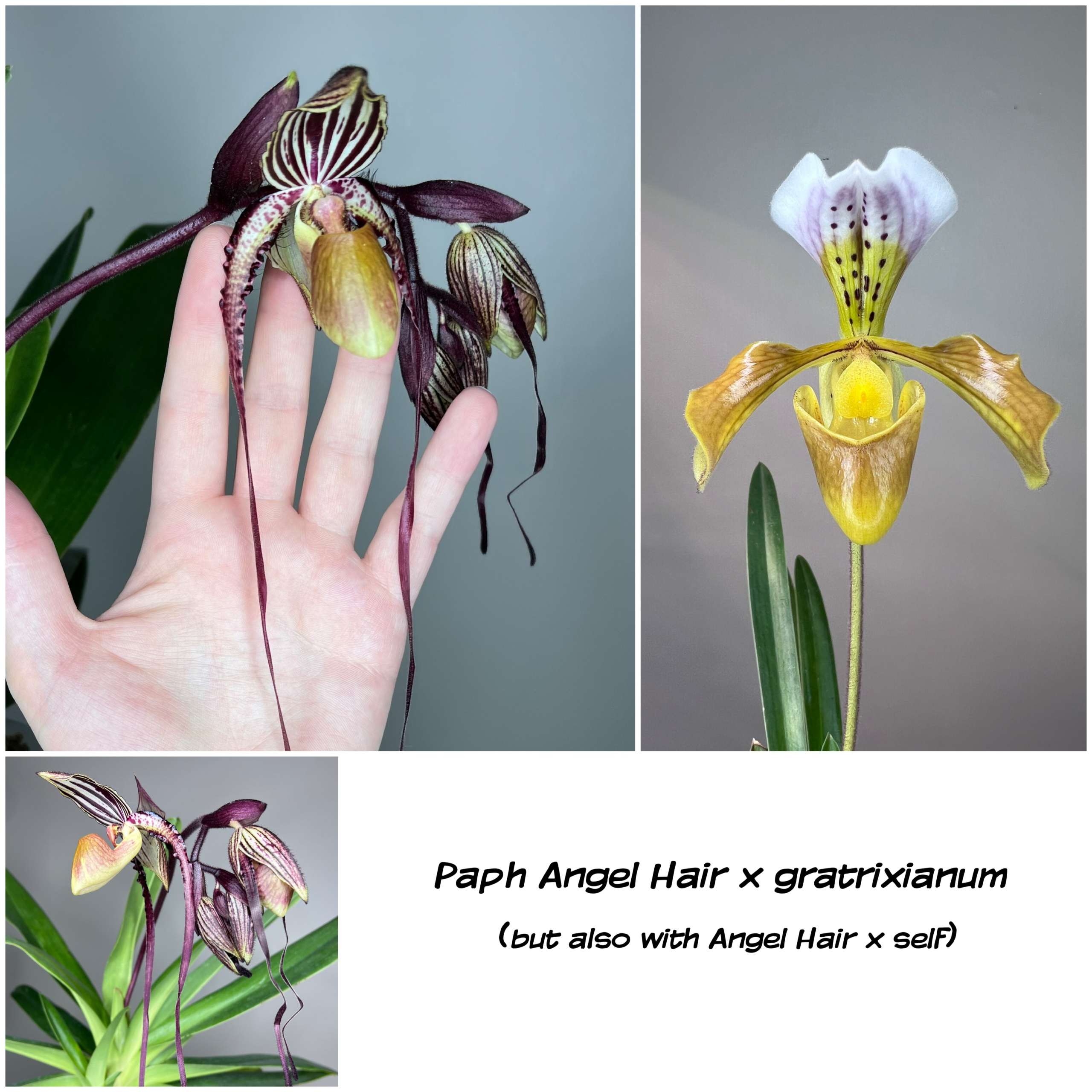
Paph Angel Hair x gratrixianum var. christensonianum
(+ Paph Angel Hair x self)
Pollinated: Dec 9, 2022
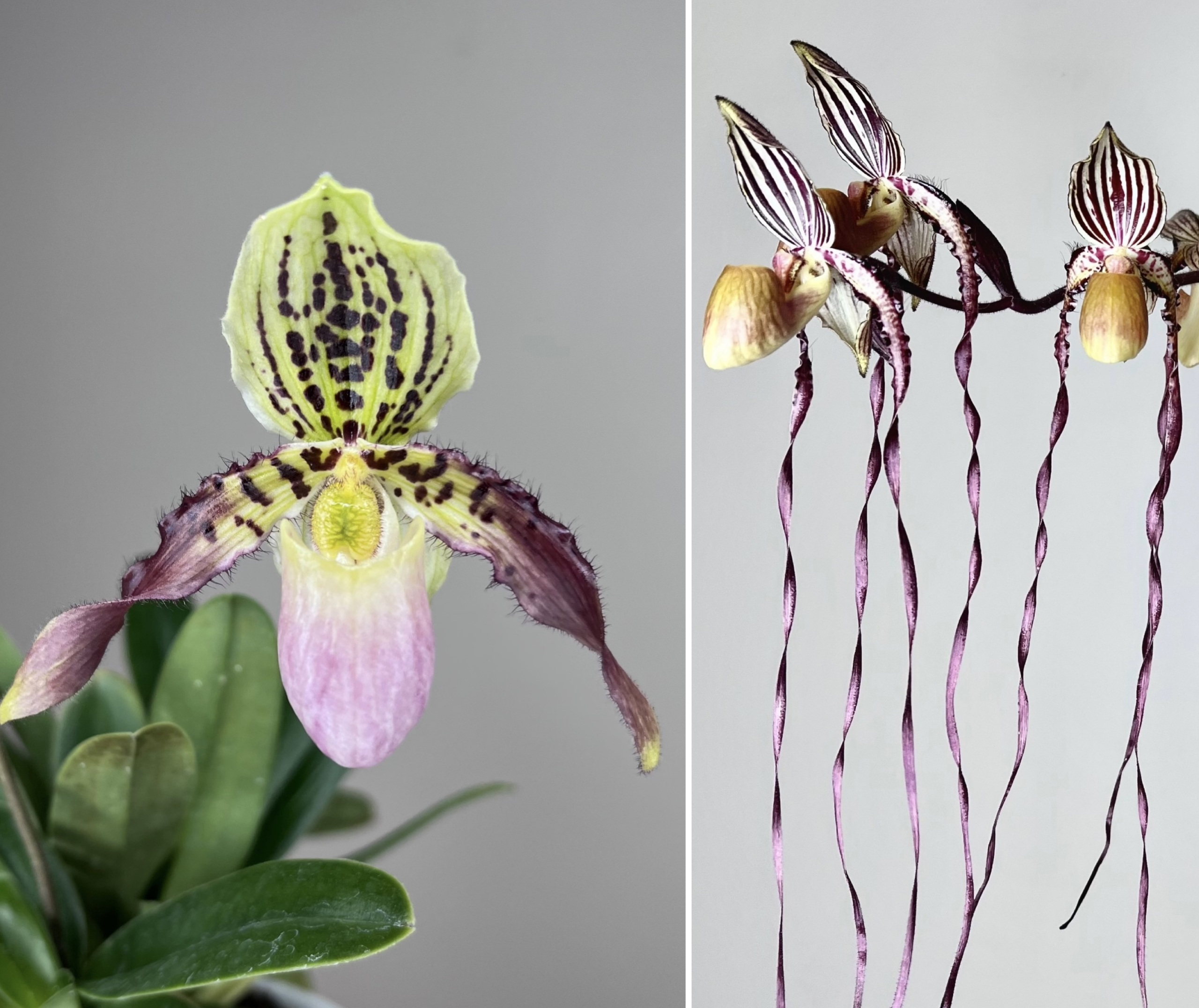
Why This? Expected Outcomes – I was tight on space and stupidly used pollen from 2 plants on one flower, so this is a selfing AND a cross with gratrixianum. It’s totally possible that only one or the other will come through. By mid-size I should be able to tell which is which based on how the leaves look; the gratrixianum was var. christensonianum and had very skinny and thin leaves compared to Angel Hair. I hope that the gratrixianum cross works because I’ve seen similar crosses from paphs in the section Paphiopedilum crossed with sanderianum or roth and the outcome is really stunning. For the selfing, I’m just hoping for some that have wider or longer petals.
|
 |
|
Paph (Tropical Magic ‘Mini Spots’ x philippinense fma album ‘Mini Green Tails’) x Angel Hair
Pollinated: Dec 9, 2022
Why This? Expected Outcomes – Lots of potential for unique flowers on relatively compact plants. Because the mother plant is an old Paphanatics plant, I went a little crazy and crossed it with everything. If nothing else, they should grow well in most home conditions provided they get enough light.
|
 |
|
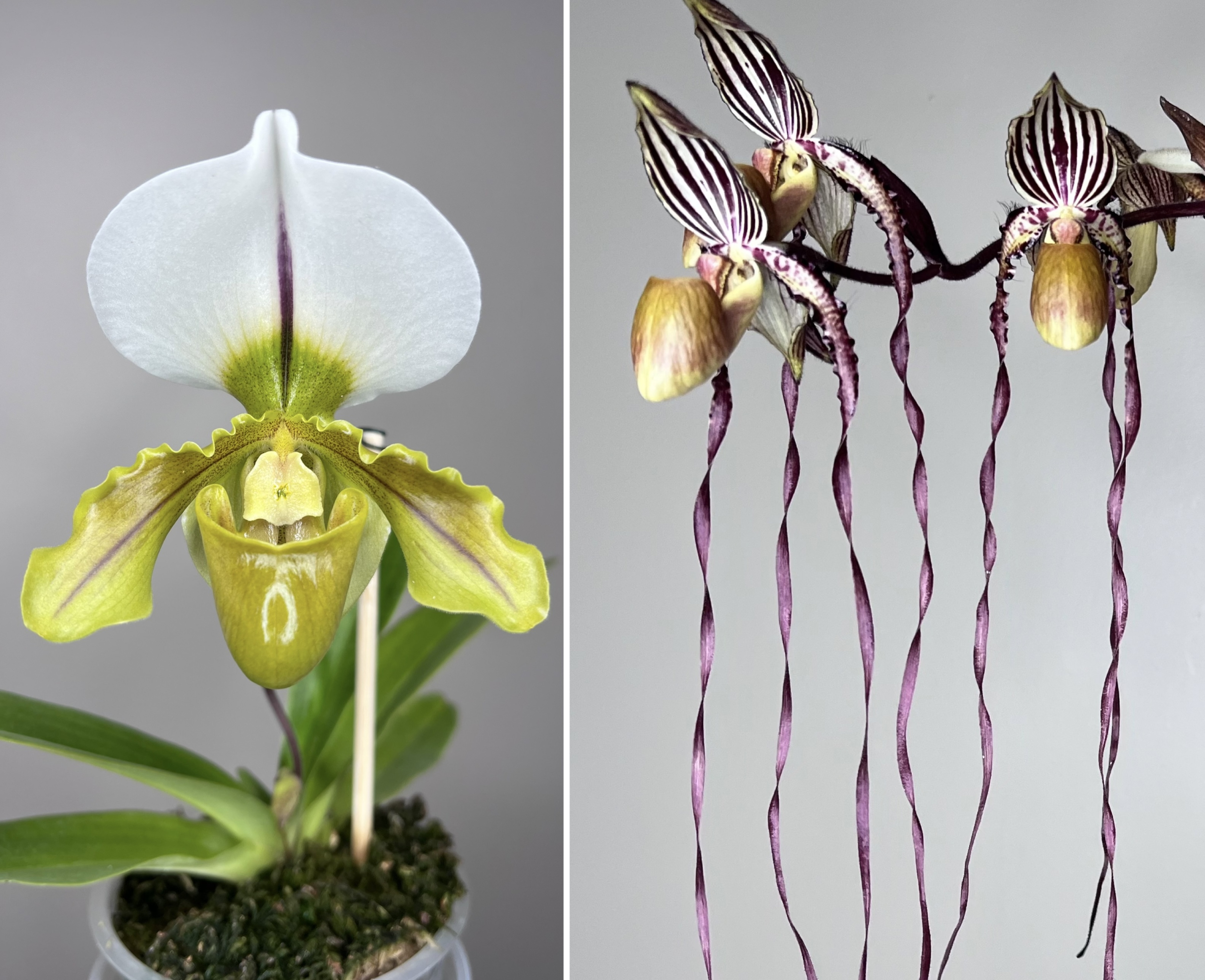
Paph Hamana Spice x Angel Hair
Pollinated: Dec 30, 2022
Why This? Hypothesis – This is probably a terrible cross—but that’s exactly why I had to try it. Hamana Spice is a chunky, early-predecessor to many green bulldog-type Paphs, while Angel Hair is a multifloral with long, trailing petals. These two breeding directions don’t usually mix… but what if they did? Best-case scenario: The dorsal sepal from rothschildianum (in the pollen parent) aligns well, producing an unusual, long-petaled bloom. Lower flower count (common when strap-leaf Paphs are crossed with multiflorals), but thicker, slightly elongated petals, which I actually like. Worst-case scenario: A complete genetic clash leading to awkward, unbalanced, or downright ugly flowers. Why It’s Worth It I’ve only seen strap-leaf Paphs × multiflorals attempted a couple of times, and while the flower count was lower, the resulting petals were wider, thicker, and longer. There’s a lot of opportunity for this to go wrong, but sometimes, the weirdest crosses lead to the most unexpected successes.
|
 |
|
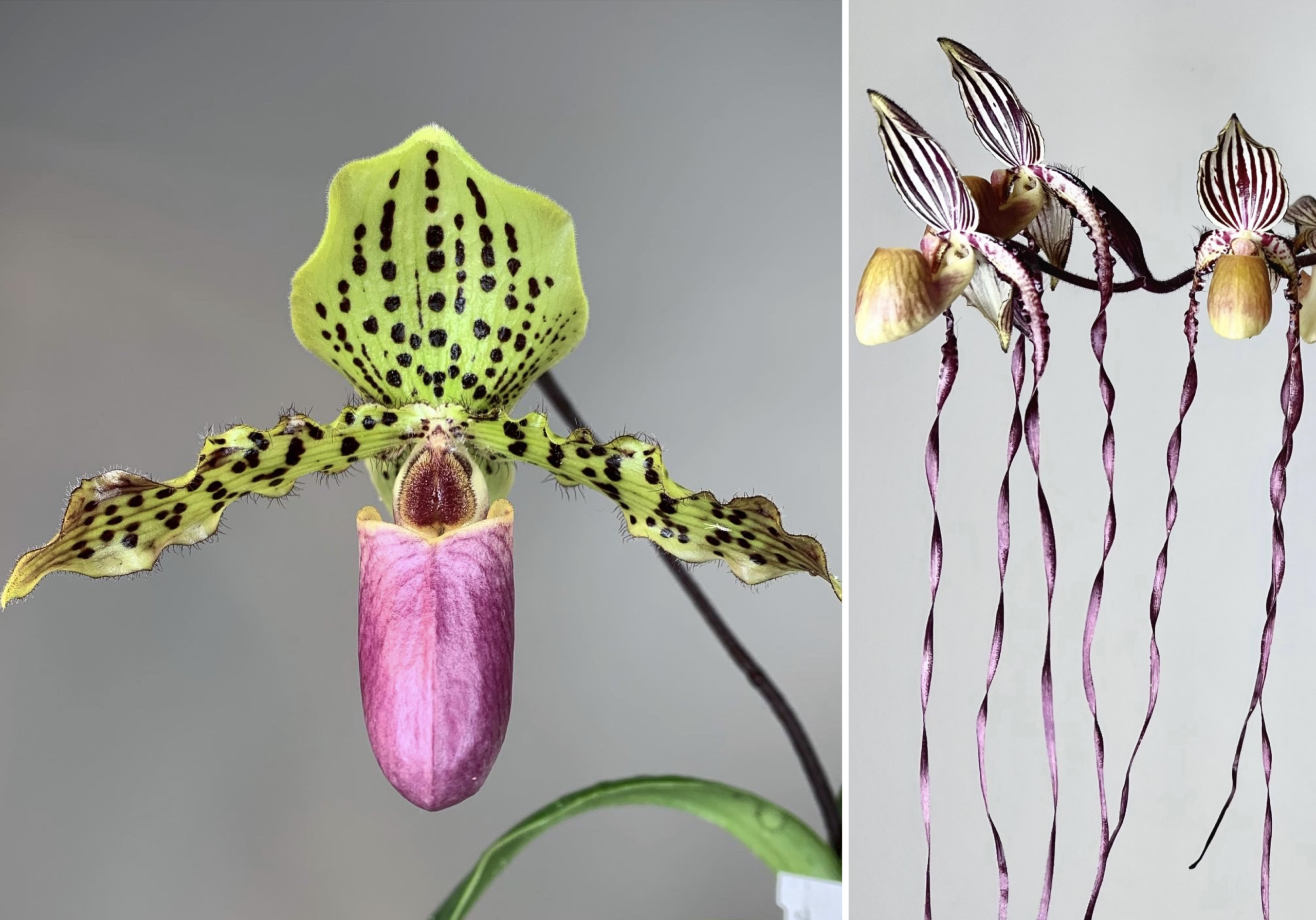
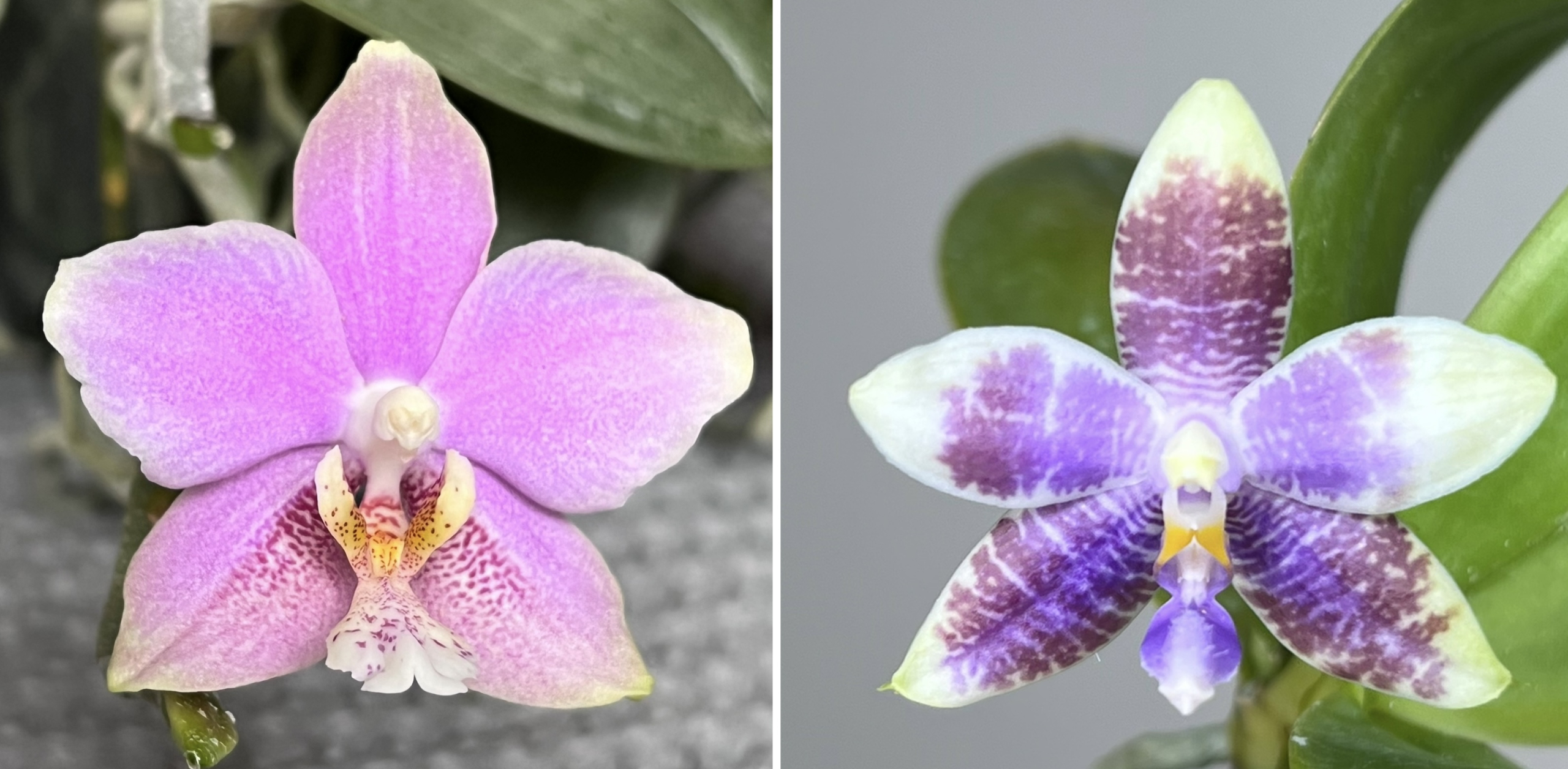
Paph Henryvan x Angel Hair
Pollinated: Jul 1, 2023
Why This? Expected Outcomes – My #1 most anticipated paph cross! The doubling up of rothschildianum from both parents has a lot of potential to produce wide flowers. The colours from Henryvan are bright pink and green – if some of that transfers to the progeny, then rothschildianum-esque plants with unique colours could be the outcome. I’d be very pleased with that. Both of the parents are good growers for me.
|
 |
|
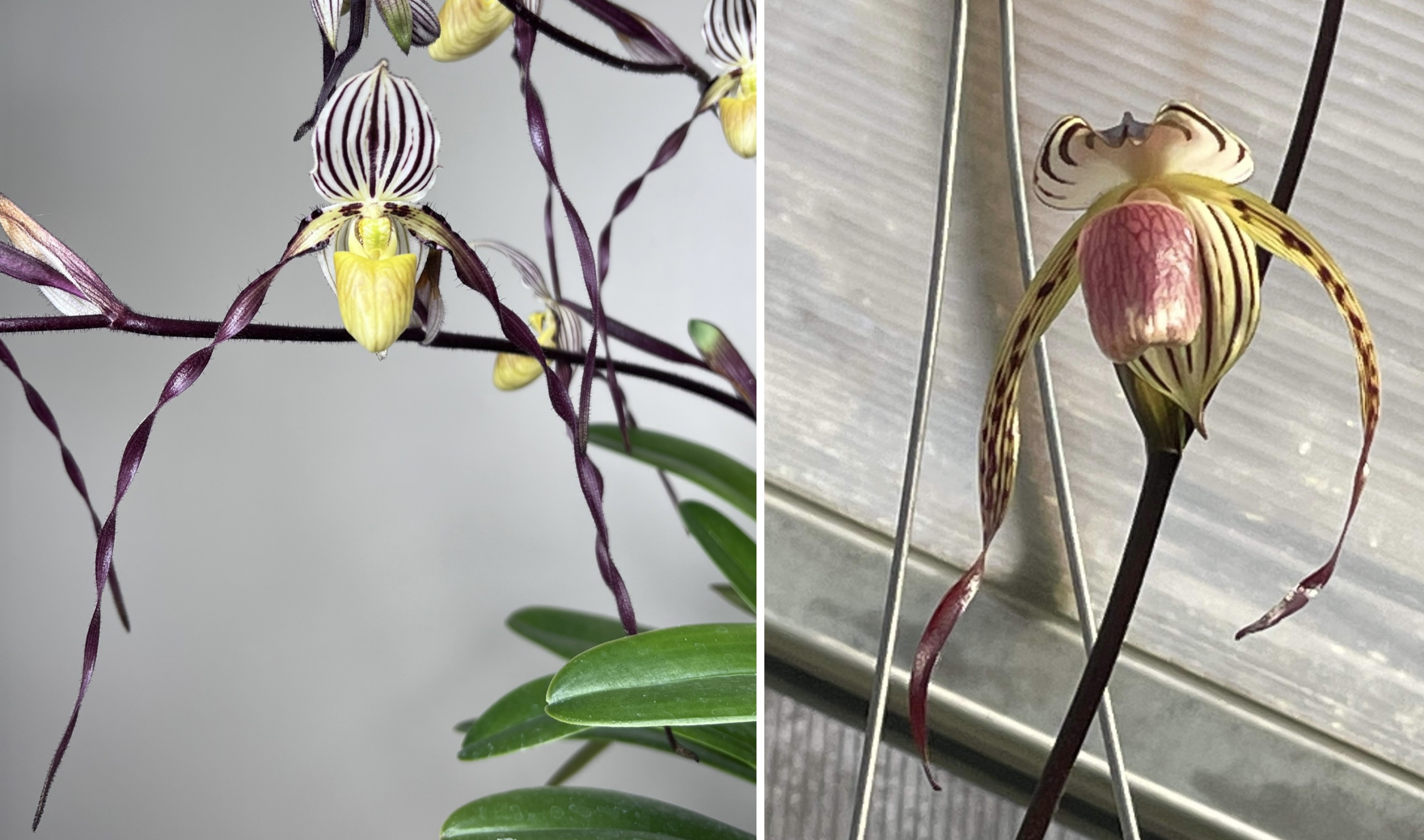
Phal August Occasion x Lioulin Blue Pheasant
Pollinated: Jul 1, 2023
Why This? Expected Outcomes – I only have 2 protocorms of this cross. With August Occasion having an alba parent on one side, I think there’s a chance the Lioulin’s courulea colours could carry forward. Ideally pastel blue flowers would be nice; pink with spots is more likely though.
|
 |
|
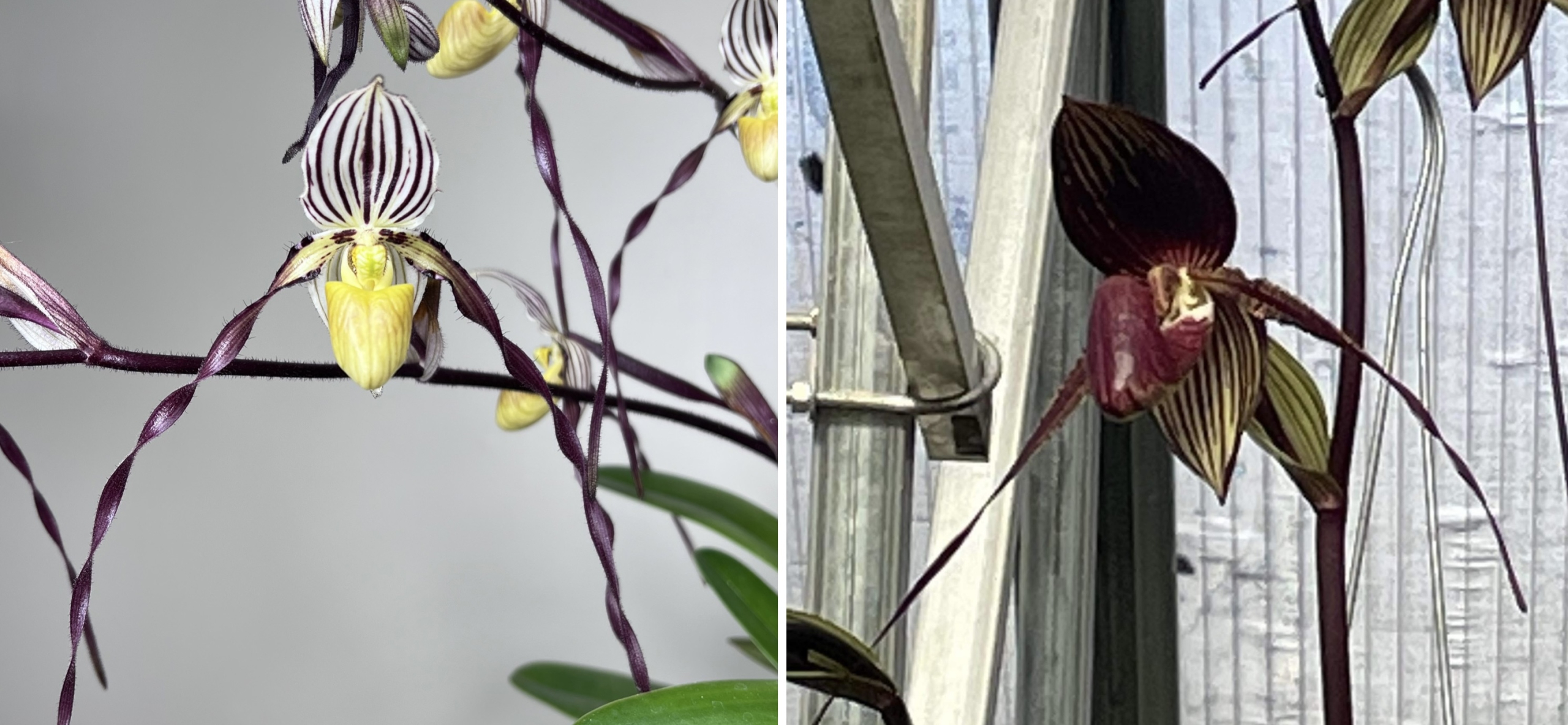
Paph Mount Toro (philippinense x stonei)
Pollinated: Apr 4, 2023
Why This? Expected Outcomes – This is a remake of Mount Toro so the outcome is fairly cut and dry – it should look like this. If anything the darker colours from my philippinense should bring forward more red in the petals. The pollen from the stonei came from my friend Ken Avant, so this cross is extra special and I’m excited to grow them out.
|
 |
|
Paph philippinense x Anita Baby
Pollinated: Apr 4, 2023
Why This? Expected Outcomes – The pollen from Anita Baby is also from Ken Avant. Those plants are so dark and we are both excited to see what will come of this cross because my philippinense is dark too. I believe Dave/Paph Paradise has already made this cross, so it will likely be named by the time I grow these out and flower them.
|
 |
|
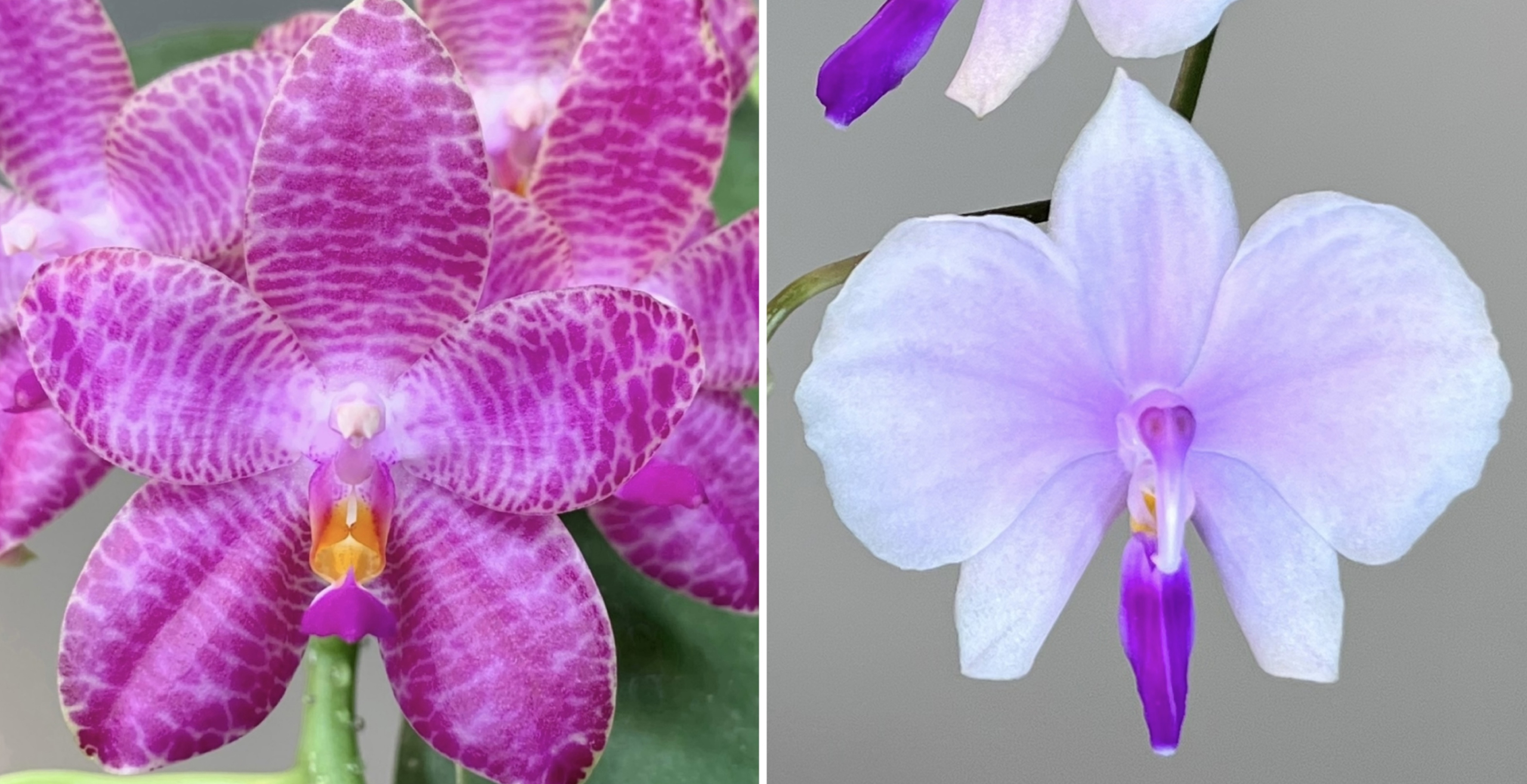
Phal Marianne Schmoll x violacea ‘Indigo’
(honghenensis x cornu-cervi chattaladae) x violacea
Pollinated: Jun 6, 2023
Why This? Expected Outcomes – Like the previous cross, this has lots of potential. The violacea is the darkest I’ve ever seen in person and its flowers smell wonderful. Mixing this all together, I’m guaranteed to get dark pigments and strong fragrance – beyond that…who knows what will happen.
|
 |
|
Phal Mok Choi Yew x lowii
(gigantea x violacea) x lowii
Pollinated: Oct 19, 2023
Why This? Expected Outcomes – This cross seems impossible, so I’m actually expecting the outcome to just be Mok Choi Yew x self, as the result of some accidental auto pollination.
|
 |
|
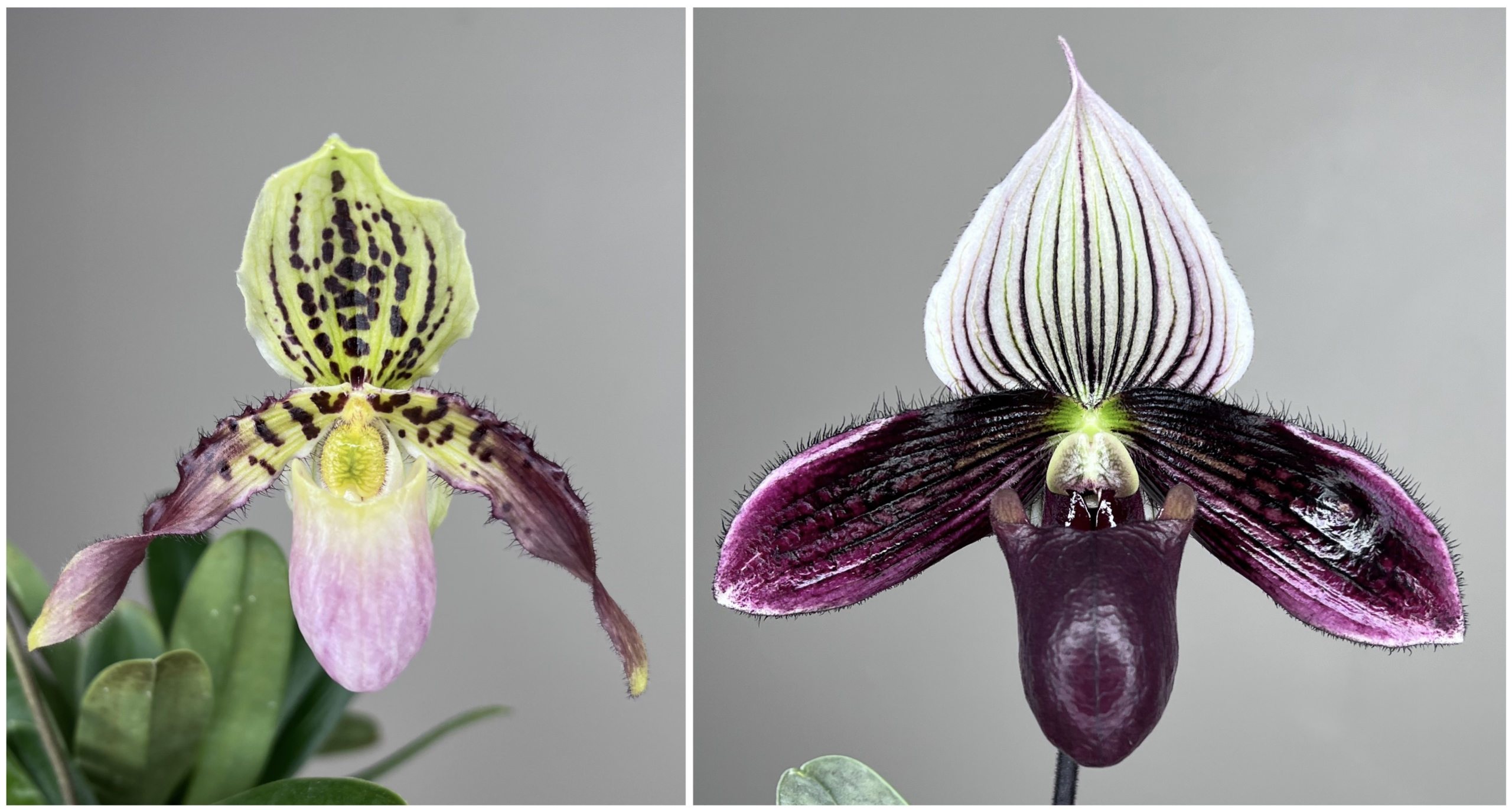
Paph (Tropical Magic ‘Mini Spots’ x philippinense fma album ‘Mini Green Tails’) x Mystic Paradise
Pollinated: Feb 18, 2024
Why This? Expected Outcomes – If this cross works, it’s sure to have beautifully dark flowers.
|
 |
|
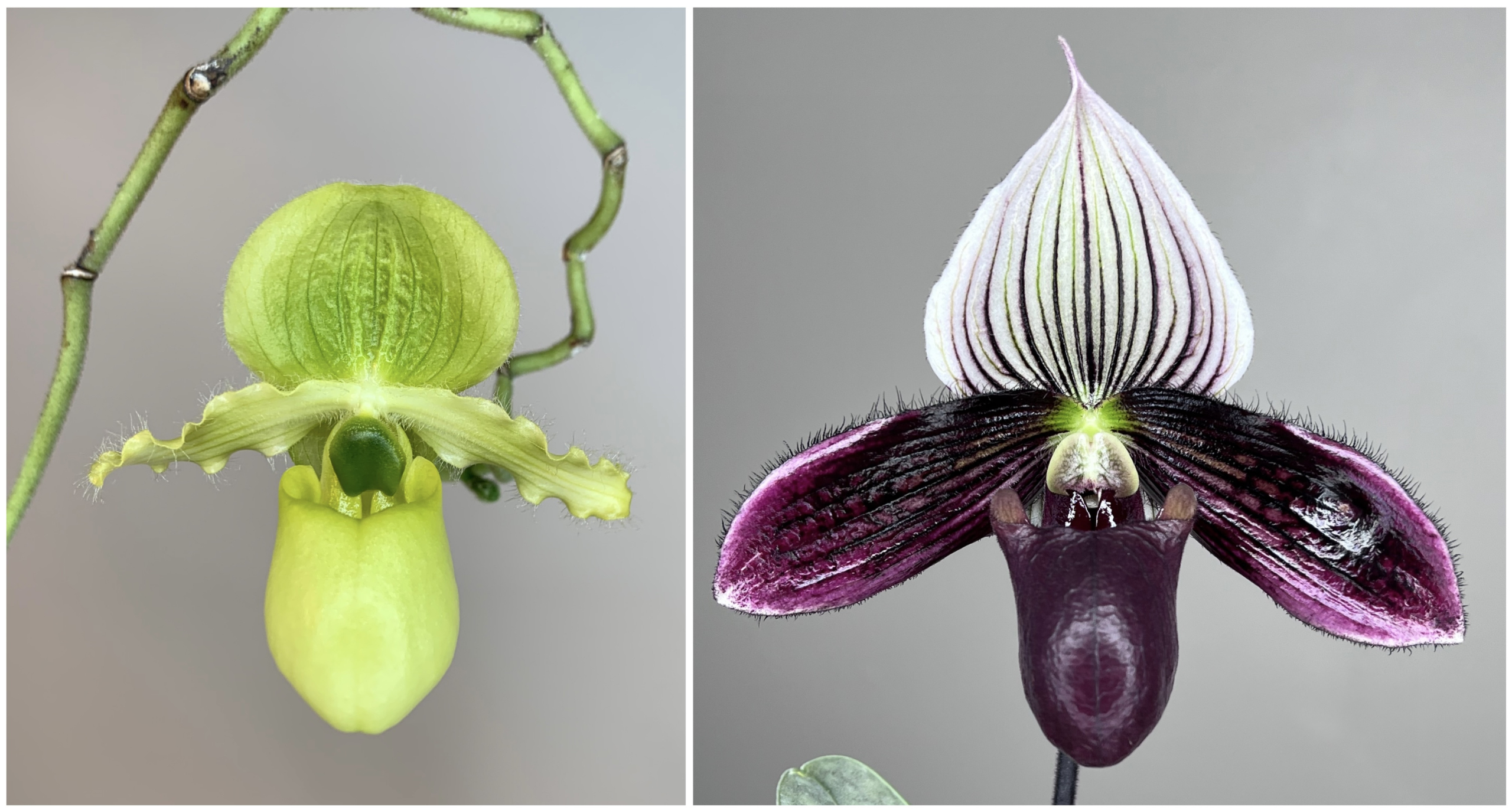
Paph primulinum x Mystic Paradise
Pollinated: Feb 18, 2024
Why This? Expected Outcomes – If this cross works, it’s sure to have beautifully dark flowers.
|
 |
|
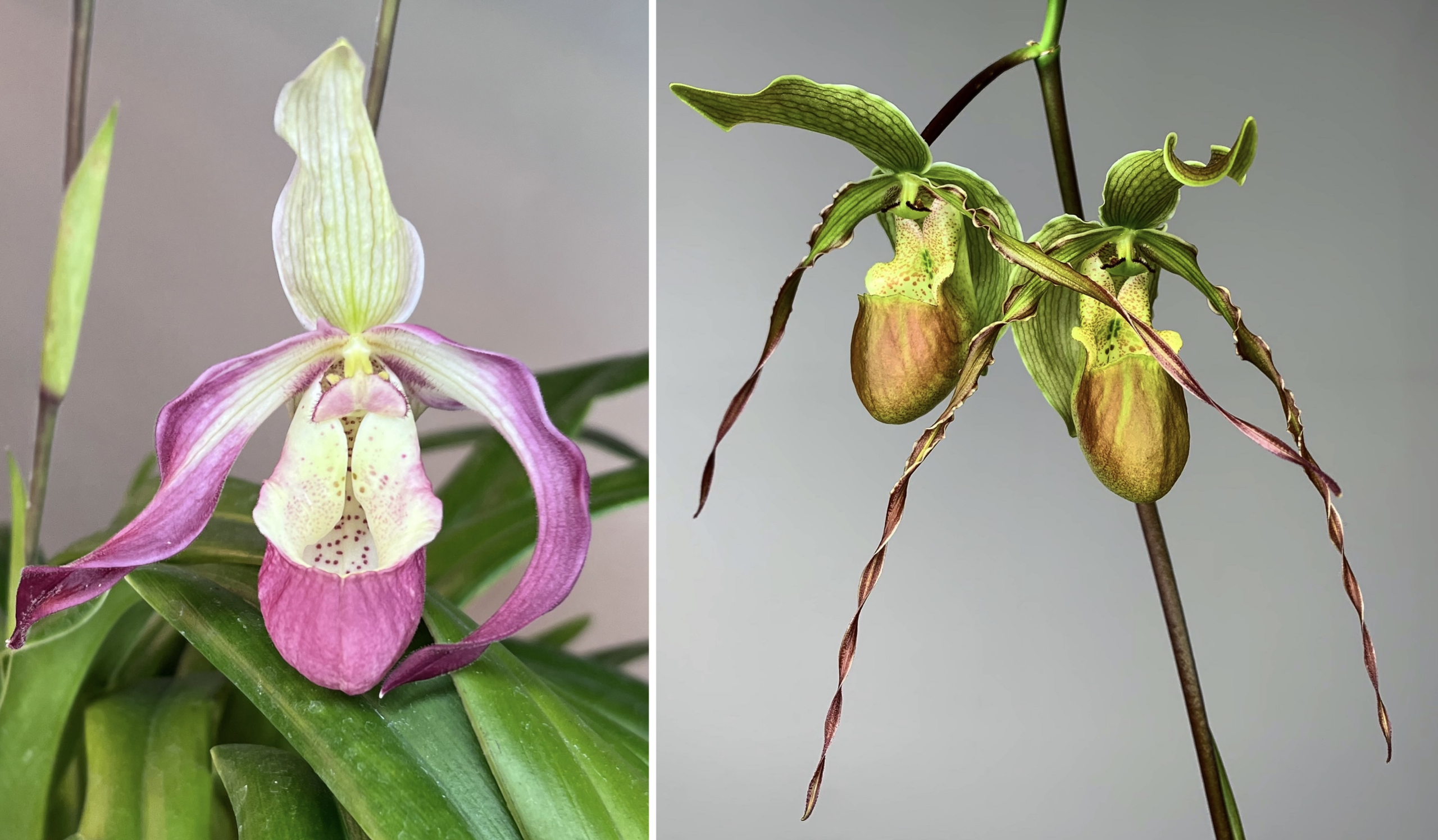
Paph Calurum (Ainsworthii) x roethianum x self
Pollinated: Apr 10, 2024
Why This? Expected Outcomes – The pod parent of this cross was a gift from an orchid friend and I have tried to cross it on every phrag I have and all have failed…until this one. The long-petaled lineage probably aligned with the genes in some way that finally worked…however there were very few seeds; less than a dozen, so we’ll see how they turn out.
|
 |
|
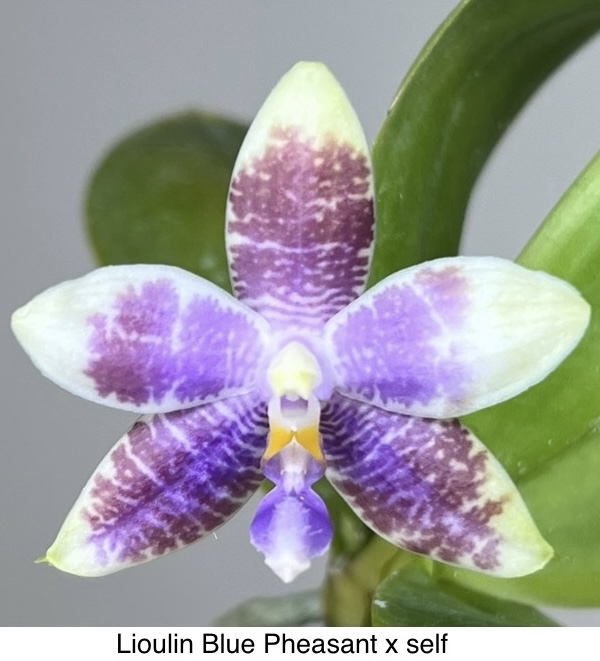
Phal Lioulin Blue Pheasant x self
Pollinated: Apr 14, 2024
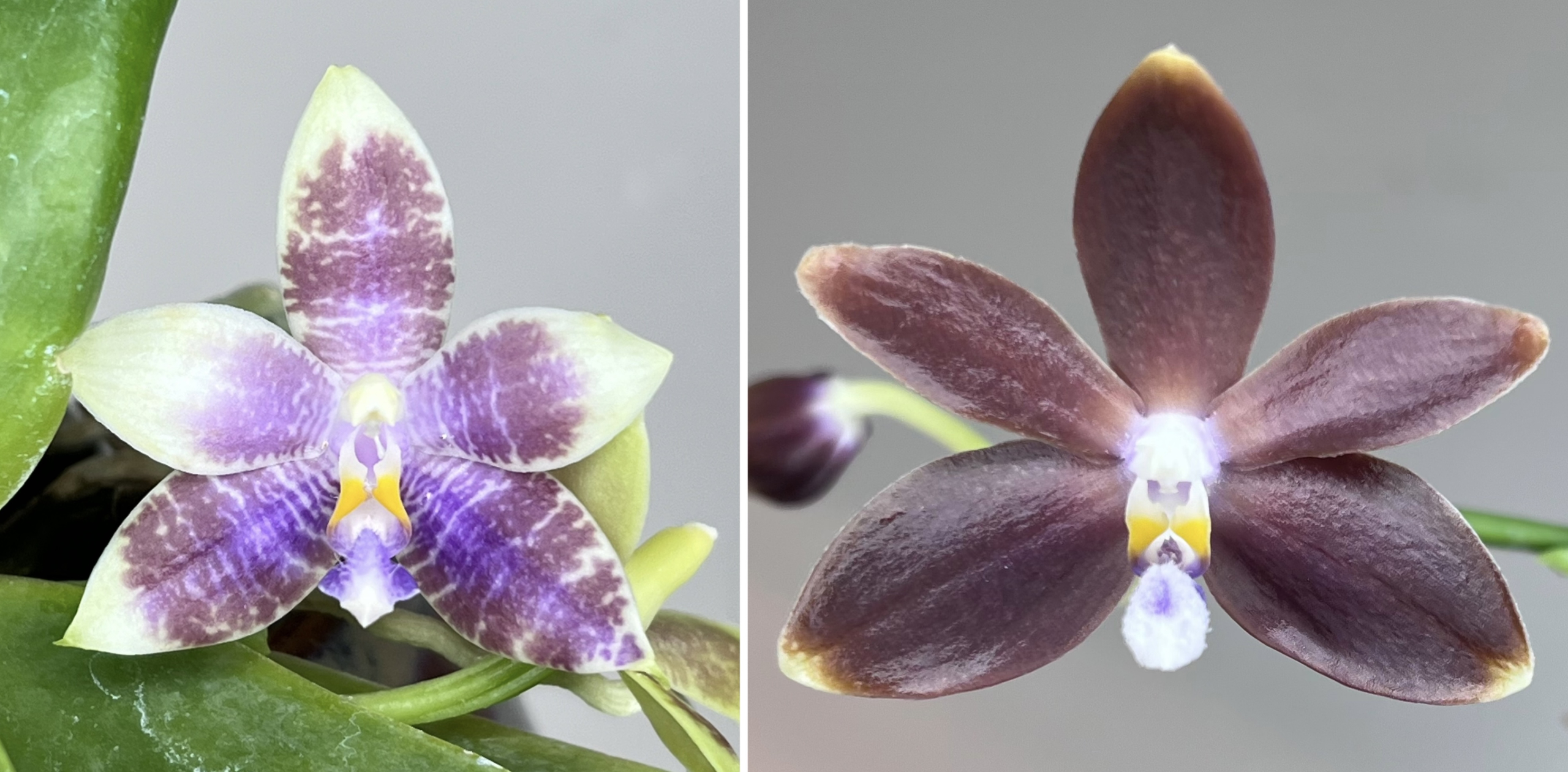
Why This? Expected Outcomes – This flower has a really unique coerulea colour. It’s sort of brown, transitioning to bright purple in the middle. I’ve seen siblings from this cross and they are really unique and have nice contrast. I’m hoping I can get some interesting outcomes in the shake-out of the selfing that can re-align kind of odd traits.
|
 |
|
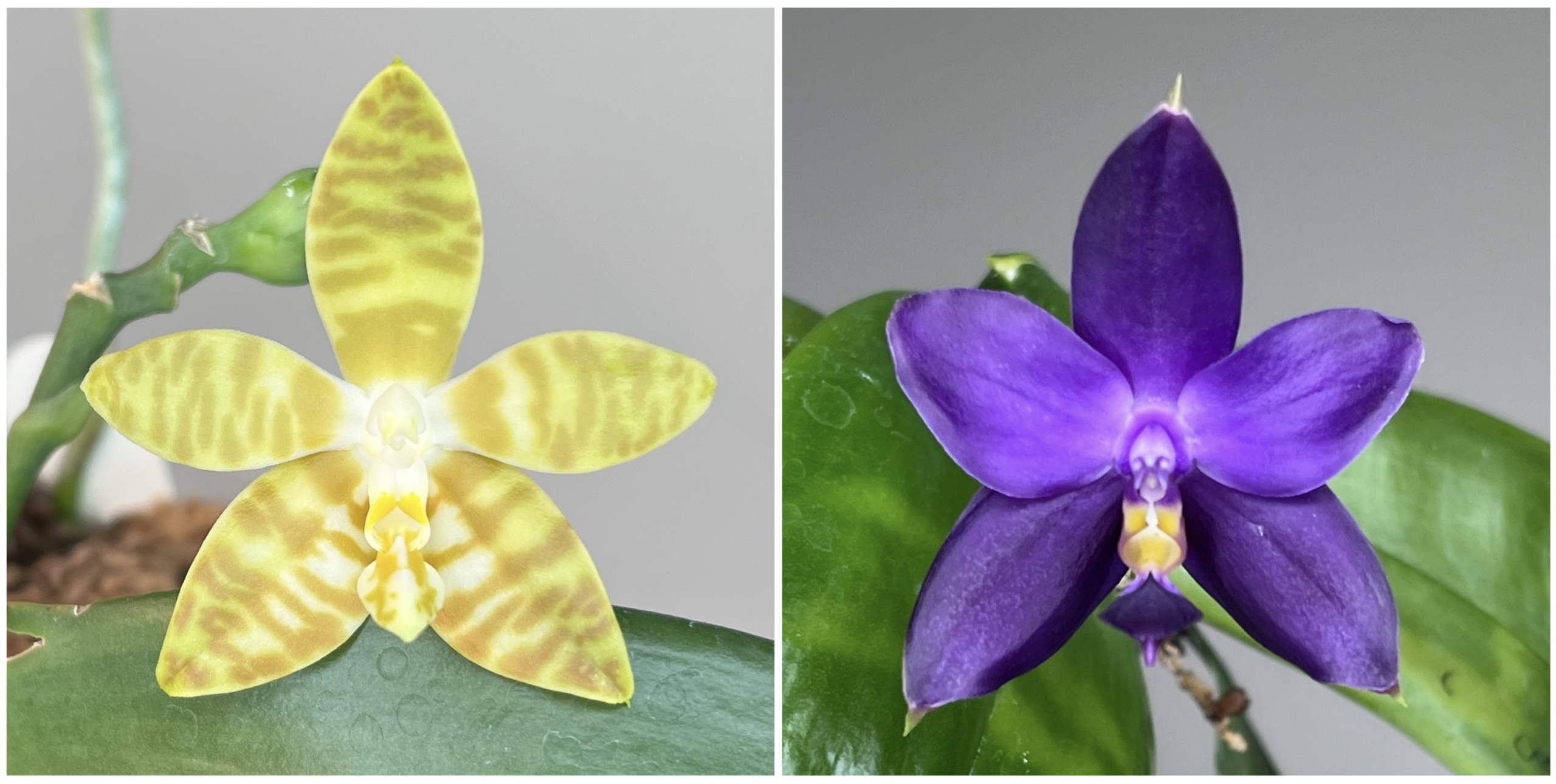
Phal Lioulin Blue Pheasant x tetraspis f brunneola ‘All Chocolate’
Pollinated: Apr 28, 2024
Why This? Expected Outcomes – I’m hoping to lean into that brown colour from the Lioulin Blue Pheasant and the very dark pigment of my tetraspis, with the hopes of getting brown flowers. The only concern I have with this cross is that the pollen parent doesn’t seem overly happy with my conditions—maybe the water is too minerally, maybe my temps are too cool, maybe it’s just a slow-growing plant—regardless, I’m hoping the seedlings of the cross are more vigorous; and if that happens, it might be worth my time to do a sibling cross of these down the road and select for good growth and dark brown colour.
|
 |
|
Phal Princess Kaiulani
amboinensis fma flava x violacea indigo coerulea
Pollinated: May 18, 2024
Why This? Expected Outcomes – This cross is gonna be flawless. With the super yellow amboinensis I got from my dear friend Ken, and the intensely dark purple from my violacea, I suspect the progeny will be very dark red, and maybe if I’m lucky some will have sort of a brownish-yellow colour.
|
 ![]() |
|
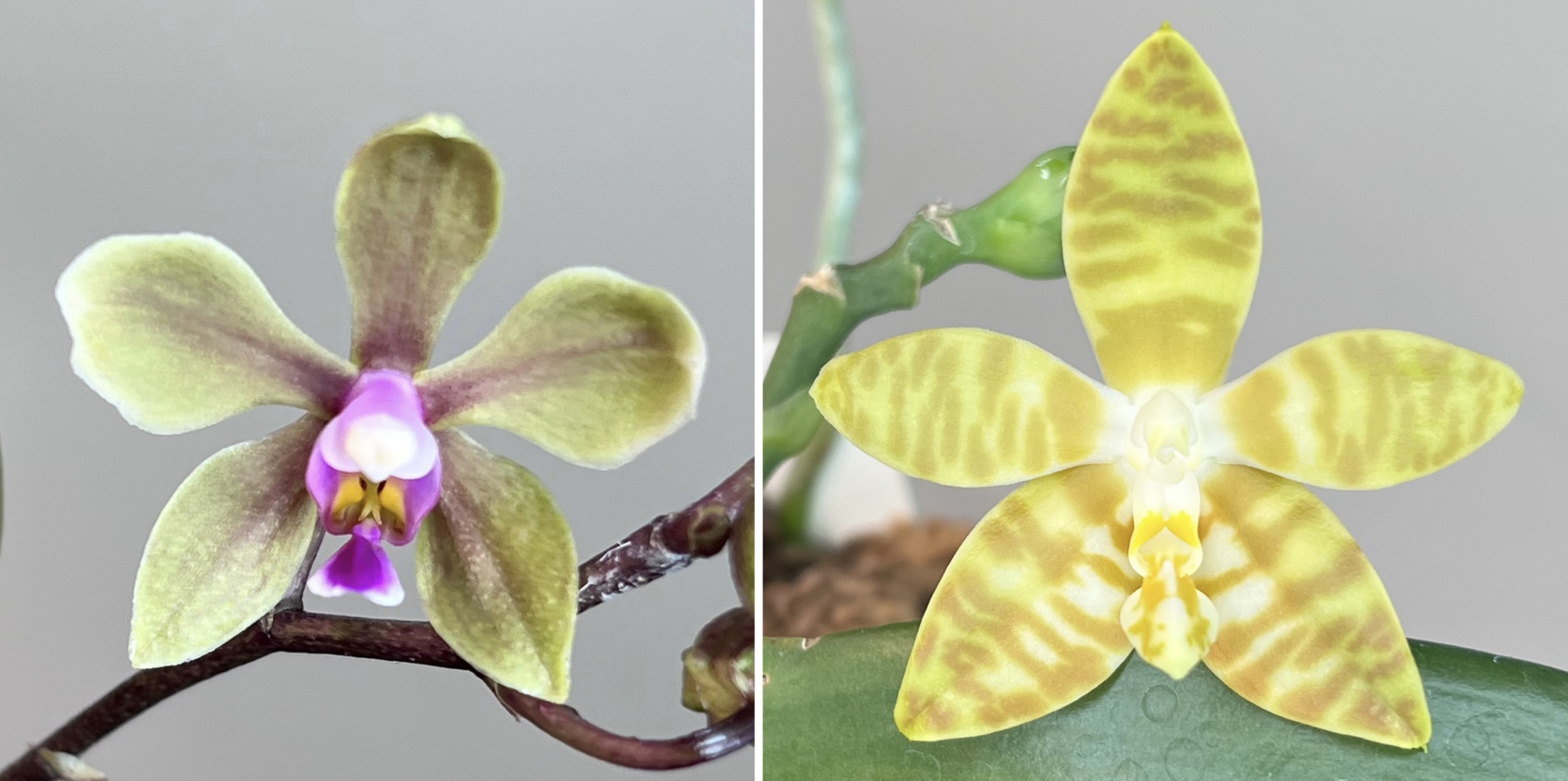
Phal stobartiana x amboinensis flava
Pollinated: May 18, 2024
Why This? Expected Outcomes – This cross is weedy; there are so many seeds and so much germination, I’m more worried about how i’m going to separate them and ensure they grow well. Outcomes though…I’m expecting muddy yellow to green flowers that take after stobartiana’s shape but with a bit more size and wideness.
|
 ![]() |
|
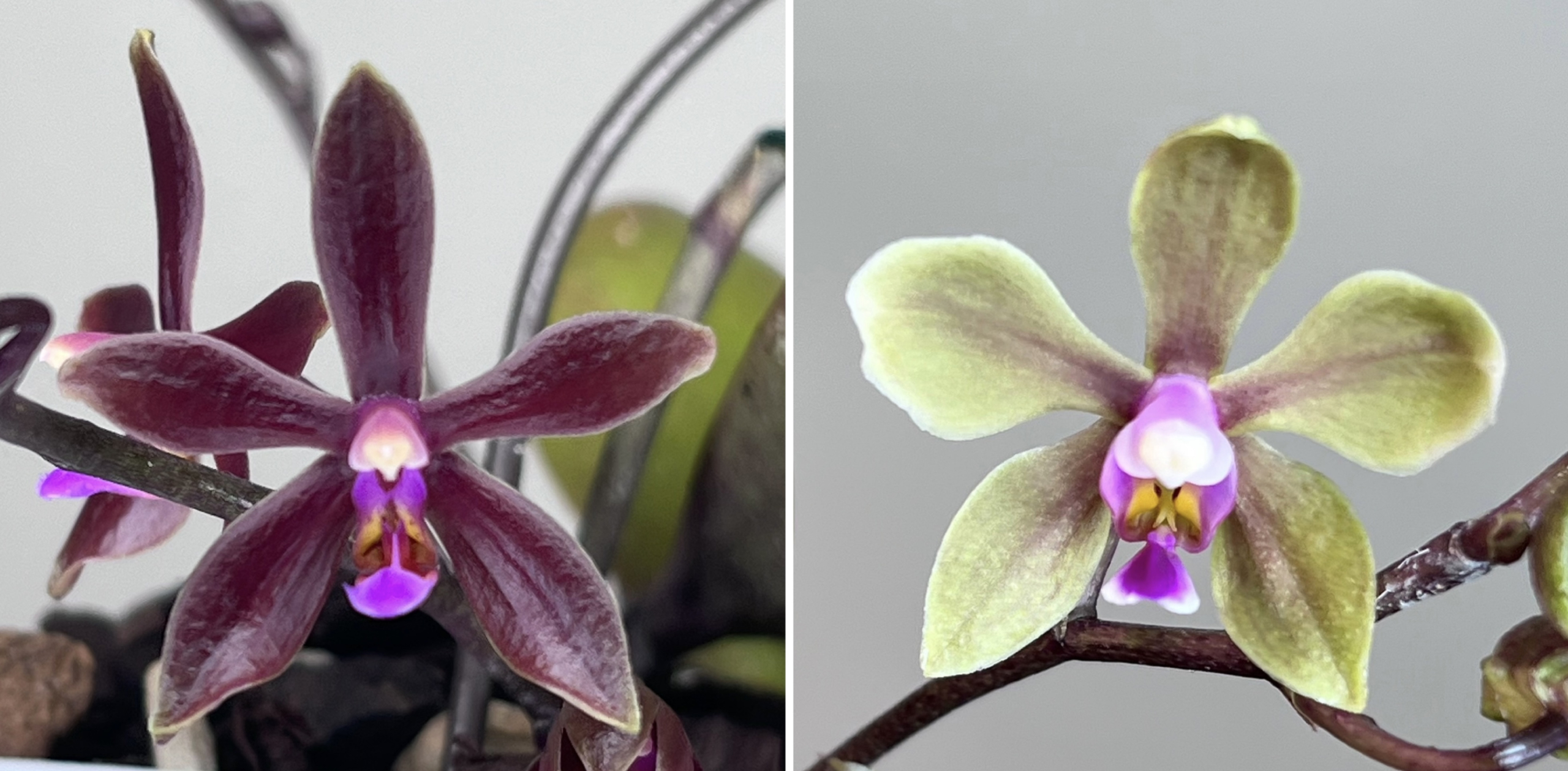
Phal Marianne Schmoll x stobartiana
(honghenensis x cornu-cervi chattaladae) x stobartiana
Pollinated: May 18, 2024
Why This? Expected Outcomes – re-aligning aphyllae genetics (honghenensis x stobartiana), pretty much guarantees these will look like that group. I’m hoping more than anything that the flowers are a dark brown and that the plants are as vigorous as Marianne Schmoll is.
|
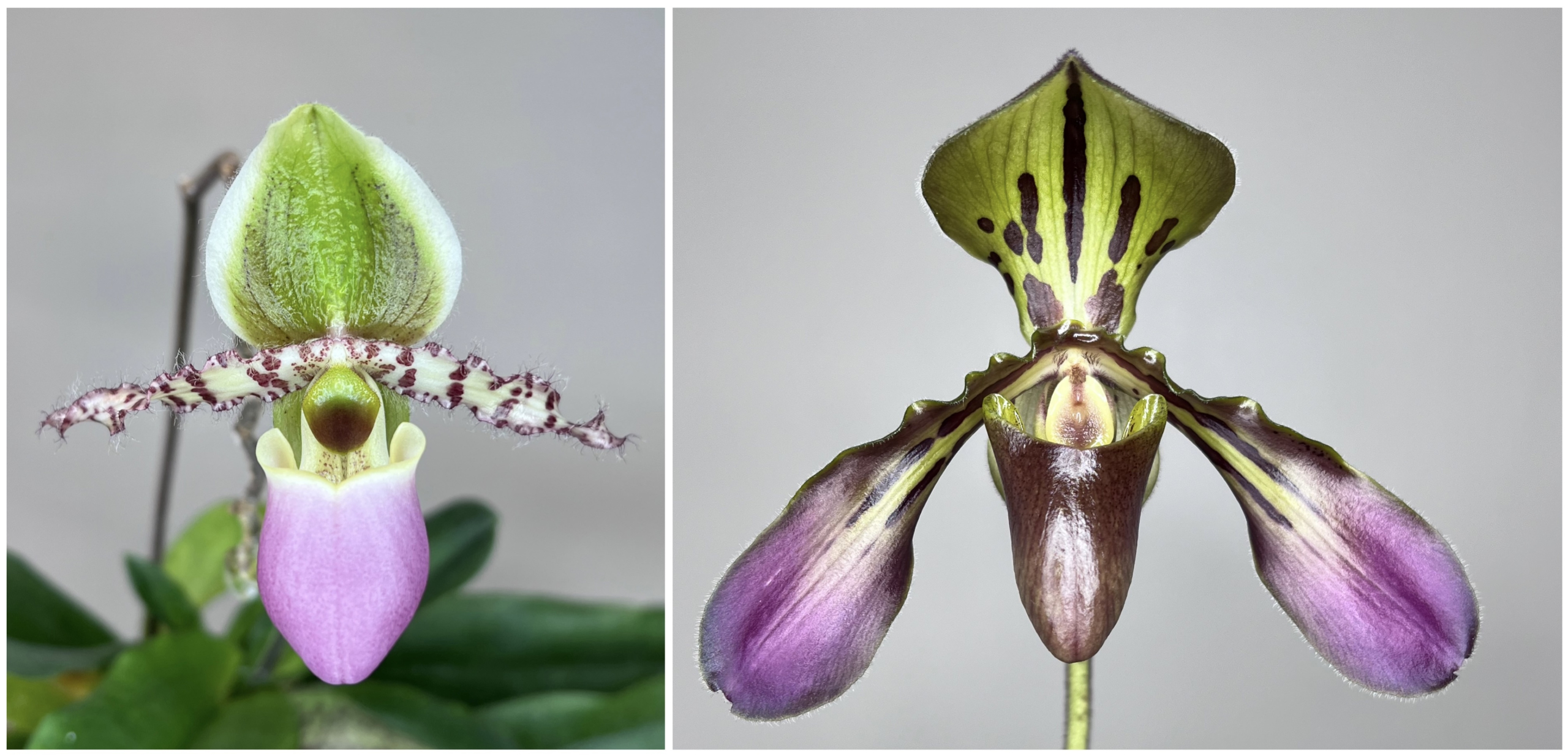 ![]() |
|
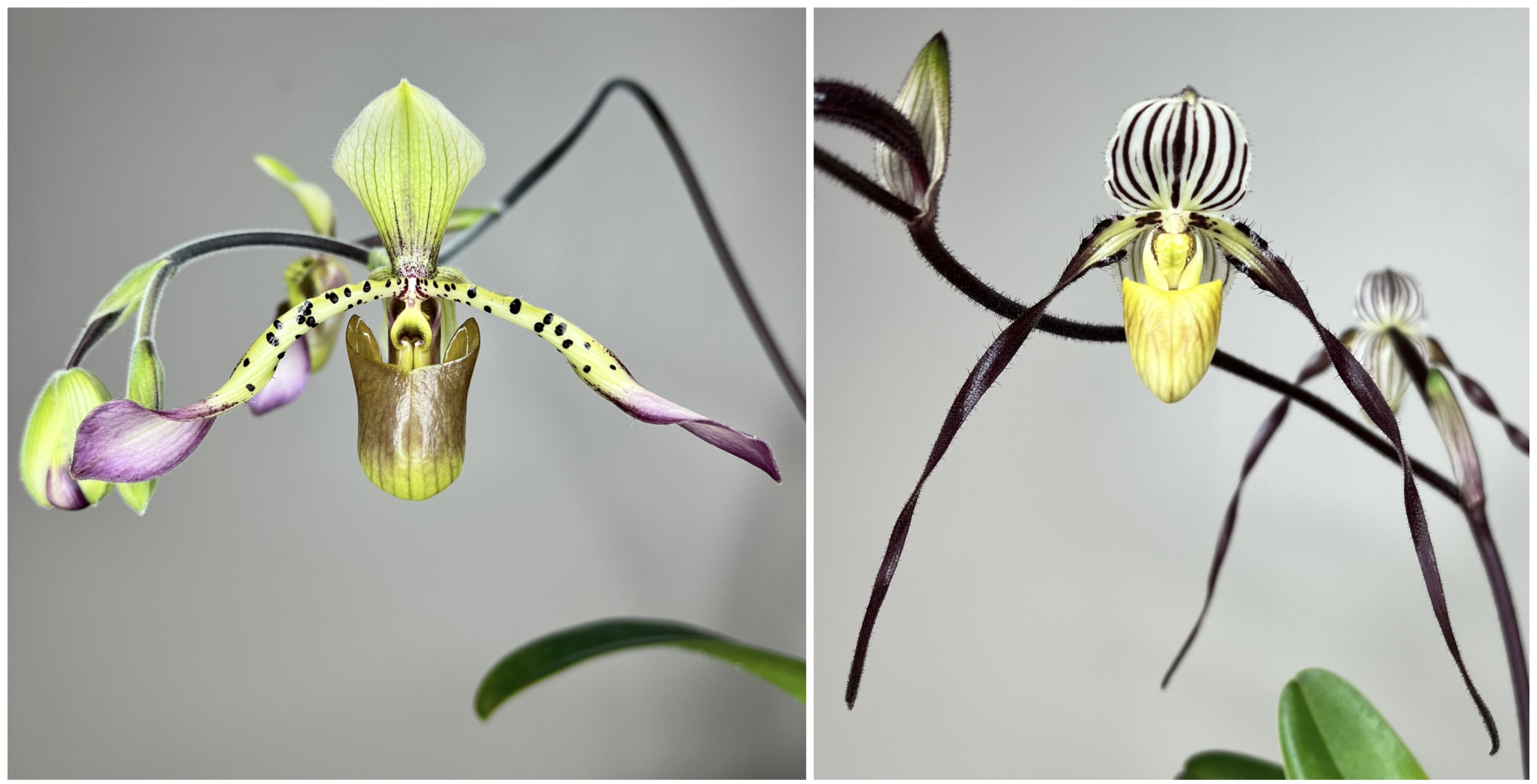
Paph liemianum x tigrinum ‘Beetlejuice’
Pollinated: Jun 3, 2024
Why This? Expected Outcomes – There are a bunch of tigrinum x Cochlopetalum paphs that all mostly look the same. I wanted a tigrinum hybrid and liemianum was the only thing in bloom…but the nice thing is it’s a really strong plant (though it is quite big). Expecting nice coloured flowers that lean into the tigrinum traits, but hopefully a better grower…tigrinum has been challenging.
|
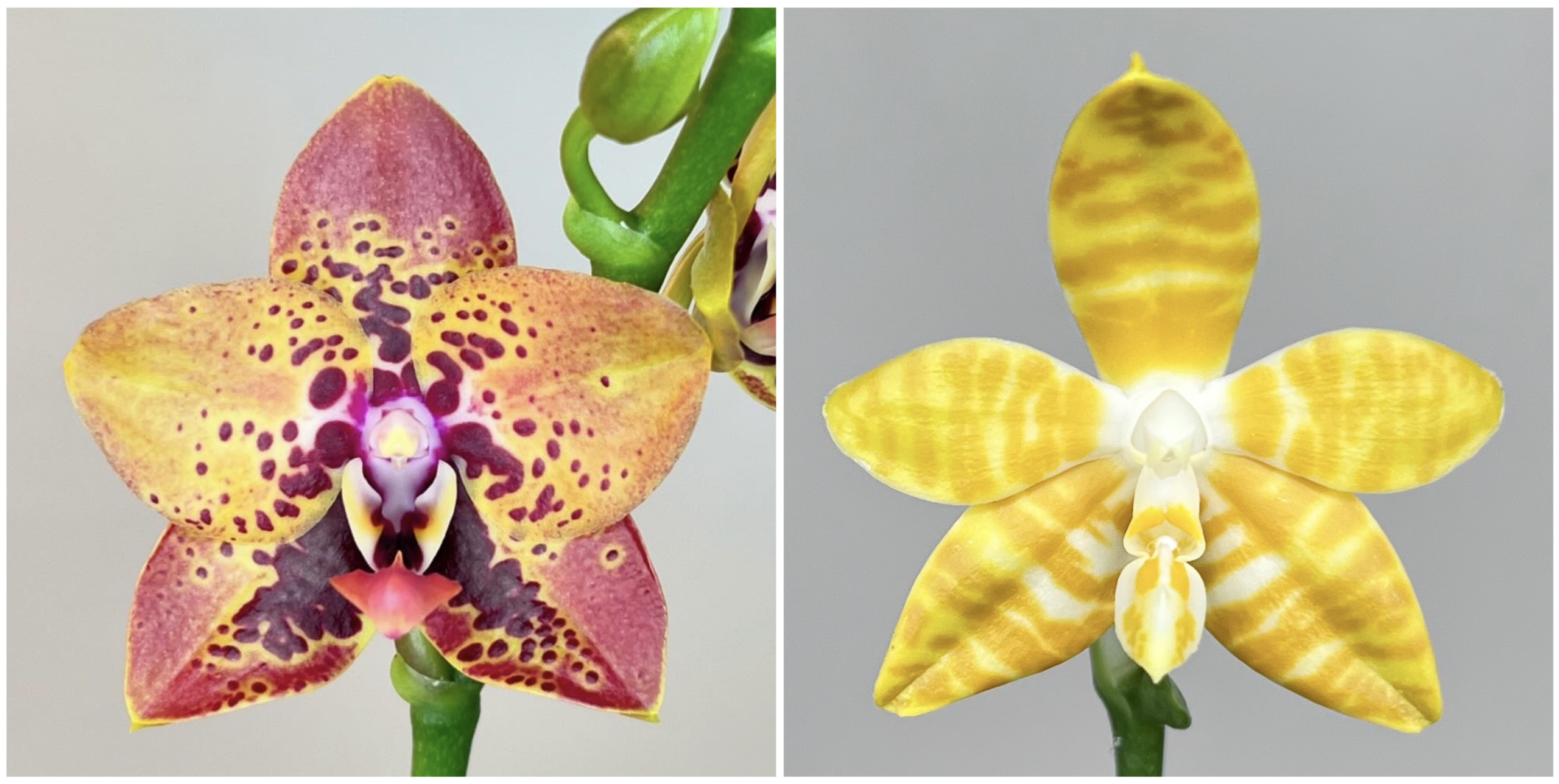 ![]() |
|
Phal Zheng Min Anaconda ‘CL1’ x amboinensis flava
Pollinated: Jun 29, 2024
Why This? Expected Outcomes – I haven’t made a cross with this clone of Zheng Min Anaconda, so I’m really looking forward to this. Based on the flowers, I’d expect yellow progeny…but it depends a lot on if those flava genetics align from both plants. I could end up with a bunch of not yellow flowers.
|
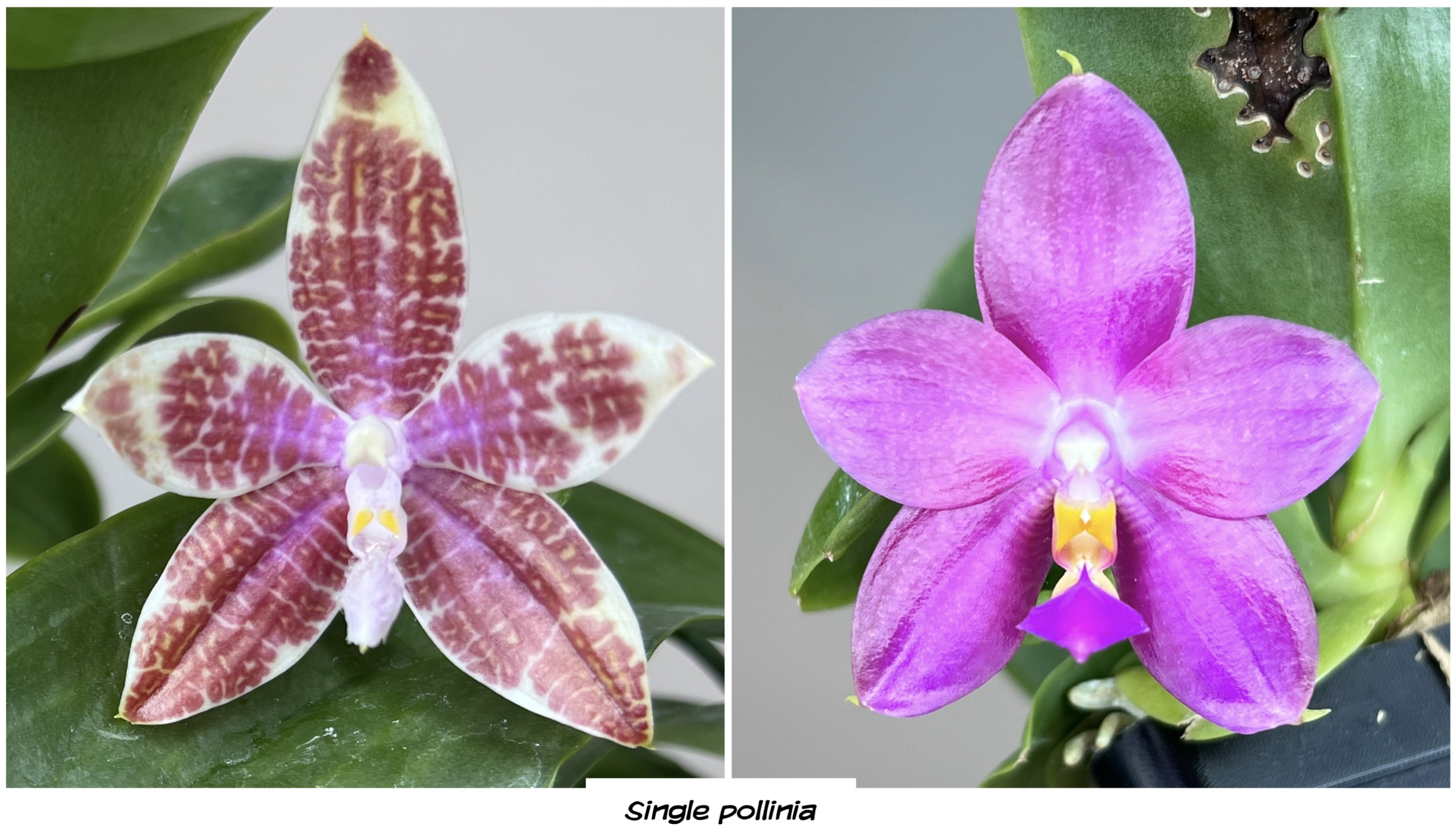 ![]() |
|
Phal heiroglyphica x “Popsicle Pink”
Pollinated: Oct 27, 2024
Why This? Expected Outcomes – the pollen parent is unregistered, so that’s why it’s in quotes. I’ll get on that eventually. Hoping for really pigmented and patterned flowers out of this cross. The heiroglyphica is a spectacular line from my pal Ken—with huge flowers and very dark colours. I’m excited to see the outcome of this one because it should have big flowers, lots of colour and a lot of blooms.
|
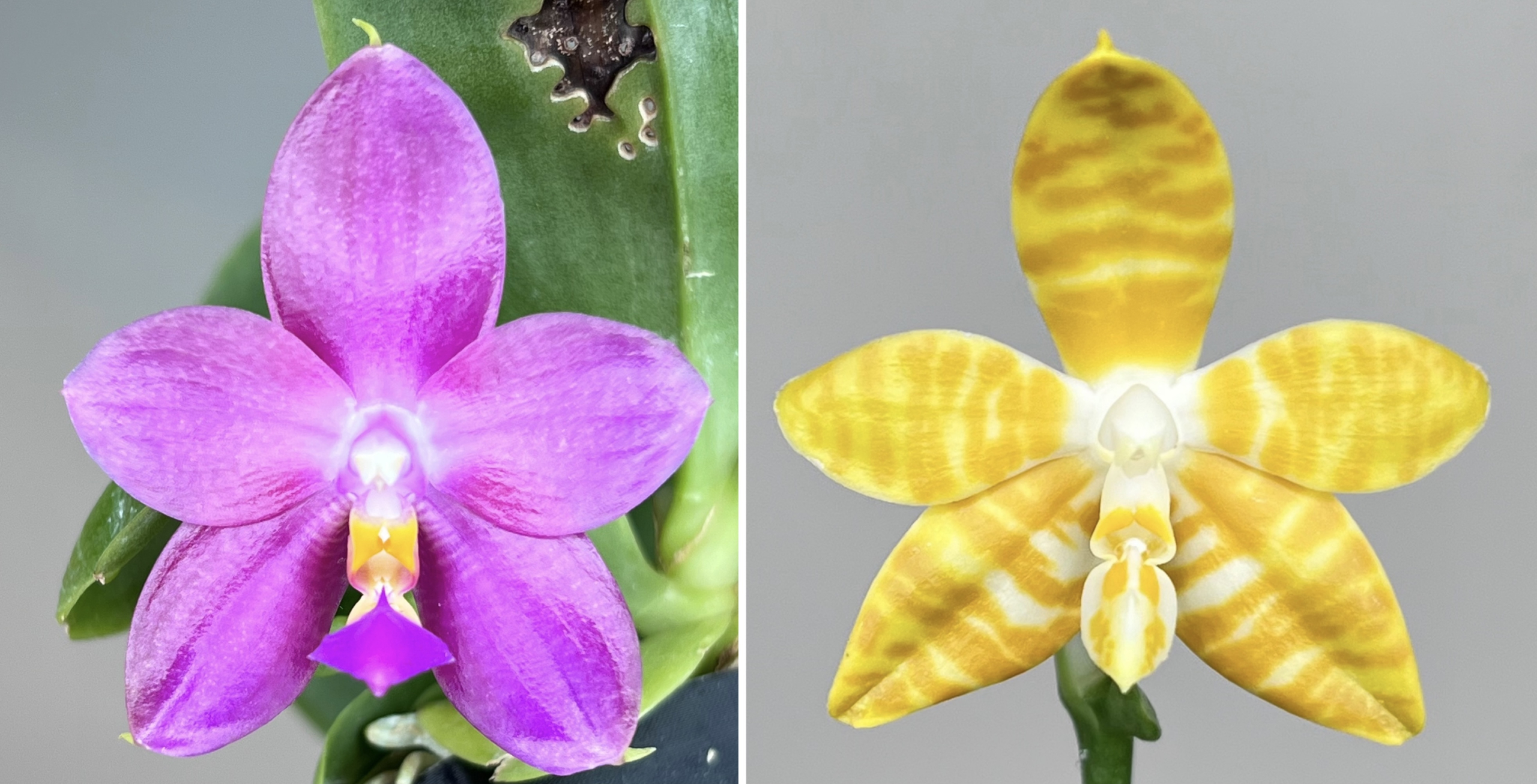 ![]() |
|
Phal “Popsicle Pink” x amboinensis flava
Pollinated: Oct 27, 2024
Why This? Expected Outcomes – the pollen parent is unregistered, so that’s why it’s in quotes. The parent to the pink flower was flava also, so I’m really hoping the genes line up and I get some really saturated and solid yellows out of this cross…but we’ll see. It’s fairly similar to Princess Kaiulani, so it really can’t go wrong
|
 ![]() |
|
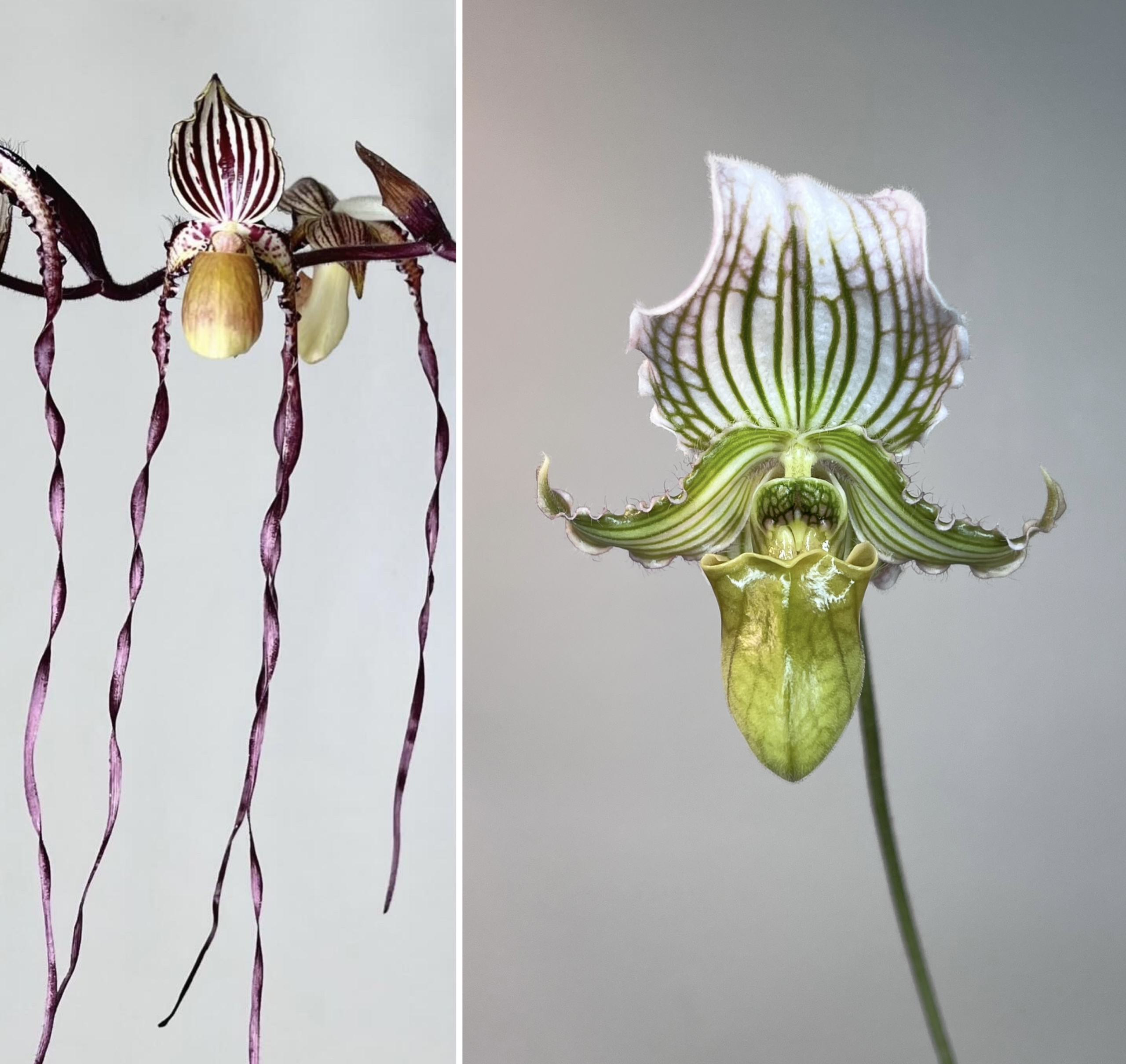
Phal Angel Hair x fairrieanum
Pollinated: Nov 19, 2024
Why This? Expected Outcomes – What an insane cross…right?! I have no idea what to expect, but at a bare minimum they should be good growers. I have seen one other multifloral x fairrieanum cross and it was actually incredibly charming…in this case the backwards reflex from sanderianum might not blend so nicely with fairrieanum, but if it does the combo of fairri and roth for the large dorsal sepal will make for an incredibly stunning flower.
|